


This month a skeleton of twisted bones found under a car park in Leicester was confirmed as belonging to Richard III. What a dismal end to a life full of tragedy and treachery!
In case you don’t know the story behind Richard III’s tragic and eventful life, here it is in a nutshell:
His father was the Duke of York, and the family were Plantagenets. Richard’s father and older brother died in the Wars of the Roses. Basically, the Wars of the Roses were between Richard’s Plantagenet family from Yorkshire (whose emblem is a white rose) and the Tudor family from Lancashire (whose emblem is a red rose). And by the way, the Wars of the Roses still go on today up here in the north of England, but nowadays they’re confined to cricket matches between Yorks and Lancs :) (Or football matches between Manchester United and Leeds United – which sometimes involve real fighting.)
Richard’s second brother became Edward IV in 1460, and he made Richard Duke of Gloucester. There followed some more fighting between the Plantagenets and the Tudors and Henry VI briefly managed to get hold of the throne, but the Yorkists succeeded in knocking him off again.

Then Richard’s brother, Edward IV, died. Richard’s nephew became Edward V, but since he was only 12 his uncle Richard was put in place as ‘protector of the realm’. This is when one of the most dastardly events in English history happened. Edward V and his brother were living under their uncle Richard’s protection in the Tower of London…and they disappeared. Were they killed? And if so, was it their uncle Richard who did it? Did he get rid of his own nephews so he could seize the throne for himself?
Rumours were flying when Richard came to the throne as Richard III…but his troubles were far from over. The Tudors still wanted the throne for themselves, and this time it was Henry VII’s turn. He came back from France to fight beside the red-rose-wearing Lancastrians, and Richard III of York was killed in battle in 1485. By all accounts he was a courageous man, and died bravely in battle. A tragic end to a life filled with war and treachery.
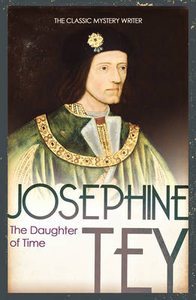 If you’d like to read more about whether Richard actually did murder his own nephews, I can recommend a great read: The Daughter of Time, by Josephine Tey. This book is absolutely gripping from start to finish. It’s all about a detective, Alan Grant, who’s laid up in hospital after being attacked. An actress friend, who knows he’s an expert on reading people’s faces, gives him some portraits to study to keep him occupied. One of them is Richard III. Alan guesses he’s looking at a man of conscience and integrity – and then is astounded to find out it’s Richard III’s portrait, the king accused of murdering his own nephews.
Alan can’t believe it, and starts an investigation. If you think it sounds dull, think again! Once you start reading this book, it’s very hard to put down. I absolutely loved it. I won’t tell you if he finds Richard innocent or not in case it spoils the story for you. Oh, and I can also recommend The Franchise Affair and Miss Pym Disposes, also by Josephine Tey. Both equally unputdownable!
 And if you like historical novels, Philippa Gregory’s The Cousins’ War series is absolutely brilliant and a great introduction to the Wars of the Roses. The first book in the series is called The White Queen, and is about Edward IV’s wife, witchcraft and plotting. I loved it! The whole series is being adapted by the BBC and should appear in May, under the title The White Queen. I can’t wait!
Hope I’ve whetted your appetite to find out more about this fascinating period in English history.
So what do you think? Did Richard kill his nephews? Have you read any other historical novels which deal with this time period? If so, please leave a comment. I’d love to hear from you!


 Helena Fairfax
Leave a Reply