
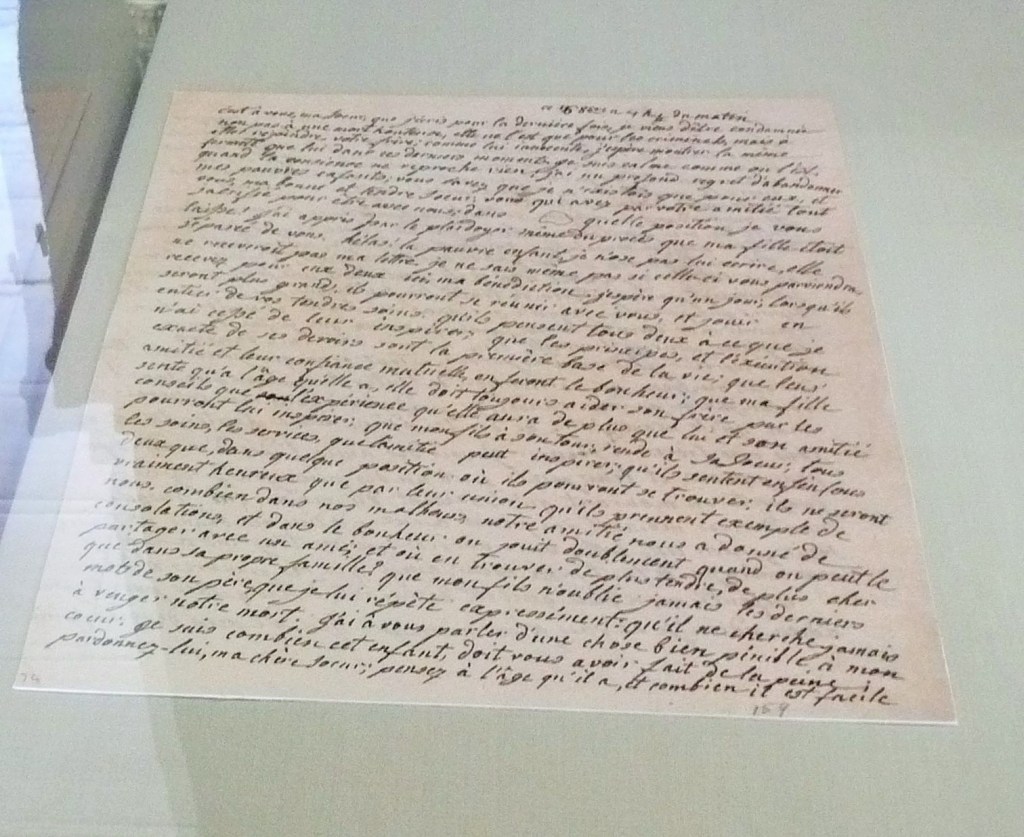
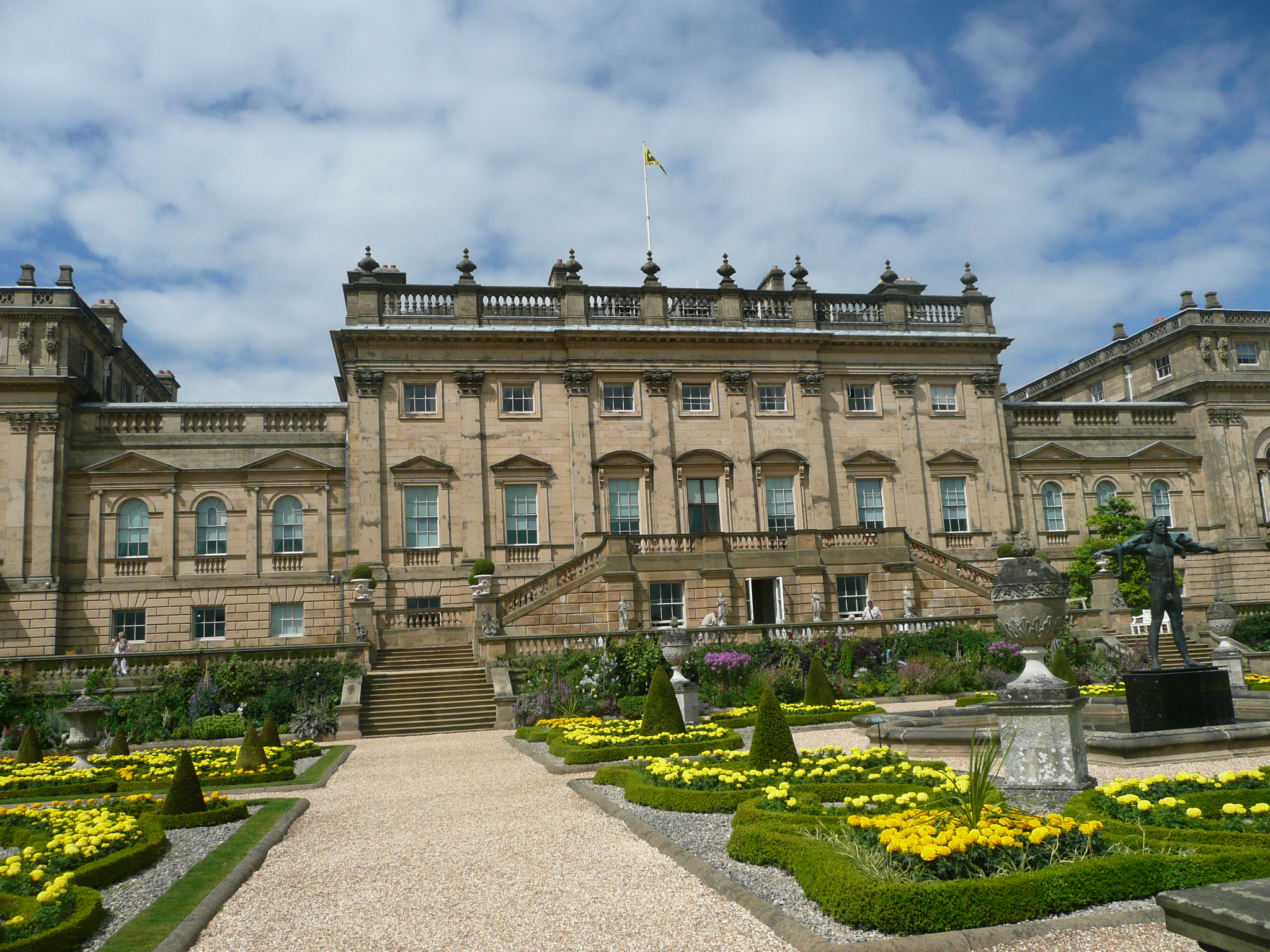
Harewood House is a stately home on the outskirts of Leeds in the north of England. It’s owned by the Earl and Countess of Harewood, and the state rooms and gardens are open to the public. It’s a magnificent place to visit. At the moment they have a special exhibition, where the last letter written by Marie Antoinette is held in a glass case.

Marie Antoinette wrote the letter to her sister-in-law, Madame Elisabeth, a few hours before her execution. It is dated le 16 Octobre 1793. 4h30 du matin.
Before reading this letter I didn’t know much about Marie Antoinette except the stories that have been passed down: that she was a shallow spendthrift with no thought for her people, and of course the famous story that when told her subjects had no bread to eat, she is supposed to have replied, ‘Qu’ils mangent de la brioche.’ (‘Let them eat cake.’)
After reading her letter I was astonished and moved to find a very different woman altogether from the one that history has painted. It’s a moving, courageous and thoughtful letter. Here are the opening lines:
C’est à vous, ma soeur, que j’écris pour la dernière fois : je viens d’être condamnée non pas à une mort honteuse, elle ne l’est que pour les criminels, mais à aller rejoindre votre frère, comme lui, innocente, j’espère montrer la même fermeté que lui dans ces derniers moments.
Here’s my translation: It’s to you, my sister, that I write for the last time: I have just been condemned, not to a shameful death – that is only for criminals – but to rejoin your brother. Like him, I am innocent, and I hope to show the same firmness as he did in these last moments.
If she were a selfish woman her last words would all have been about herself, but Marie Antoinette’s letter is only concerned with her love and 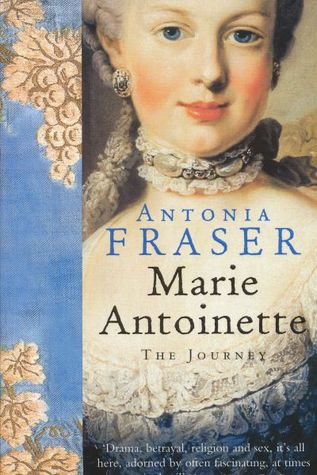 fears for the people she is leaving behind. ‘It’s my deep regret that I’m abandoning my children. You know that I lived only for them and for you, my dear and tender sister.’
She goes on to ask her sister to pass on her last words to her children, begging them in most heartfelt terms to love and take care of each other and expressly repeating their father’s last request to his son: « qu’il ne cherche jamais à venger notre mort » (That he never seeks to avenge our death.)
It’s a most heart-rending letter that tells also of Marie Antoinette’s deep regret that she is forced to leave all her friends in this time of trouble. The letter is stained with tears in several places.
je vous embrasse de tout mon cœur, ainsi que ces pauvres et chers enfants : mon Dieu! qu’il est déchirant de les quitter pour toujours. Adieu, adieu
(I embrace you with all my heart, and my poor, beloved children. My God, how painful it is for me to leave them for ever! Adieu, adieu.)
 Winston Churchill once said ‘History is written by the victors’, and I think the revolutionaries left a false picture of Marie Antoinette that has survived to this day. I don’t think she was the shallow egotist that she was portrayed, and after reading this letter I’m determined to find out more about her. I’ve already discovered that she was sent away to the hostile environment of the French court at the age of only fourteen, and must have felt lonely and isolated for much of her life.
There are a couple of books that have been recommended: Stefan Zweig’s Marie Antoinette: The Portrait of an Average Woman, and Antonia Fraser’s Marie Antoinette: The Journey. I’m going to read at least one of these, and try to see beyond the rumour and gossip that surround this poor woman, even long after her death.
What do you know of Marie Antoinette? Do you think she was misunderstood by her subjects, or do you think she deserves her infamous reputation? If you have any questions or comments at all, I’d love to hear from you!


 Helena Fairfax
Leave a Reply