
Another month and another authors’ Round Robin, and this month’s topic has come at a good time for me again. Thanks for setting the theme, Robin Courtright. I really love these monthly posts. They’re thought-provoking and they’re like therapy!

This month’s question is:
In what time period do you prefer to set your stories – past, present, or future? What are the problems and advantages of that choice? Would you like to change?
As I mentioned, this question has come at a really apt time for me. All my books so far have been contemporary.
Problems and advantages of writing contemporary fiction
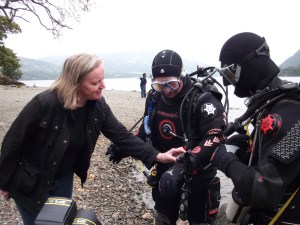
The advantage of writing contemporary fiction is that I know this period inside out :) That’s not to say that I don’t need to do any research. All my books are set in different locations and most of my characters have jobs I haven’t done myself, so I research to make sure I get my facts right. I’ve worked behind the bar in a hotel which came in handy when writing Felicity at the Cross Hotel. The hero of that book, though, is a diver, and I have no experience diving the freshwater lakes of the Lake District. I had to ask the divers of Penrith Divers’ Club for help with my research, which I was ver y nervous about doing (I write contemporary romance, and I thought they might just laugh in my face) but in the end it turned out to be a brilliant experience and I’m still friends with some of the divers today. I even got a write up about meeting them in my local paper, with lots of photos, which you can see in the Telegraph and Argus here.
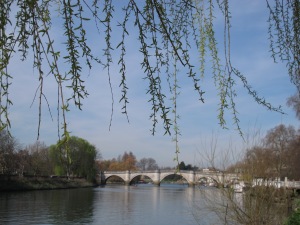
The research I do for contemporary romance isn’t all-consuming and yet it’s very interesting. When writing Penny’s Antique Shop of Memories and Treasures, for example, I find out that Richmond Park in London is a Royal park and the oldest park in the country. It has a fascinating history and I loved writing the scenes featuring my hero and heroine’s walks there.
The research is fun, so what are the disadvantages to writing contemporary fiction? Well, one disadvantage to a plot-writer is modern technology. A couple of years ago I was part of an anthology of summer stories. Our theme was that the heroine receives a life-changing letter.

A letter? Really? When did you last receive a letter that wasn’t either junk mail or a bill? Almost everyone emails these days. However, I thought up a scenario which I hope was convincing. The heroine receives a letter from a TV company telling her she’s won a place on a reality TV show, and… Well, you can read for yourself what happens in Come Date Me in Paris!
Many a possible contemporary plot is ruined by the fact that the heroine always carries a mobile phone, so she can just dial her way out of trouble, or if she’s in two minds about meeting a stranger she can just google him or look him up on Twitter.
Writers of contemporary romance sometimes have to exercise a bit of ingenuity in order to create tension. I find actually the biggest disadvantage in writing contemporary romance is finding a cause of conflict between hero and heroine. In Jane Austen’s day the conflict in Pride and Prejudice is basically caused by the fact that Mr Darcy and Lizze Bennett come from different social spheres. These days even Prince William has married a “commoner” (how I hate that word) and Prince Charles has married a divorced woman, as Edward VIII was not allowed to do. In today’s more liberal times, finding a reason why two attractive people who were meant for each other not to be able to get together is actually quite hard!
Problems and advantages of writing sci fi
I’ve never written a futuristic story, but I absolutely love reading sci fi. I wrote a post for a recent Round Robin on the very subject of why I love this genre. Philip K. Dick and Stanislaw lem are two of my favourite authors. Since I’ve never written in this genre, I don’t feel qualified to talk about it, but I’d say for me the problem that stops me writing sci fi is my lack of scientific knowledge. I realise being a scientist isn’t strictly necessary. Margaret Atwood’s The Handmaid’s Tale could be classed as sci fi and I suppose she hasn’t had to have any knowledge of physics to write it. But for me, the best sci fi novels show what could happen from a technological point of view, they show how human beings would react to situations we don’t understand, and they even predict events that have later come to pass. I don’t think I’m capable of writing any sci fi stories that couldn’t just as easily have been set in the present or the past.
Problems and advantages of writing historical fiction
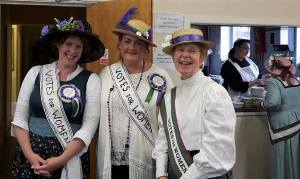
I’ve never written any historical fiction…up until now. This is why the Round Robin question has come at such a great time. I recently released a non-fiction book for the publishers Pen & Sword, with the title Struggle and Suffrage: Women’s Lives in Halifax 1800-1950 and the Fight for Equality. The book was released for the centenary of the Representation of the People Act, when the first women in Great Britain gained the vote. Halifax grew up out of the textile industry in West Yorkshire, and researching the lives of the women who lived and worked there has been fascinating.

Reading about so many ordinary yet extraordinary lives – the lives of textile workers, nurses, mothers, doctors, parlourmaids, suffragettes and many more – has given me so many ideas for stories and an urge to start writing fiction again. I have an idea in mind for a historical novel, and before that I’ll be writing a historical short story for an anthology of stories all set around the same shop in the town of Hebden Bridge, which myself and some Yorkshire and Lancashire authors will be releasing next year.
The advantages of changing genre are that I’m able to follow my urge to write these stories. The disadvantage is that up until now I’ve only written contemporary, and my readers might not like my new direction. This is something I’m a little worried about, but I’ve weighed this up and I would like to take the risk. I’m really looking forward to bringing these women of history to life and to getting to know a new set of characters :)
* * *
Thanks very much, Robin, for another interesting topic. I’m looking forward to finding out what the other authors in the Round Robin feel on the subject. (Follow the links below if you’d like to hear their views.)
Are you a writer, and have you ever changed genres? As a reader, is there a genre you prefer? Do you like both historical and contemporary fiction? Is there a genre you’d never read, and if so, why? If you have any comments at all, I’d love to hear them!
Marie Laval http://marielaval.blogspot.co.uk/
Anne de Gruchy https://annedegruchy.co.uk/category/blog/
Skye Taylor http://www.skye-writer.com/blogging_by_the_sea
Dr. Bob Rich http://wp.me/p3Xihq-14G
Anne Stenhouse http://annestenhousenovelist.wordpress.com/
A.J. Maguire http://ajmaguire.wordpress.com/
Judith Copek http://lynx-sis.blogspot.com/
Victoria Chatham http://www.victoriachatham.com
Beverley Bateman http://beverleybateman.blogspot.ca/
Heidi M. Thomas http://heidiwriter.wordpress.com/
Marci Baun http://www.marcibaun.com/blog/
Helena Fairfax http://www.helenafairfax.com/blog
Diane Bator http://dbator.blogspot.ca/
Rhobin L Courtright http://www.rhobinleecourtright.com


 Helena Fairfax
Leave a Reply