
After Harvey Wienstein was accused of abusing his position and of using his power to take advantage of women working either directly for him or in his industry, the #metoo campaign went viral.
Lots of romance novels involve powerful men. In recent weeks there has been a lot of discussion about whether romance writers are adapting their stories to the current #metoo climate, and whether the wealthy, alpha male is now metaphorically dead – especially where the alpha male also happens to be the heroine’s boss. An example of this discussion is here, in this Wall Street Journal article headed Will Office Affairs Ever Be the Same? Not in Romance Novels
The WSJ article sounded to me a little tongue-in-cheek. That often seems to be the case when romance novels are  discussed in “serious” journals. Adele Parks and Joanna Trollope were part of a more considered discussion on ITV’s Good Morning Britain. If you missed it, it’s well worth watching the clip for Adele Parks’ thoughtful comments on why women read romance and how readers respond to her novels.
On BBC Radio 4’s Front Row programme, Anna Boatman, publishing direct of Piatkus, said a familiar theme in romantic fiction is for the hero to have the power to rescue the heroine in a practical way, while the heroine rescues him emotionally. She said this will always be a popular romantic theme, but that she’s finding it less interesting, and that she has seen changes in the romance submissions she’s receiving.
I’ve been mulling over Anna Boatman’s comment a lot these past few days, as what she said sums up exactly how I’ve rethought my own romance novels since I began writing. You can follow my train of thought exactly through the characters of my books in the order they were published.
The Alpha Male
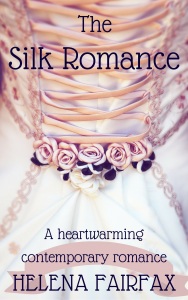 In my first novel, The Silk Romance, the French hero, Jean-Luc, owns a silk mill in Lyon. The heroine, Sophie, comes to work for him. The story is a Cinderella romance, with a wealthy hero who – yes, as Anna Boatman describes – rescues the heroine practically. Sophie in her turn rescues Jean-Luc emotionally. Jean-Luc is a typical alpha male. Reviews of the hero and heroine said things like: “an old-fashioned romance”, “a charismatic hero”, “a strong female” and a hero who “enchants the reader”. One of the reasons people read romantic fiction is in order to fantasise. If a reader is going through a particularly stressful time, escaping with a tall, dark, handsome hero who has wads of cash and tells her exactly what she needs to do – or even better, does absolutely everything for her, leaving her to relax on the settee binge-watching her favourite programmes and snacking on M&Ms – is an enticing prospect. But could you live with a Jean-Luc organising your life for you every single minute of every day? I’m not sure I could.
Restoring the power balance
Over the years my heroes and heroines have changed quite a lot. In my last full-length novel, Felicity at the Cross Hotel , it’s my heroine, Felicity, who has the power in the workplace. Felicity Everdene arrives at the Cross Hotel 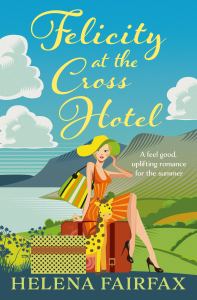 in the Lake District to find the business is struggling. Patrick Cross, the hero, is a good businessman – he’s built up a thriving diving school – but he’s not sure he has what it takes to make a go of the rundown hotel his father has left him. Felicity has the business nous and the money to turn things round. I aimed to have the balance of power remain equal in this story, but also to show two characters with believable strengths and flaws.
Over the past few months I’ve been working on a non-fiction book about the lives of women in Halifax, West Yorkshire, from 1800-1950. Researching this book has been an eye-opener on just how little power women in Britain had over their own lives until relatively recently. Researching for this book has made me think even more deeply about how I portray the power balance in relationships in my romance novels.
Strong women characters
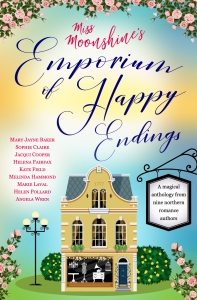 In a few weeks’ time some author friends and I from the north of England will be releasing an anthology of romantic short stories. The collection is called Miss Moonshine’s Emporium of Happy Endings. The stories are a mixture of historical and contemporary, and my story is set in Edwardian times – a time when women had no vote and very few rights. Although my story is a romance with (I hope) a strong hero, I made a deliberate attempt to make sure that everything practical in the story was resolved by women. There is only one incident in which the hero has to come to the rescue, but that’s only because women at the time didn’t have the same rights he did. But by the end of the story… Well, you’ll have to wait and see!
My story is called ‘Beatrice Marches for Women’, and I thoroughly enjoyed creating a cast of strong women characters. Miss Moonshine’s Emporium of Happy Endings is on pre-order on Amazon and will be released in print, too, on May 18th.
Talking of northern authors, Elizabeth Enfield – author and creative writing tutor – took part in the same BBC Radio 4 discussion as Anna Boatman. She made a wonderful comment that in one of the biggest #metoo romances of all time, a vulnerable woman goes to work for a powerful man. The boss tries to seduce the heroine, she discovers he’s married, she refuses to compromise and ends up losing her job and her home. Can you guess the title of the book? Yes, it Charlotte Bronte’s Jane Eyre :)
* * *
Do you think the alpha male is becoming less popular in romance novels? Do you think there is still a place for the CEO/employee trope in romance?
If you have any comments at all on this subject, I’d love to hear from you!


 Helena Fairfax
Leave a Reply