

If you haven’t yet seen the Netflix series Queen Charlotte, and if you’re looking for a touching love story, with a great script, an excellent cast, beautiful costumes and stunning scenery, then you’re in for a treat.
Shonda Rhimes called this prequel to Bridgerton ‘fiction inspired by fact’. I loved this retelling, and what I love most about it is that, even though not historically correct, it makes all the emotions in Queen Charlotte and King George III’s complicated, troubled, steadfast and passionate love story seem as real to us now as they were to the couple themselves two hundred year ago. For me, the series brings their human story alive.
How much of Netflix’s Queen Charlotte is real?
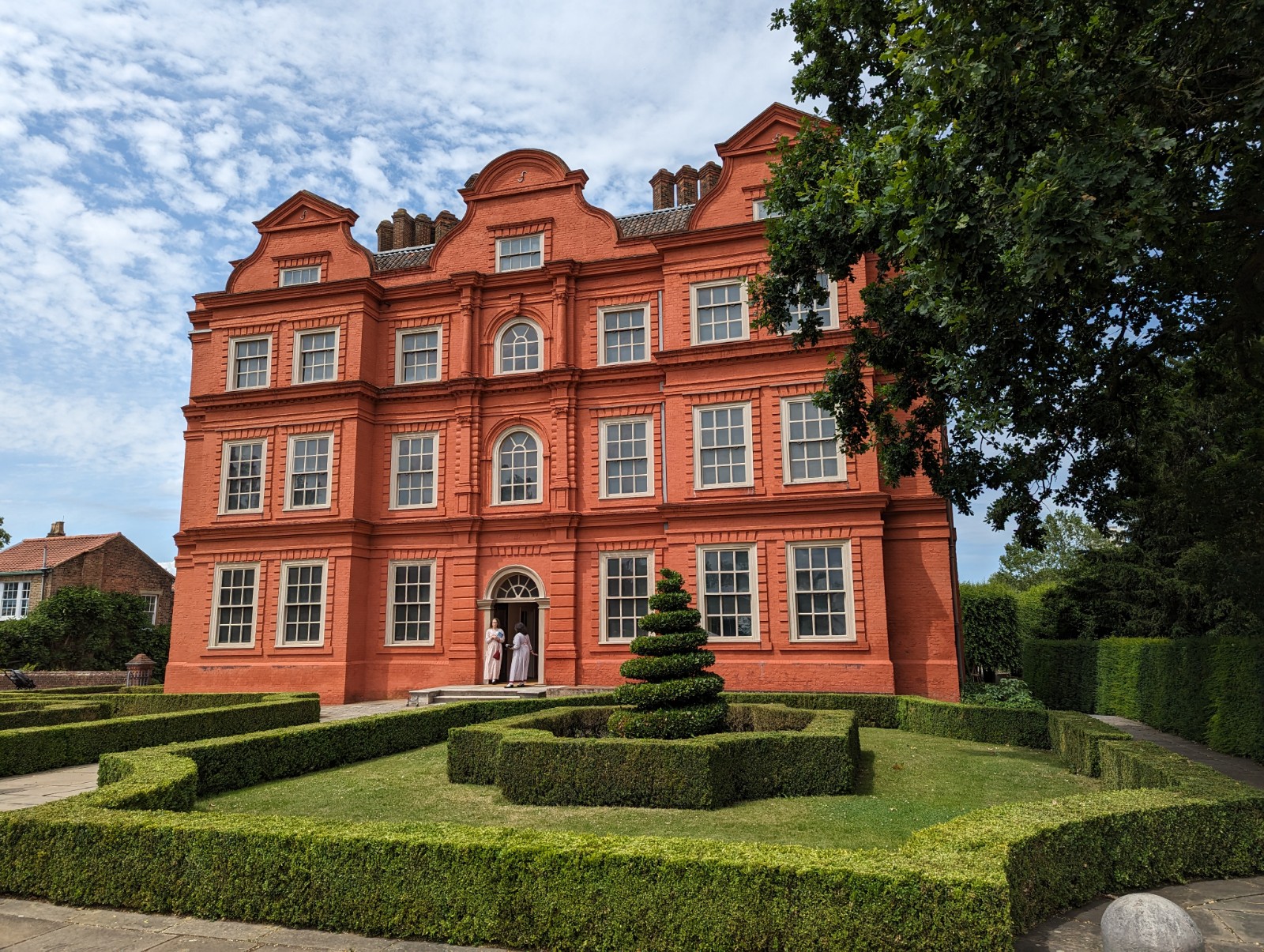
King George III and Queen Charlotte were real people, with real emotions. I was lucky enough to visit Kew Palace recently, their summer residence. The curators at Kew have done a wonderful job of making you feel as though the royal couple and their children still walk the rooms. The place feels unchanged, and this is doubly so because the end of the couple’s time there was so unhappy, which meant no other member of the royal family ever lived in the palace after them.
After Queen Charlotte died in 1818 the palace was closed, until her granddaughter, Queen Victoria, opened it to the public in 1898.
Was Queen Charlotte Britain’s first Black queen?
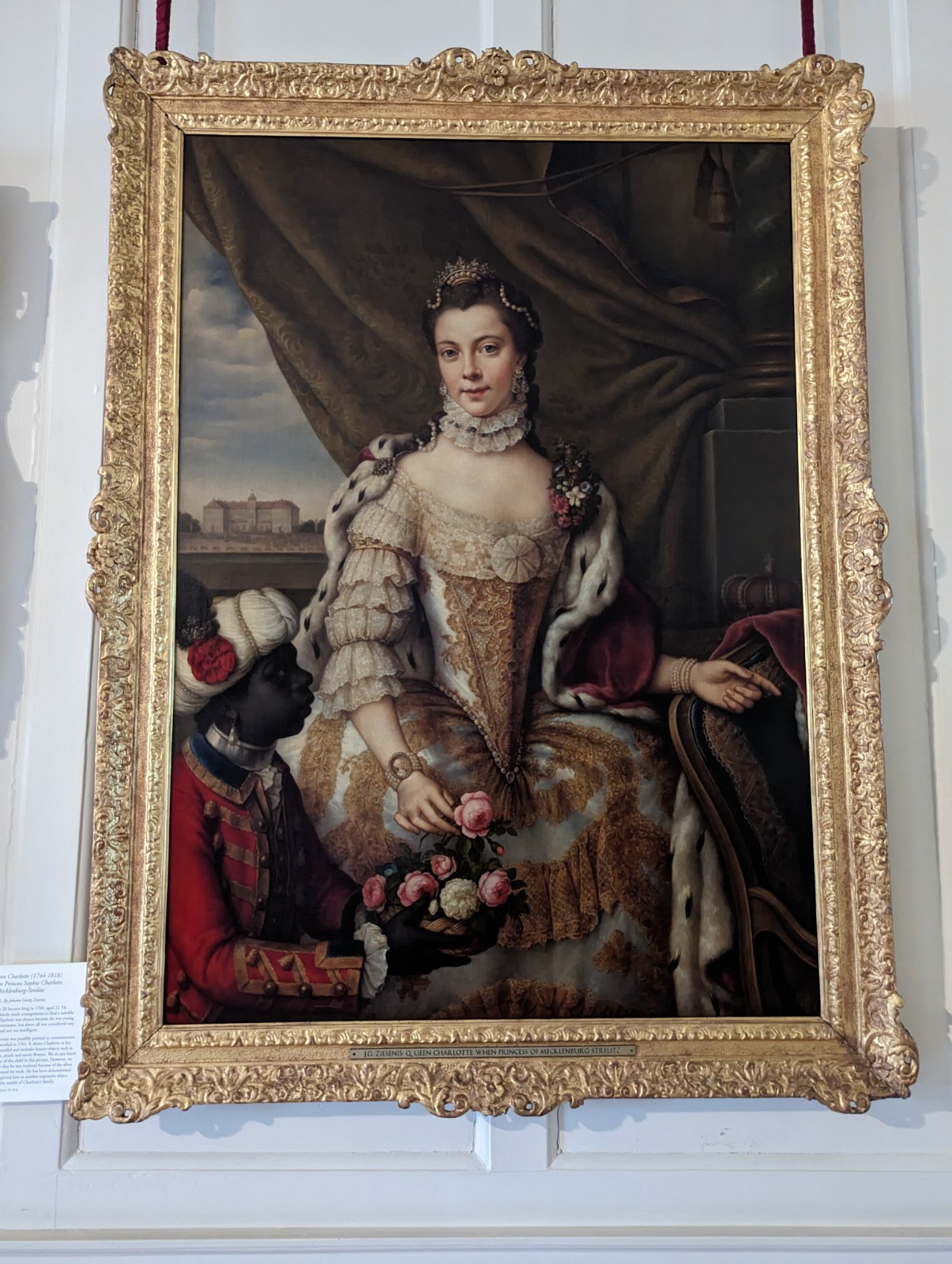
This portrait of Queen Charlotte hangs in the palace entrance. Here, she appears fair-skinned, although many historians say she had African heritage. (More on Bridgerton and Charlotte’s heritage here.) What struck me most forcefully in this portrait, though, is that the young Charlotte has a black slave. I found this a totally unexpected shock.
I discovered afterwards that the painting was done before Charlotte’s marriage, while she was still living in northern Germany. According to this article, King George III fervently denounced slavery. There were no slaves in any of his palaces, and he signed the Act for the Abolition of the Slave Trade in 1807.
Are the characters in Queen Charlotte true to life?
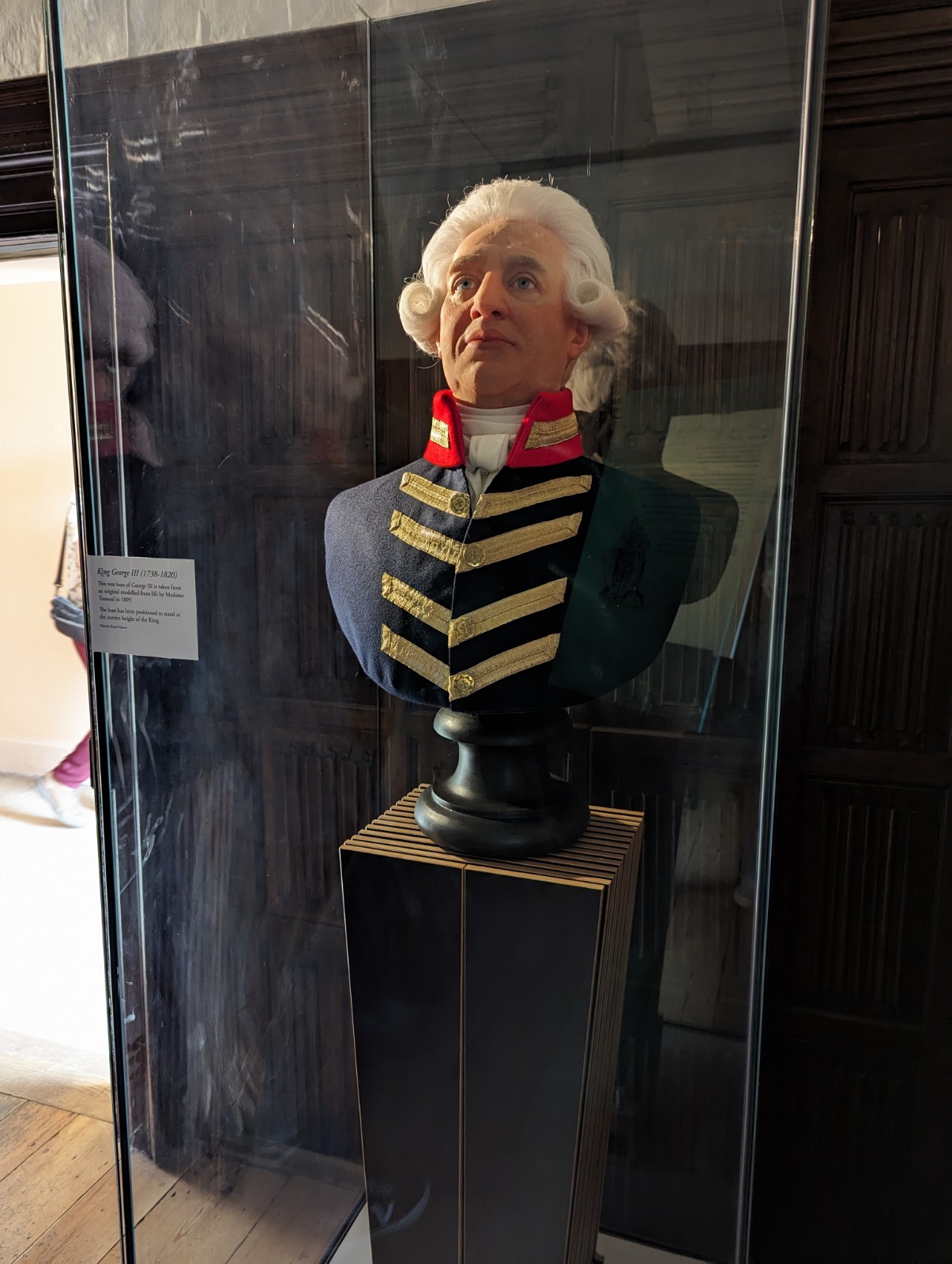
This model of King George III was taken from an original modelled from life by Madame Tussaud in 1809. (And I had no idea Mme Tussaud was making waxworks two hundred years ago.) The model stands at the King’s surprisingly small height. Plump and fair, he looks nothing like his tall, dark and handsome Netflix counterpart, Corey Mylchreest.
In fact in real life, apparently neither George nor Charlotte were attractive people. There were many cruel comments and caricatures of Charlotte, with people calling her ‘ugly’.
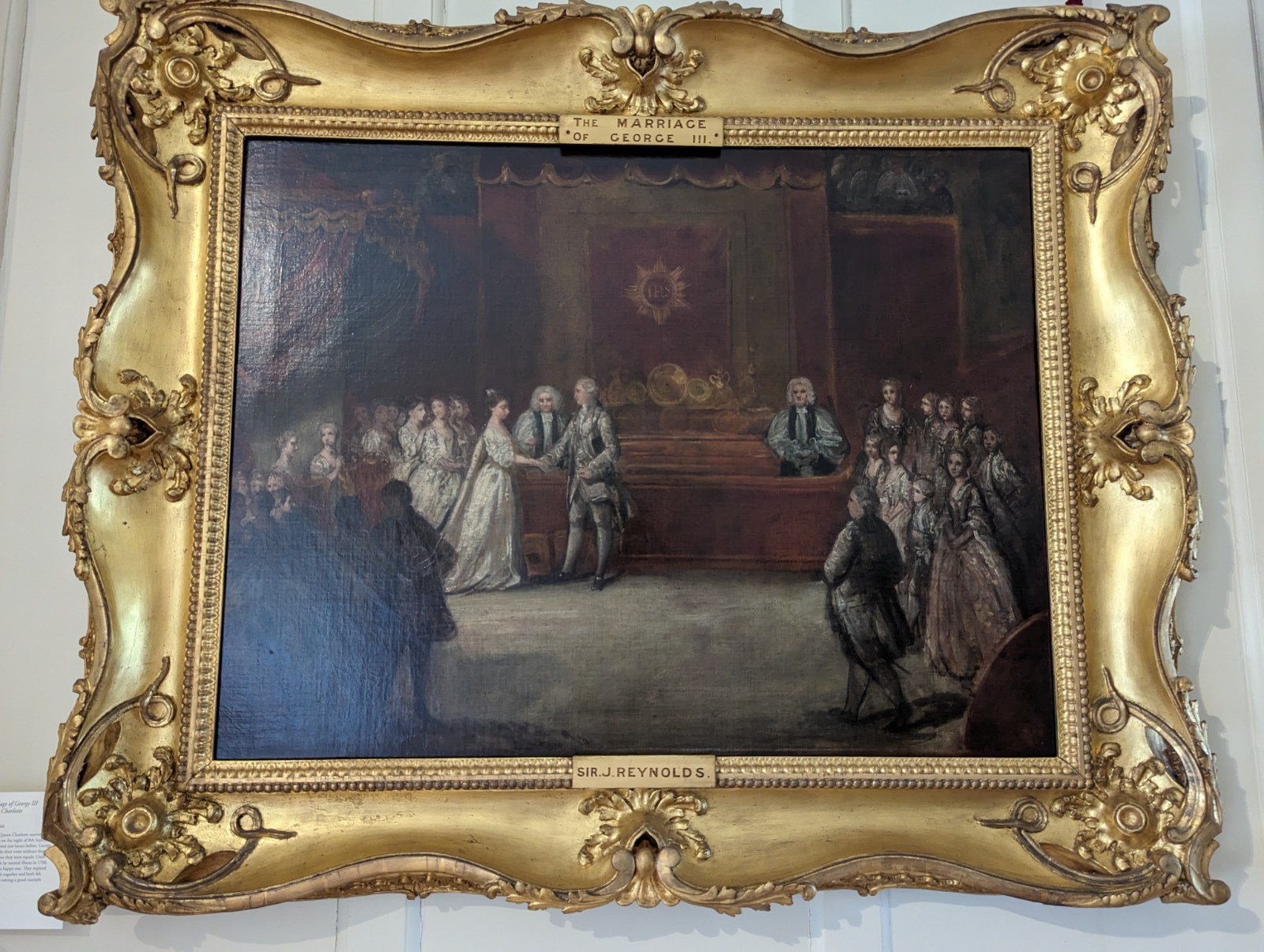
What is true to the series is that on the day of their wedding, they’d never met. The real-life Charlotte was seventeen, had only been in England six hours, and couldn’t speak any English. George was twenty-two. On the surface, it should have been a disaster, but the couple had a long and loving marriage, and fifteen children.
Mad King George III
George III was often ridiculed at the time – and also since that time (see this about his portrayal in the musical Hamilton). I think it’s wonderful that the Netflix series is sympathetic towards his mental health problems and portrays him as fundamentally a decent person. In the series, he insists Charlotte think of him as ‘just George’. I thought this was surely made up for the TV show, but apparently in real life King George insisted he and Charlotte start their marriage as equals – unheard of in that time. He was a conscientious and dedicated King who wanted to be a good monarch, and tried his best to be a loving husband and father.
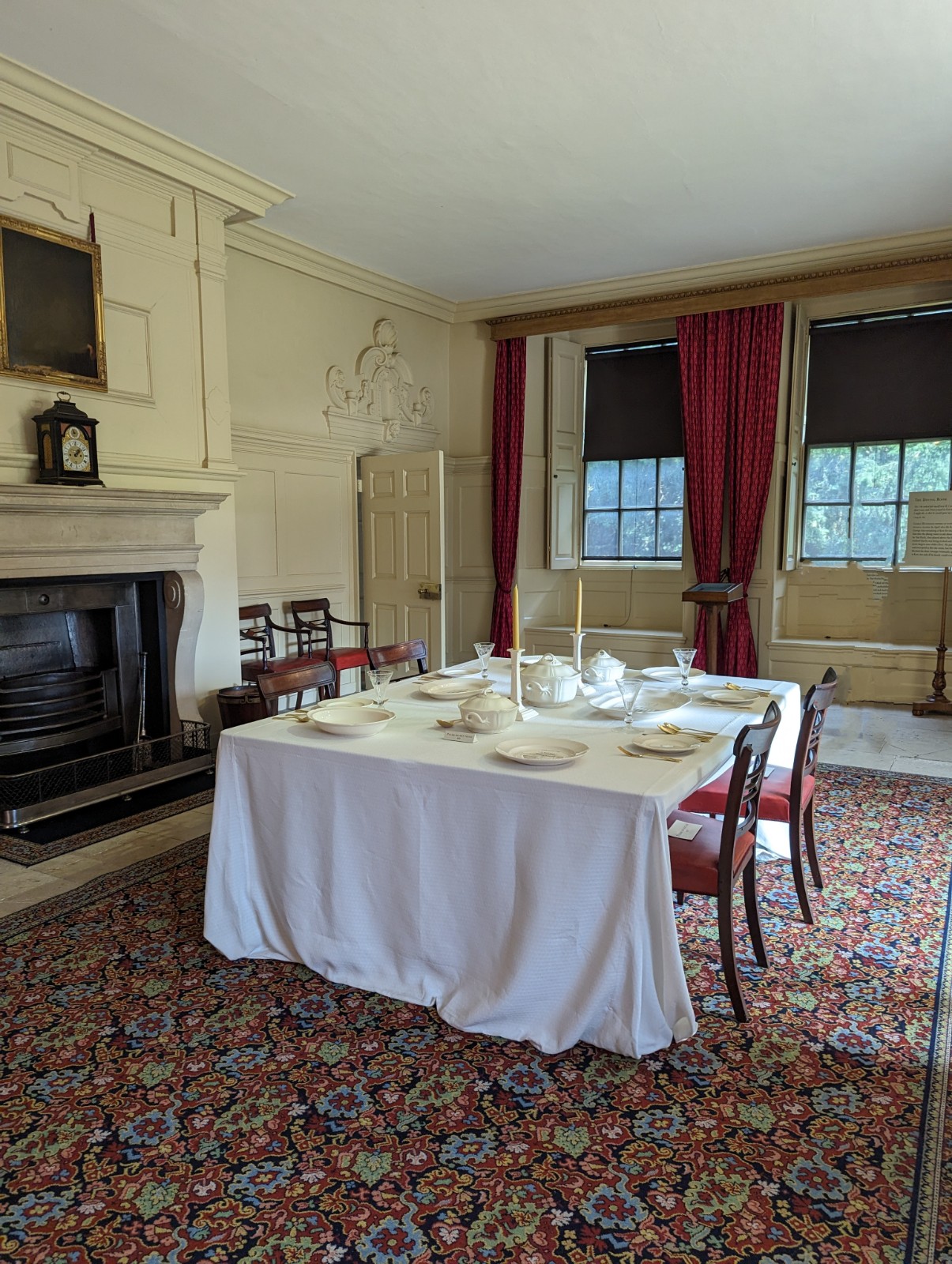
No one can be certain today what King George’s ‘madness’ actually was, although many historians suspect he had bipolar disorder. In real life, as in the Netflix show, he was subjected to a brutal treatment. Doctors tricked him into entering the breakfast room in Kew Palace by telling him they wanted to look at the portrait over the fireplace. They then shackled him to one of the chairs. It gives a real unpleasant tingle down the spine to stand in the same room where George was locked in and basically tortured to ‘cure’ him of his mental health problems.
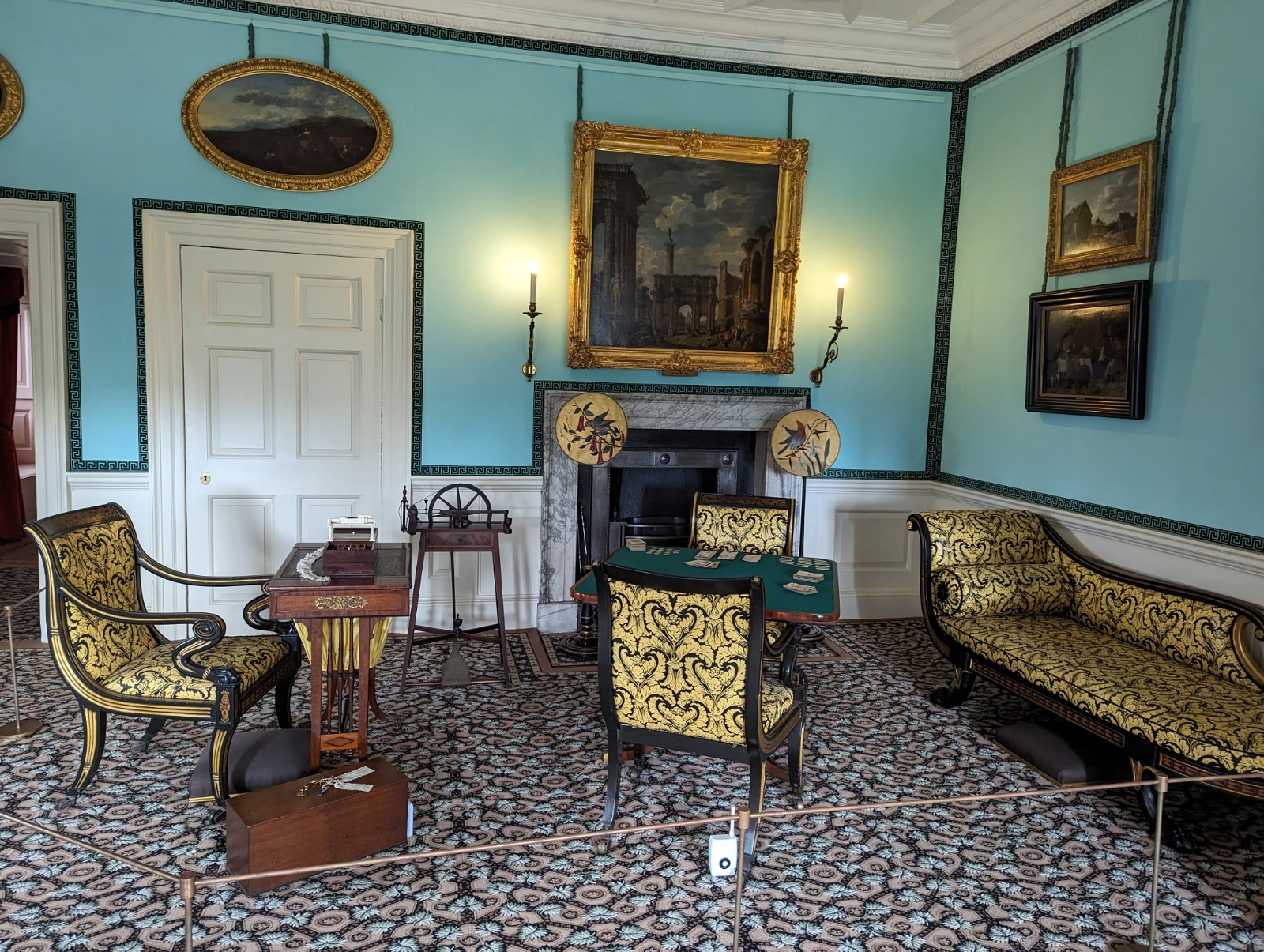
Kew Palace changed from a happy refuge, with its beautiful gardens, to a place of sadness and trouble. The King wanted his family around him in his illness, and Queen Charlotte, steadfast and loyal, supported him as much as she was able. Her boudoir in the palace is an elegant, sumptuous room, but for the queen and her daughters it must have seemed at times like a prison.
Her daughter Princess Amelia said, ‘I think it a great mercy we have so little company, as a made-up face with a heavy heart is a sad martyrdom.’
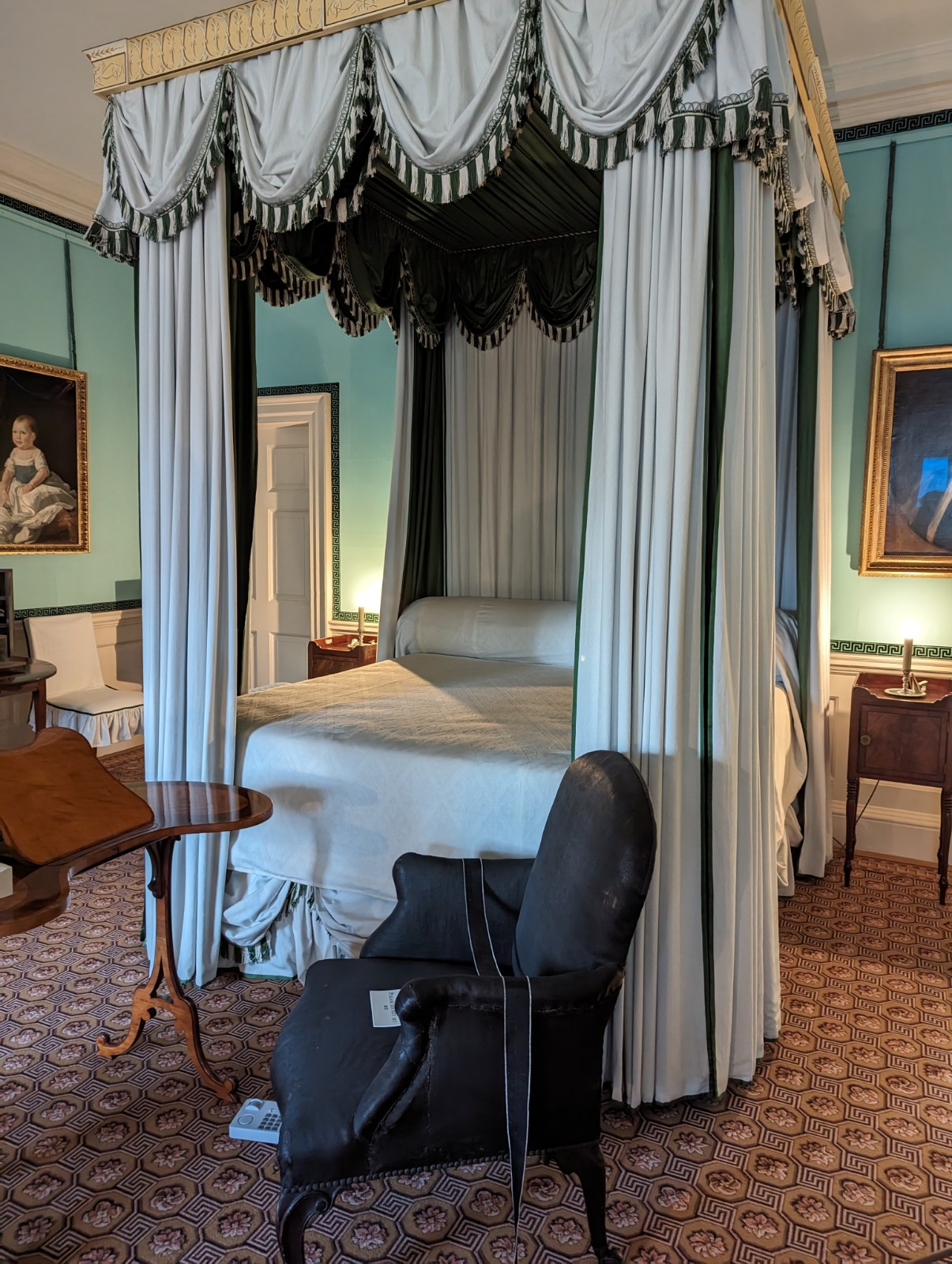
By 1818, King George was so mentally unwell he was kept away from his people in Windsor Castle. Queen Charlotte herself had also become ill from ‘dropsy’ (oedema). She died in this chair, with her daughters with her, in 1818. Again, it gives a real sensation of sadness and chill to walk through this room where her daughters were left grieving.

On the day of Queen Charlotte’s death, her daughters took a last walk around the beautiful gardens in Kew, knowing they would never return again. Her coffin was taken for burial at Windsor Castle, where they laid straw over the cobbles so that King George wouldn’t hear her passing and discover his beloved wife had died.
Kew Gardens
It was a wonderful and moving experience to visit Kew Palace and to be able to walk in these rooms. You can find out more about Kew Palace here. There is so much to discover, too, in Kew Gardens. Here are just a couple of photos of a wonderful place to visit…


*
I hope you enjoyed my brief history and photos. I loved the Queen Charlotte series and I think it shows in the best way how fiction can give us a fresh view of places, people and periods we might not otherwise have thought about.
If you’ve watched the series and enjoyed it, or if you know any more about King George III and Queen Charlotte’s story, please do let me know in the comments. I’d love to hear from you!


 Helena Fairfax
Leave a Reply