
Another month, and another authors’ Round Robin. This month the topic has been set by author Skye Taylor:

Indie publishing or trad?
Sounds a simple question, but there’s no straightforward answer. When it comes to choosing between indie and trad publishing, so much depends on the author’s experience and what they want to gain from publishing their book.
I’ve written on this topic before, but for those new to my blog in the past few years, here’s how my experience unfolded.
At the time I had my first novel published, I’d never considered self-publishing. Not many writers did think of it at the time, but in my case I was completely ignorant about publishing in general, and totally at sea.

My first novel – The Silk Romance – passed through the Romantic Novelists’ Association New Writers’ Scheme. My reader gave me invaluable advice on romance writing, and I still think of it today. After the second attempt, she thought my manuscript had real potential, which was a massive relief to a completely new author. She gave me the address of an editor at Harlequin/Mills & Boon.
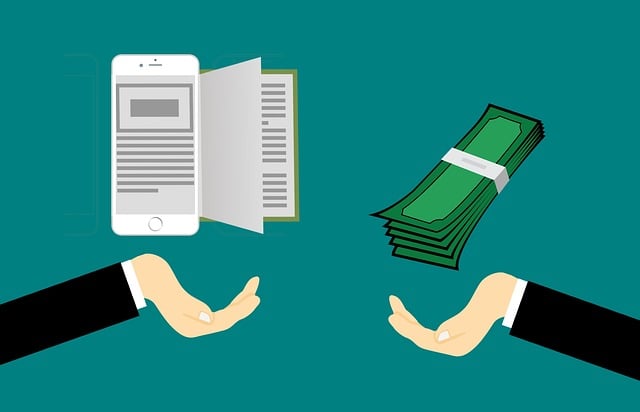
Indie vs traditional publishing
I sent the manuscript off and then I waited. And waited. And waited. And then I received my first rejection. At that time a rejection for this type of book was quite a blow. There were very few other publishers in the market who were interested in shorter romances, or if there were, I didn’t know of them.

I put the book on one side, and started another. M&B rejected it again. In the meantime, life got in the way, and I had to put writing on one side for two or three years. When I finally came back to it, in that short time everything had changed, and there were dozens – maybe hundreds – of small presses accepting manuscripts for digital print.
The very first publisher I sent The Silk Romance to accepted it. Like many new authors, I was so relieved someone actually wanted it, I signed a contract then and there. I sent them my second novel, which they also loved.

I met some wonderful people through this publisher, and was lucky (with the hindsight of experience, very lucky) to have a great editor. However, book sales were poor, marketing was non-existent, and there were rumours among other authors about royalties not being forthcoming. Eventually I took the rights back. To someone new to publishing, the experience was stressful, to say the least.
I had a third novel which I sent to a publisher closer to home. This publisher (Publisher A) was interested, but six months later I still hadn’t heard anything. In the meantime, I’d had an offer from a different publisher (Publisher B). I would sooner have gone with Publisher A, so I asked them had they made a decision. They asked me to wait, but they couldn’t tell me how long or that they’d definitely take the book at the end of it. I find this sort of thing stressful, too. In the end, I made the decision to go with Publisher B.
By this time I’d joined the Society of Authors, and found them a godsend. I was starting to realise that unless you are J.K. Rowling or Margaret Atwood, as an author you are right at the bottom of the food chain in the publishing world, even though you are the creator. The SoA looks after authors’ rights. They read my contract from Publisher B and advised me to insert a clause saying if sales fell below a certain limit in a twelve-month period, I could have my rights back. This I did.
The book had the lightest of light edits and a quick cover, and there it was, up for sale. Again, marketing was non-existent. Although I’d had that clause inserted, this didn’t mean the publisher couldn’t sell the audio rights away (which they did) or, for some reason only they thought wise, the entire North American rights, for which I received the sum of £11. (Yes, that’s eleven pounds. I haven’t missed off a couple of zeroes, or even one.)

You’d think writing heartwarming romances would be a feel-good experience, but again, I had a really stressful time.
My sales fell below a certain level and so, again, I asked for my rights back. They were returned, except for the audio and North American rights, obviously, because they’d been sold. I tried to get the North American rights back, and at first I was told I could have them, for the price of $500 (remember what I received for them?) and then I was told that, after all, they weren’t for sale. This was all monumentally stressful. Still, at least now I was free.
In the meantime I had another manuscript, which Publisher A loved. A meeting was arranged in London – quite a fair distance for me, and expensive to get to. I went to the meeting and was delighted to be offered a contract. A few weeks later I was told they ‘owed me an apology’, and after all, they wouldn’t publish my book. This event was stressful, time-consuming, and cost me money.

So after this, I thought, ‘I know. I’ll try getting an agent. They’ll be able to look after me.’ The road to getting an agent involved a lot of rejections and waiting. And waiting some more, and rejections again. A few showed an interest, which got my hopes up, only to have them dashed. One thought the idea for my next novel brilliant and asked for the full manuscript, only to never contact me again. One said she wanted to work with me, suggested quite a few rewrites (which I did) and then a few months later – months in which I didn’t approach any other agent – she told she was no longer representing my genre.
By this point, following rejection after rejection, and with poor sales through my publishers, I’d decided writing contemporary romances was obviously something I wasn’t good at. Still, I had four novels now, and I thought I had nothing to lose by self-publishing them apart from my time. I’d put them up on Amazon and then try my hand at a completely different genre.

I joined the Alliance of Independent Authors and found an editor and a brilliant cover designer. In the time I would otherwise have wasted sending query letters and feeling stressed about my publishers, I studied everything I could about self-publishing and marketing for authors, and determined I’d give my books the best chance I could.
To my absolute astonishment, my previously trad-published books began to sell. I sold the large print rights, my books were bought by libraries, and I still receive an income for books borrowed. I’ve also had talks recently about selling some of the other rights – something I’m very excited about and proud that I’ve managed to achieve without an agent.

I know trad publishing isn’t always a bad experience. My non-fiction book, Struggle and Suffrage in Halifax: Women’s Lives and the Fight for Equality, is traditionally published and my editors and production assistant were a delight to work with.
If you self-publish, you have to be prepared to run your own business, do all the marketing, create a commercial ‘product’ with an on-trend cover, etc. It’s time-consuming, and lately I haven’t had the time to look after my backlist as well as do my day job (editing for indie authors) and concentrate on writing the next novel.
The time involved is the drawback to the indie route, and I’d love all this work to be taken away from me so I can concentrate on my day job (editing for indie authors) and writing another novel. This is something I personally will need to think about for the future.
I’m looking forward to reading the other authors’ take on this topic. Please click on the links below for my fellow authors in the Round Robin.
Do you, as a reader, care if a book is self-published or traditionally published?
If you’re an author, do you have experience of self-publishing? How have you found it compared to traditional publishing?
If you have any comments at all, I’d love to hear from you!
Connie Vines http://mizging.blogspot.com/
Bob Rich https://wp.me/p3Xihq-3l0
Diane Bator https://escapewithawriter.wordpress.com/
Victoria Chatham http://www.victoriachatham.com
Skye Taylor http://www.skye-writer.com/blogging_by_the_sea


 Helena Fairfax
Leave a Reply