helena fairfax, freelance editor, yorkshire

Helena Fairfax

Making Real Settings Feel Real to Your Readers: 7 Tips for Writers

Another month, and another authors’ Round Robin. This month the topic has been set by author Skye Taylor

helena fairfax, freelance editor, fiction editor
How do you make real settings, either present-day or historical, feel authentic for readers?

Readers often say an authentic, immersive setting feels like a character in itself. The trick is not to show readers how much research you’ve done, and not even just to build a realistic world, but to create a backdrop for your specific characters to act out their story.

It can help to ask yourself what setting your characters need, and how important this setting is for their character.

Anne Shirley’s story would be completely different outside Prince Edward Island, Bridget Jones’s would be different outside London, and without eighteenth-century Scotland Claire Fraser would be a different character altogether.

Prince Edward Island
Image by Brigitte Werner from Pixabay

The most compelling settings feel lived-in and three-dimensional, and by the end of the story they feel as real to readers as their own hometown.

Here are my 7 tips on making real settings feel authentic
Tip one

Try to give readers some idea of the setting early in the opening. Sometimes, as an editor, I start a manuscript feeling a little confused as to where and when the events are taking place. Readers like to feel orientated early on (unless you deliberately intend for them to wait).

Here are a couple of great examples of authors who have set the real setting from the get-go, and in a compelling way:
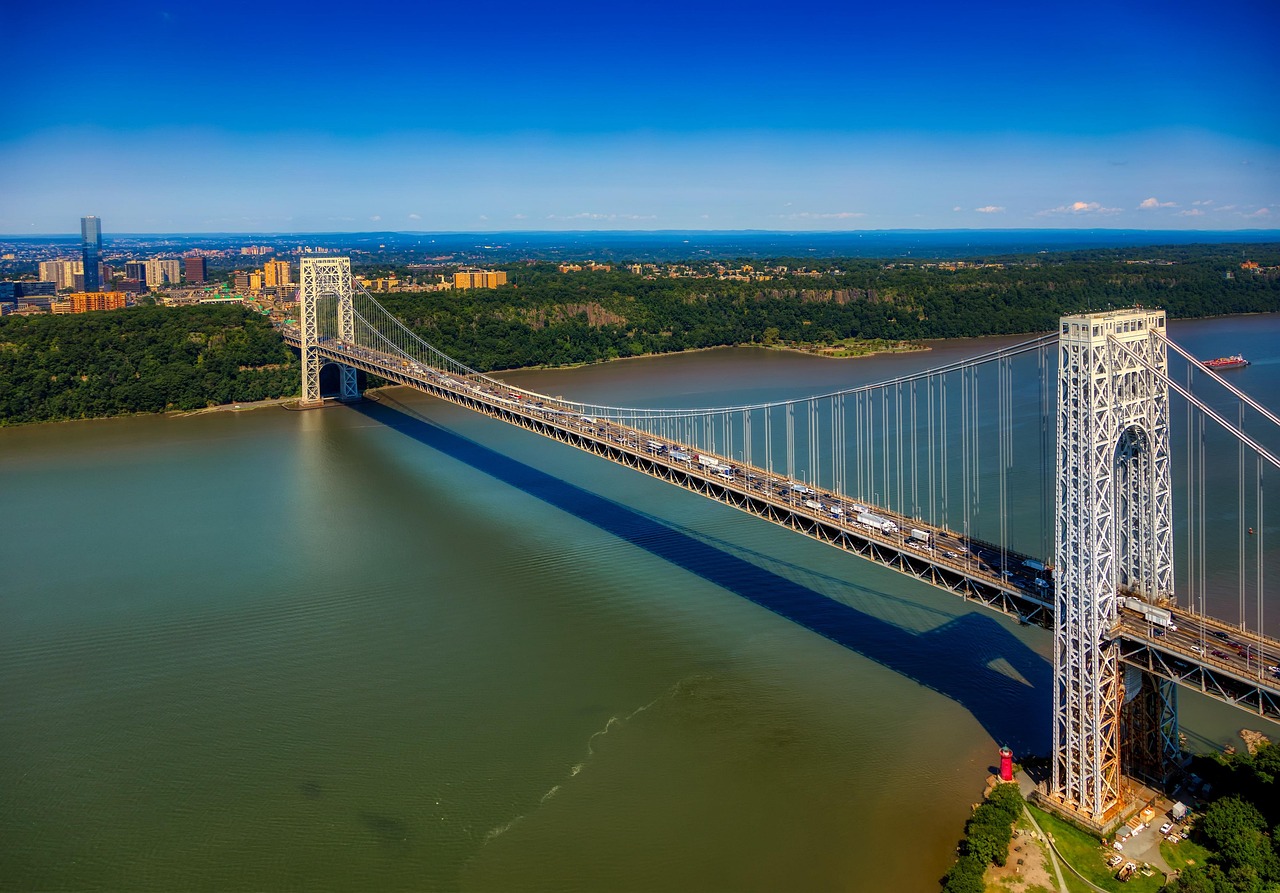
Image courtesy of Pixabay

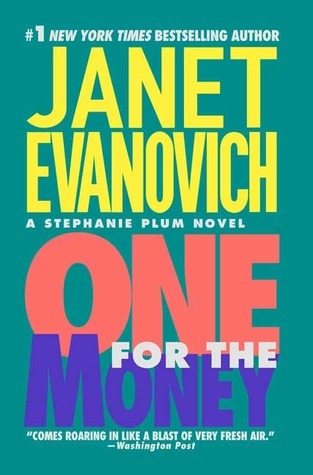
‘ There are some men who enter a woman’s life and screw it up forever. Joseph Morelli did this to me – not forever, but periodically.

Morelli and I were both born and raised in a blue-collar chunk of Trenton called the burg. Houses were attached and narrow. Yards were small. Cars were American. The people were mostly of Italian descent, with enough Hungarians and Germans thrown in to offset inbreeding.’

This is from Janet Evanovich’s One for the Money. It’s a great opening, not just because it gives a sense of place straightaway, but it also shows the heroine’s humorous character – and leaves us wanting to know what Morelli did to upset her!
Here’s a second, totally different example:

‘In these times of ours, though concerning the exact year there is no need to be precise, a boat of dirty and disreputable appearance, with two figures in it, floated on the Thames, between Southwark Bridge, which is of iron, and London Bridge, which is of stone, as an autumn evening was closing in.’

This could only be Charles Dickens, master of the realistic London setting, and this is from the brilliant Our Mutual Friend.
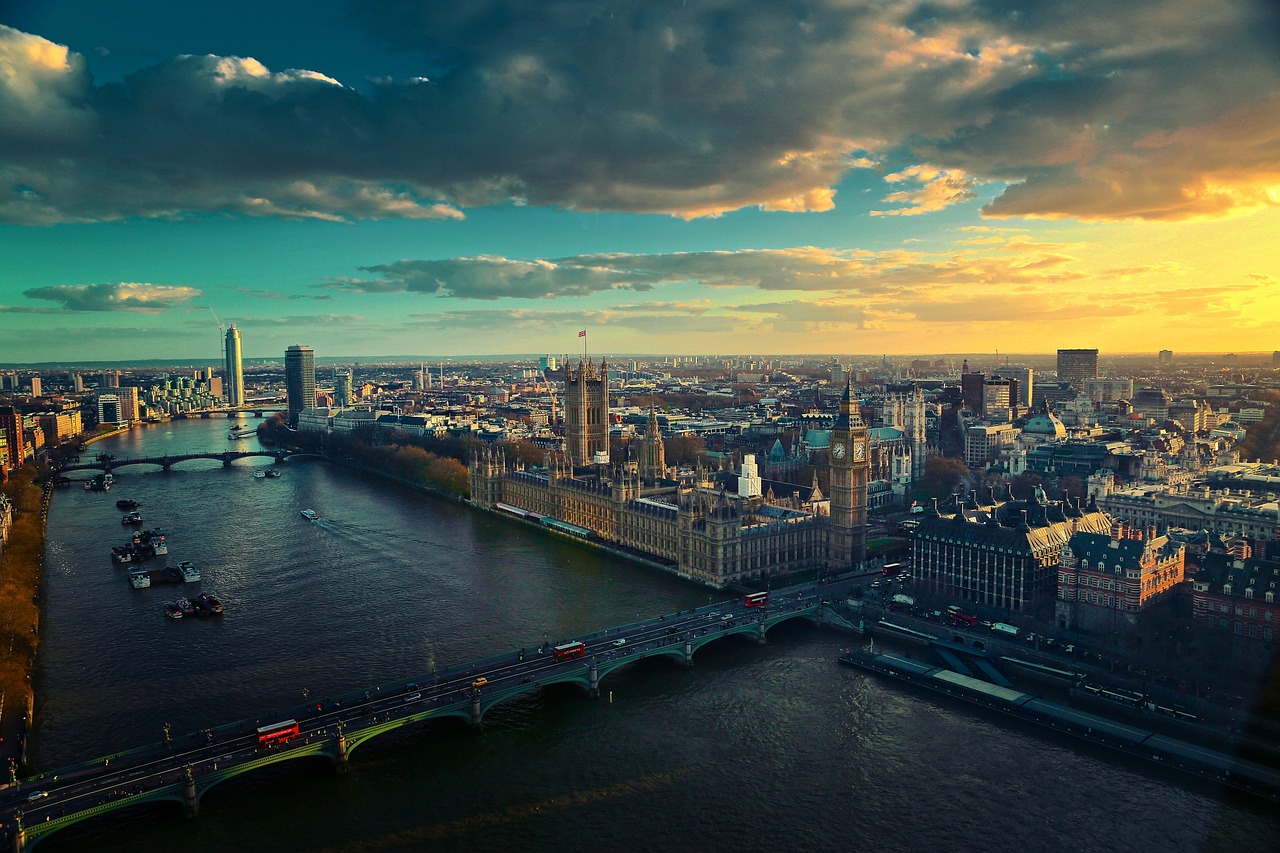
Image by liushuquan from Pixabay
Tip two

Engage all the senses

In order to immerse readers properly, try conjuring up all the senses, and not just sight.

What are the distinctive sounds of your setting? In a historical novel, without the rumble of traffic and passing aircraft that most of us town-dwellers live with, what sounds would people hear?

What smells characterise your location? Salt air on the coast? Industrial pollution? A sewage-filled street in Victorian times?

How does the weather affect the setting? And your character’s mood? (I wrote a post previously on the symbolism of the seasons in literature, with some examples.)

Tip three

Remember who is telling your story

A stranger will see a setting differently from a local. I live near the Yorkshire moors. A German friend from the big city of Dortmund once visited and was so struck by the landscape, he told me he was ‘suffering from green shock’. His culture shock stayed with me and was part of the backbone to my novel The Summer of Love and Secrets, in which a group of teenage Londoners visit the moors for a week.

helena fairfax, freelance editor, author

These contrasts can reveal a lot about character. A rich man would react to a Victorian London slum differently to a man who lived there. A character’s mood, or their goals can also affect how the setting will come across to readers. (Are they looking for a criminal? Are they in hiding? Are they on holiday?)

If the setting is familiar to a character, then what details do you need to show? In historical settings, for example, characters wouldn’t point out details that to them are perfectly ordinary.

Tip four

Capture the language and dialect

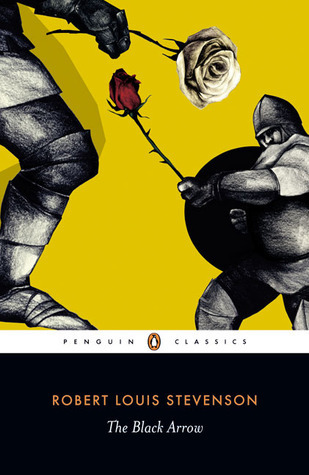
Dropping in regional phrases and slang can help give a strong idea of setting. Knowing how much and how little is tricky. I’ve edited novels where the author is aiming to give an idea of historical setting, but in trying too hard, the dialogue comes across as overblown, and not something ordinary people would say. In general, less is more – although Robert Louis Stevenson, whose books I love, has been accused of overdoing it.

Stevenson famously said about his novel The Black Arrow ‘Tushery, by the mass! Ay, friend, a whole tale of tushery. And every tusher tushes me so free, that may I be tushed if the whole thing is worth a tush.’ Readers, including me, loved the tushery!
Having said that…

Tip five

Don’t over do it

Novels are about characters and plot. The setting is a vital part of the story, but ask yourself how much description is needed. Is it important for the character development? Does it advance the plot? If the description were cut, would it matter? Readers love to fill in the gaps with their own imagination. Using our own imaginations to picture things and making our own mental images is part of what makes reading novels so much fun.

Tip six

Use subtle context

If characters actually live in a setting, they wouldn’t remark on their normal surroundings. For example, where I live there are too many streetlights to see the night sky properly. When I’ve been deep in the countryside, I’m always struck by the beauty of the night sky – but locals who are used to it wouldn’t remark on it the same way I do. It takes some ingenuity to get across what’s normal to your characters – especially when trying to drop in period detail – but when done subtly the details can add depth to the setting.
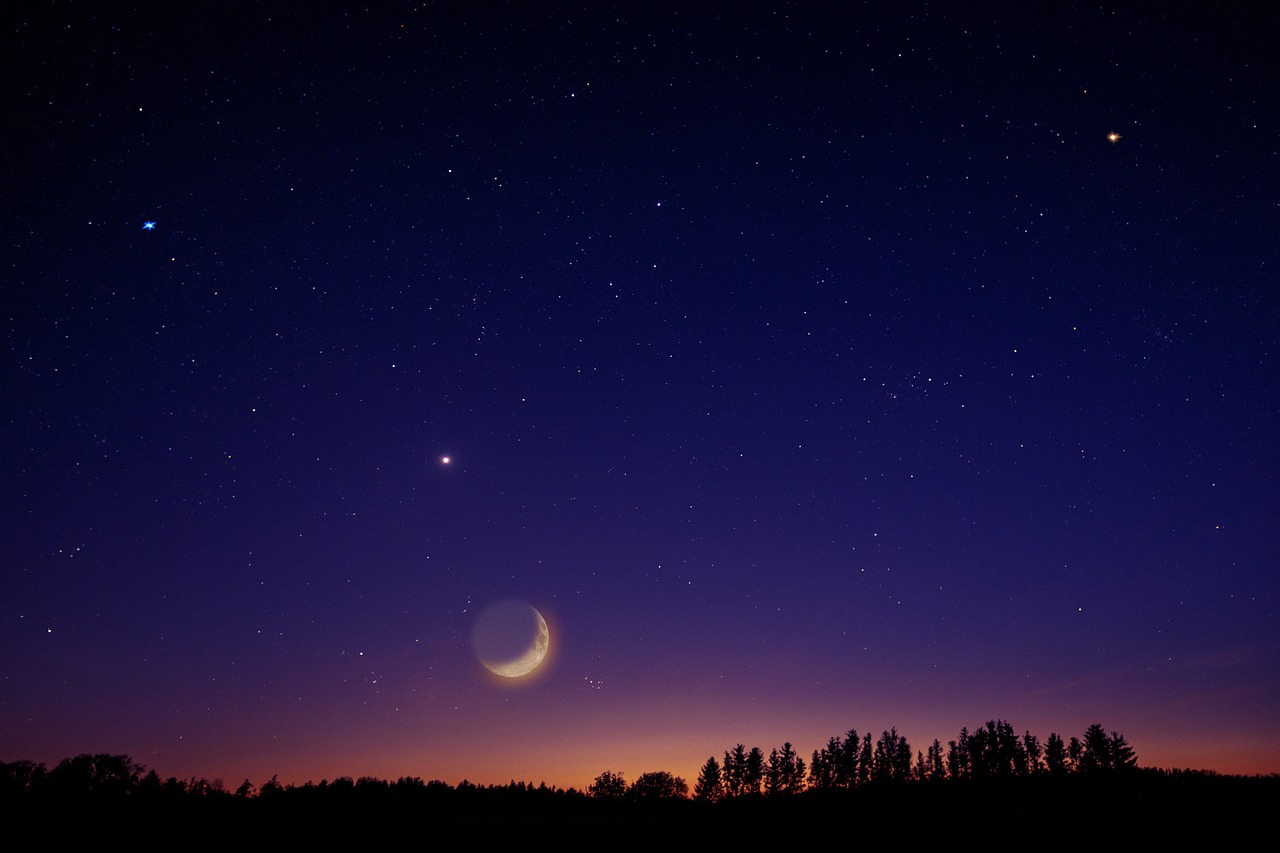
Image by Bruno from Pixabay
Tip seven

Local culture is also part of the setting

Culture is part of setting, and all sorts of things make up a local culture: what people eat, when they eat and who with, local customs and holidays, religious and political influences on daily life. If your novel is set in a Buddhist monastery it’s clearly going to have a different vibe to one set in Las Vegas.

Image by Klaus Heller from Pixabay

I live in a northern town. It’s only when my London family and friends come to visit that I notice there is a different culture here to the ones they experience. The pubs are quieter. Some pubs stop serving food at eight (the shock!). Londoners and big-city dwellers remark on people in shops/bars being ‘friendly’ here, where to me this is just normal behaviour. (When I go to London, the rich diversity of the culture stands out to me, where for Londoners this is just normal.)

*

There is much more to be said about creating settings than I’ve managed in this post, and I’m looking forward to reading the other authors’ take on this topic!

Please click on the links below for my fellow authors in the Round Robin.

Anne Stenhouse http://annestenhousenovelist.wordpress.com

Connie Vines http://mizging.blogspot.com/

Skye Taylor http://www.skye-writer.com/blogging_by_the_sea

Judith Copek https://lynx-sis.blogspot.com/

A.J. Maguire https://ajmaguire.com/

Bob Rich  https://wp.me/p3Xihq-3r1

Belinda Edwards https://booksbybelinda.com/blog/

Sally Odgers https://behindsallysbooks.blogspot.com/

12 responses to “Making Real Settings Feel Real to Your Readers: 7 Tips for Writers”

  1. Dr Bob Rich Avatar

    Helena, I hope one day you put these essays together into a writing book. This is excellent.

    I’ve just finished revising one of my books, and as I read your post, I was judging my book by your criteria. I think it passes.

    :)
    Bob

    Liked by 1 person

    1. Helena Fairfax Avatar

      Hi Bob, thanks so much for your kind comment. I really enjoy these Round Robins, as you know, and the topics Skye sets for us are always thought-provoking. I’m sure from reading your stories your book would pass muster!

      Like

  2. jameschristie466 Avatar
    jameschristie466

    I definitely tend to write what I know, and to do it sparely. I wrote this while I was actually in the train going through this very landscape:

    “The train skirted Loch Lomond and climbed towards Crianlarich where the carriages would split between the Oban and Fort William/Mallaig lines. Smokers flocked onto the platform for a fag while the carriages were uncoupled and once this was complete his part of the train headed north. Past Tyndrum and Bridge of Orchy, through a winter landscape of white mountains and dead grass, where smooth boulders broke the flow of icy streams and plantations of skeletal trees supported the frozen earth.

    An unforgiving land, indifferent to the fate of those who’d fought and died for it.

    The train crept out onto Rannoch Moor. The flanks of the mountains fell away. Above, a blanket of cumulus cloud stretched across the firmament. Ruffled and patchy, it diffused the radiance from above. At the edge of the picture, faraway hills stood like sculptures in ice, tinted a deep blue-grey. Nearer, Sandiman saw small black bogs studded with rocky outcrops, outposts in a sea of scrub. He did not see anything move.

    God’s spare room, he thought, and smiled. What else could you call it?”

    (“Macnab”)

    I knew a guy once (good author) who hadn’t been to the tropics and tried to write them. I’d spent months in the Australian tropics, near Cairns and Innisfail, and knew about 95% humidity and cane toads trying to gnaw your toe off.

    And I’m afraid it took me all of one second to see that he didn’t have a clue what he was talking about. I tried to break it to him gently, but it was too much for him. He took flight from the nearest cliff, tear-stained manuscript in hand, saying “farewell, cruel world!”

    Well, no, he didn’t. But while the literary ego can be a fragile one, it’s always best to write as accurately as you can about a place as there are a hundred critics ready to pounce on you if you get the feel and detail of a place wrong…

    Liked by 1 person

    1. Helena Fairfax Avatar

      Haha! I love the image of the writer and his tear-stained manuscript :D
      You’re so right about all the critics. Readers are so much closer to authors now, and if you’ve made an error, someone somewhere will point it out to you. On the other hand, it is a lot easier to research these days. I’ve never (and never will!) jumped out of a plane, but I watched many videos on social media and managed to write a credible parachute scene.
      I loved the Scottish imagery. Someone outside Scotland would probably see only the romance as they pass through. It probably takes a local to see also that this is ‘an unforgiving land’.
      Thanks for comment, as ever, and thanks for persevering with WordPress!

      Liked by 1 person

  3. jameschristie466 Avatar
    jameschristie466

    Actually, can’t resist this… My father was in the Parachute Regiment, and I did some research for a scene in the unpublished Dru novella “Graveyard of Empires” where she does actually jump out of a Hercules C-130.

    So, why not:

    ‘A little less than an hour later, the loadmaster had kitted them out. He’d adjusted Drusilla’s helmet and, despite her demurrals that she didn’t need to breathe, fitted an oxygen mask over her face, explaining it would stop her flesh freezing and maybe being flayed off during the drop. He’d seen her eyes widen behind the goggles but she’d accepted his words.

    She had more than enough to think about anyway. The parachute was heavy enough to pull her back and off balance, the harness looped and chafed between her legs and the webbing centred on an easy release clip in the middle of her chest which constricted her lungs and hurt her breasts. The whole assemblage was attached to an overhead pole by something Mr McCann called a static line. Apparently this opened the chute for her, which was something, although it all still felt a bit like being prepared for the rope at Tyburn.

    She wished she’d brought her needlepoint.

    Thank God she didn’t need to breathe, though. She’d scarcely have been able to. Dru found herself feeling quite some admiration for the oxygen dependent humans who had to go through all this rigmarole…

    And she could bloody MURDER Spike. All over again. While she had to be trussed up like an undead turkey, he got to recline in a comfortable sealed pallet. Despite the cuts, bruises and dents she’d inflicted on that handsome face, he’d just sat there looking mockingly at her all the time.

    Just because the sun was lethal to him. Once they got down, maybe she’d open that pallet a crack and stir-fry him just a bit. It would pass the time ‛til dusk…

    Then there was a flurry of motion, the sealing of the pallet, a friendly pat on her shoulder from Mr McCann – God, but he was a good man underneath that stern exterior, a little like her Xander – and a gesture towards the red light above and to her right.

    The red light due shortly to turn green, the sign for them to make the drop.

    Dru faced the loading ramp, heard the door to the cockpit close, and knew the die was cast.

    Once more unto the breach, all right.

    Then it all happened at once. The loading ramp cracked open, the light went to green and the pallet went on its way, shooting out into the slipstream beneath the thunder of the engines.

    Now it was her turn. She’d dreamed of flying to the moon often enough. Now she’d have to fall from it…

    And suddenly she calmed. Her friend was below, so if she had to expel herself from a great metal goose like a veritable egg, then that was what she’d do.

    Dru ran forward to her fate, felt the static line jerk the parachute from its pack and detach with a snap, and as she glimpsed the tail of the Hercules dwindling above her, the chute caught the air, slowing her fall and jerking her heart and lungs right into her mouth. She puked blood into her mask, saw the planet’s curve blearily through perspex, grabbed hold of the steering lines and slowly, slowly got her bearings.

    A long way still to fall, but no cones of fire from anti-aircraft guns to worry about so she might as well enjoy the view. Blue skies, still fine to see, dark fringes of forest and snow on the slopes of the Kush leading down to the northern plains and high passes to Uzbekistan.

    Dru hit the sloping ground hard and fast, not ready for the way it suddenly rushed up at her, feeling the jar of impact crack through her bones but throwing the harness off with sudden confidence and gathering up the parachute nylon in seconds.

    Vampire’s ears picked up the sound of the pallet crashing down through the pine trees. She pulled the rectangular box into a clearing, rattled Spike around inside it with vicious glee, tidied herself up and sat down to wait for dusk. She couldn’t hear any sounds of danger, not even the usual gunfire in the hills, and contented herself with the thought that unless the Atula Khan really were out there, she and Spike WERE the danger.

    It was strangely comforting to sit at peace with her consort, although she missed her knitting and longed for a sweet bowl of tea from a chaikhana in the hills…’

    (Spike & Dru : the Graveyard of Empires)

    So there we have it. I’ve changed one word, which otherwise would give away the secret of the lost story arc, but otherwise all of this awaits the “Buffy” fans, whenever they wake up to claim it…

    P. S. the parachute sequence in “The Wild Geese” is also very impressive.

    Liked by 1 person

    1. Helena Fairfax Avatar

      Wow, James, that was great! I didn’t know your dad was in the Parachute Regiment. I have every admiration for him. Your passage has reminded me (again!) why I would never jump out of a plane. You hit it on the head.

      Liked by 1 person

  4. Skye-writer Avatar

    A truly AWESOME list of tips for writers, especially new ones, but really, all of us. I often wish Diana Gabaldon adhered to Tip #5 – don’t overdo it. I love Jamie Fraser and Clair, but after the third book I found myself flipping pages. When a 300 page story became a 1000 page slog I gave up. I know she has millions of faithful followers but I am put off by a things like a chapter long description of making clay conduits.

    Liked by 1 person

    1. Helena Fairfax Avatar

      Thanks so much for your comment, Skye!
      I haven’t read past the first Outlander. For me this period is vividly brought to life in D.K. Broster’s The Flight of the Heron. I loved this novel as a teenager. Perhaps the scene-setting is again a little slow, but the characters and the story have always stayed with me.
      Thanks for setting another great topic.

      Like

  5. AJ Maguire Avatar

    I love all of this.
    Thank you so much for posting this month.

    Liked by 1 person

    1. Helena Fairfax Avatar

      Thanks so much for dropping in, Aimee. I’ve really enjoyed everyone’s posts!

      Like

  6. Marsha R. West Avatar

    Hey, Helena. I like to think of the setting as one of the characters. Great post. I’ll share.

    Liked by 1 person

    1. Helena Fairfax Avatar

      Thanks so much, Marsha!

      Like

Leave a Reply

Your email address will not be published. Required fields are marked *

This site uses Akismet to reduce spam. Learn how your comment data is processed.