
Another month… and our first authors’ Round Robin of the year! This month, author Skye Taylor has an interesting question for us:

What’s been your most fun or eye-opening research experience?
I’ve had a lot of fun researching my contemporary romances, from the south coast of France to the divers of the Lake District – but my most eye-opening research was for my non-fiction social history, Struggle and Suffrage in Halifax: Women’s Lives and the Fight for Equality.
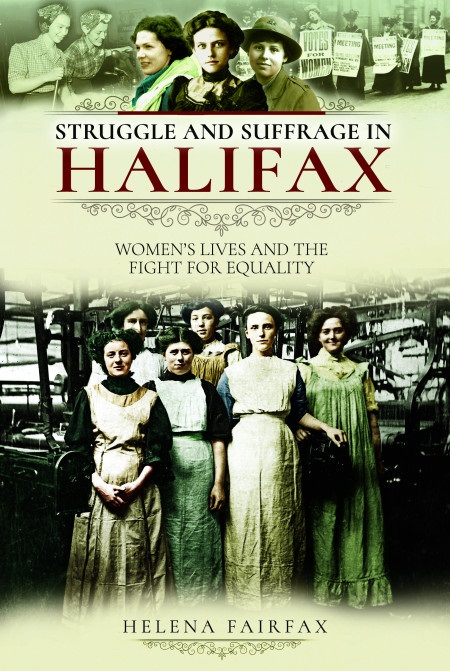
This is a talk I gave to a group of women in West Yorkshire, about just why I found the history books astonishing. This speech is my personal toast to those ‘ladies’ who have gone before us, and whose voices were never heard.
A Toast to ‘The Ladies’
I’m not a historian. I write fiction. To be exact, I write romance – a genre where women take centre stage. In the twenty-first-century romance novel, the heroine’s independence is taken for granted. She has her own money, she has her own interests and friends, and she’s not looking for a man to look after her or to make her life complete. In fact, in very many romance novels the heroine is the one who ‘rescues’ or transforms the man.
When I accepted a commission by the publisher Pen & Sword to write a history of women’s lives in West Yorkshire, I thought the book would be a step outside my normal writing sphere, but I accepted it as a challenge. And as for researching women’s lives in Halifax, really, how hard could that be? I looked forward to dipping into the wealth of information I’d no doubt find in the archives.
And this is some of what I discovered:
- Halifax Town Hall was designed by Charles Barry, who designed the Houses of Parliament;
- Edward Akroyd, the millionaire textile manufacturer, was the founder of the first Working Men’s College outside London;
- John Mackintosh opened his sweet shop in 1890, ‘and the idea for Mackintosh’s Toffee… came soon after’;
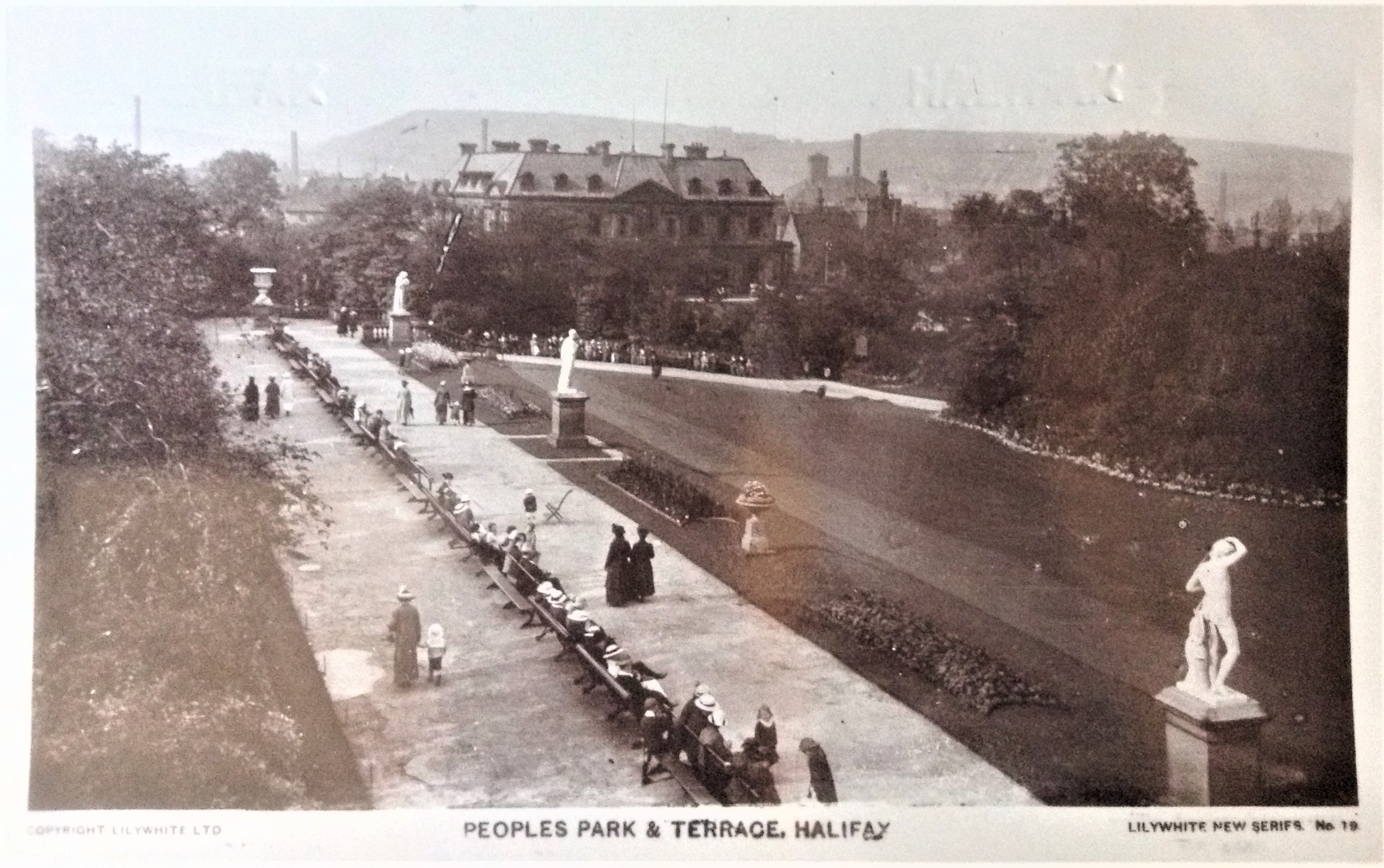
- the People’s Park was donated by Sir Francis Crossley, not for all ‘the people’ but ‘to be within the walk of every working man in Halifax; that he shall go to take his stroll there after he has done his hard day’s toil.’
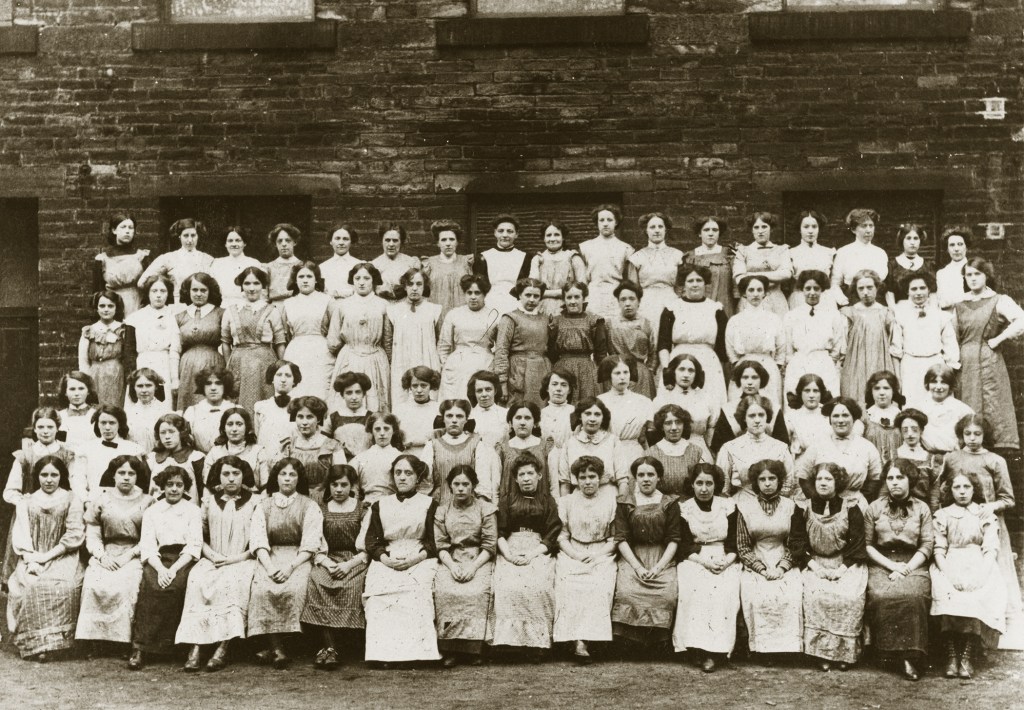
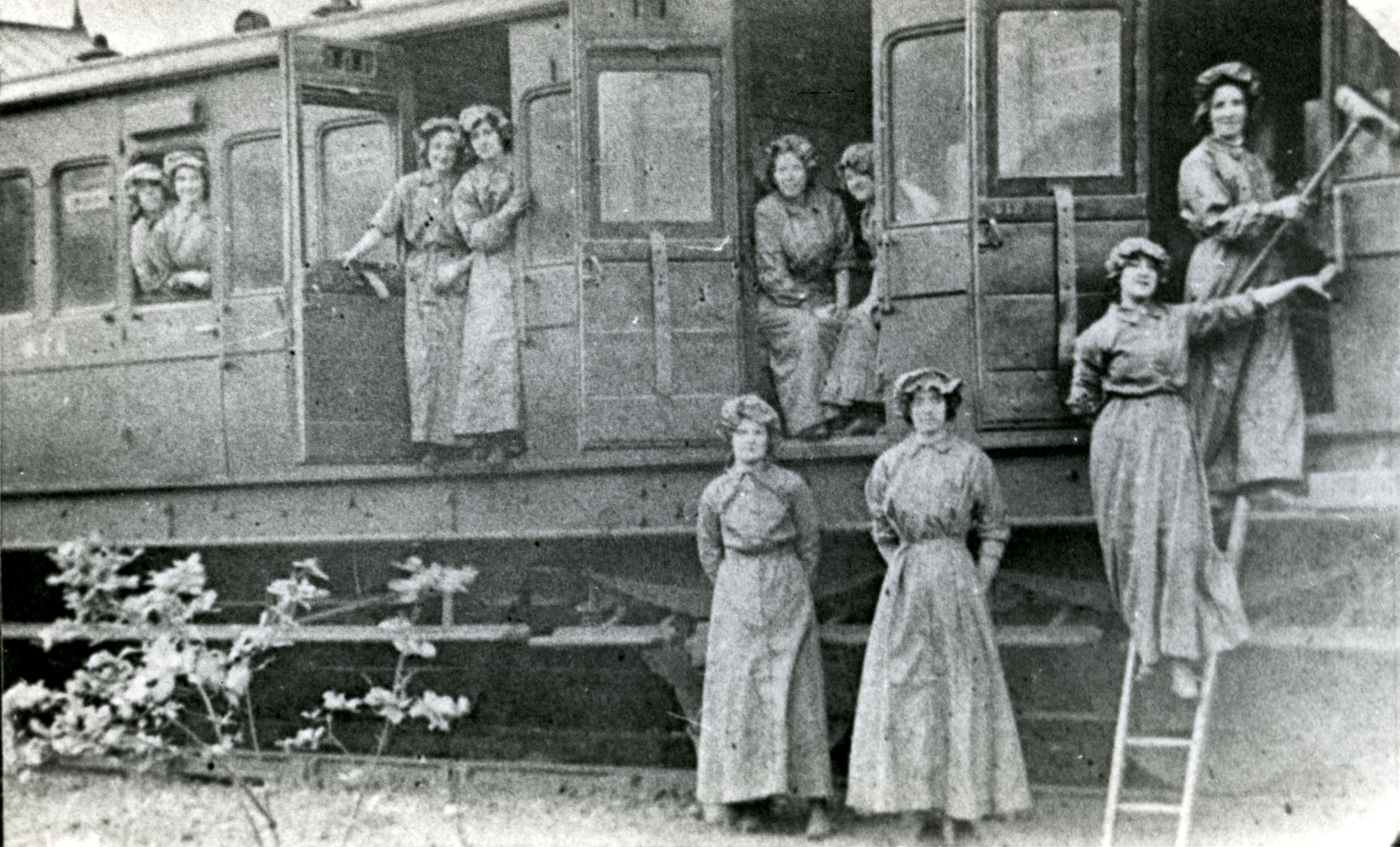
And so it went on. As I leafed through the history books, I began to wonder whether Halifax was entirely populated by men in the nineteenth century. Where on earth had fifty percent of the population disappeared to? While the men were strolling through the park at the end of their working day, what were the women doing?
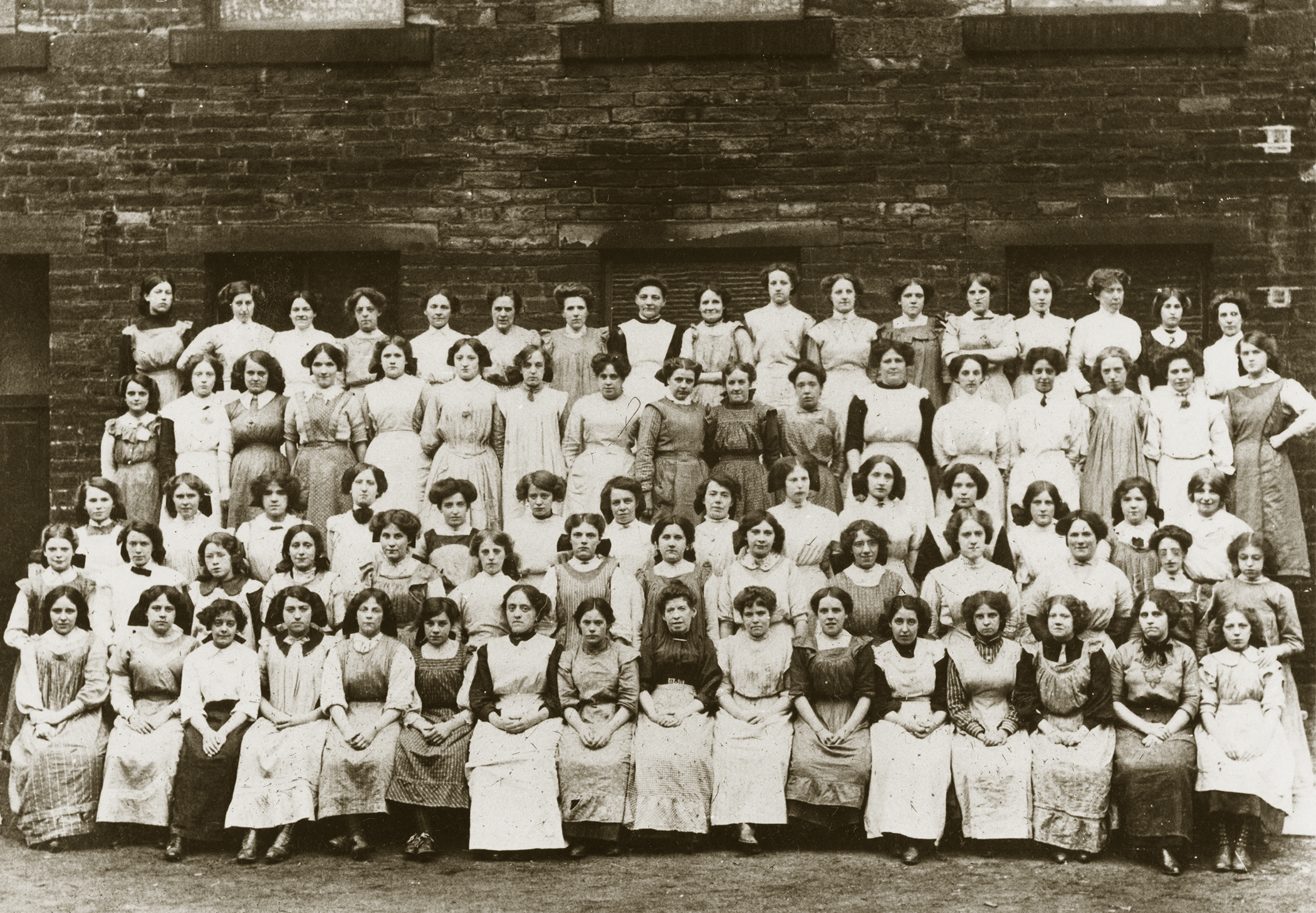
I pictured them at home, still hard at work after their own ‘hard day’s toil’ in the factory, scrubbing floors and mending clothes and feeding the children. I felt them as a completely silent presence in the archives, unrecorded, their mouths bound.
I found a report in a newspaper which I read several times over. On Monday January 14th 1839, a dinner was held at the Odd Fellows’ Hall in Bradford in honour of Mr Peter Bussey, a Chartist and agitator for ‘universal suffrage’.
In those days only the wealthy could vote (and only wealthy men, at that). The Chartists were fighting for the vote to be extended to all men, regardless of income. It was a noble cause, but the terminology still jars, almost two hundred years later. ‘Universal suffrage’? How could it be ‘universal’ if it didn’t include women?
The evening began with a toast to ‘The People. The only source of legitimate power’.
This is the part I read several times, in order to make sure I fully understood. It’s a worthy toast, but since the dinner ended with a separate toast to ‘The Ladies’, I could only draw the conclusion that ‘the Ladies’ were evidently not considered part of ‘the People’. ‘The People’ were men only, and men were therefore ‘the only source of legitimate power’.
The only source? Really? Take a look around the room, gentlemen.
In the final irony, ‘the Ladies’ weren’t even given the opportunity to answer their own toast. It was answered ‘in an enthusiastic speech by Mr G.J. Harney of London, who was applauded most warmly’.
Well done, Mr Harney. There isn’t a single mention of a woman in the entire article, and yet they must have been there. Were they just ghostly figures, shimmering in their evening finery, their mouths opening in vain, unable to make themselves heard?
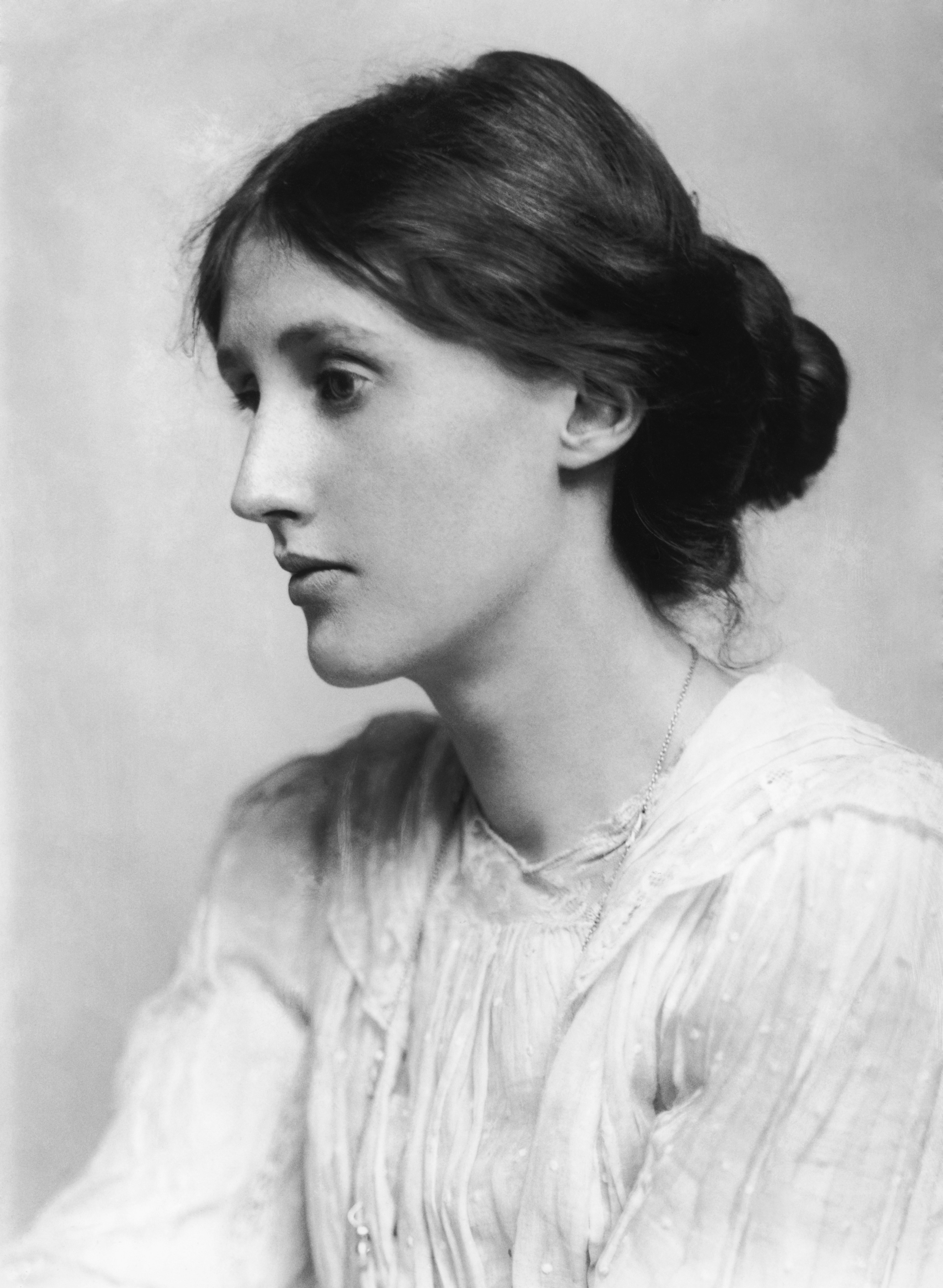
After weeks of this type of research, I began to discover for myself what Virginia Woolf had described in her essay on Women and Fiction in 1929:
The answer to the history of women’s lives ‘lies locked in old diaries, stuffed away in old drawers, half-obliterated in the memories of the aged. It is to be found in the lives of the obscure…where the figures of generations of women are so dimly, so fitfully perceived.
For very little is known about women. The history of England is the history of the male line, not of the female.’
It was only by closing the history books and looking instead for ‘old diaries’, memoirs, and letters, that I managed to gradually piece together a picture of the lives of the women of Halifax.
As I mentioned, I’m no historian. A woman was Prime Minister when I came of age to vote. I grew up with a cavalier acceptance of my rights. Looking through the archives made me understand just how far women are from genuine equality, and just how easily everything women worked for could be lost. It made me think much more deeply about the countries where women’s voices are still not heard today, and to reflect on all those intelligent, hard-working, tough, spirited women who lived before us, who contributed to the greater good of theirs and our society, and about the deep shame of their being invisible and unacknowledged in the history books.
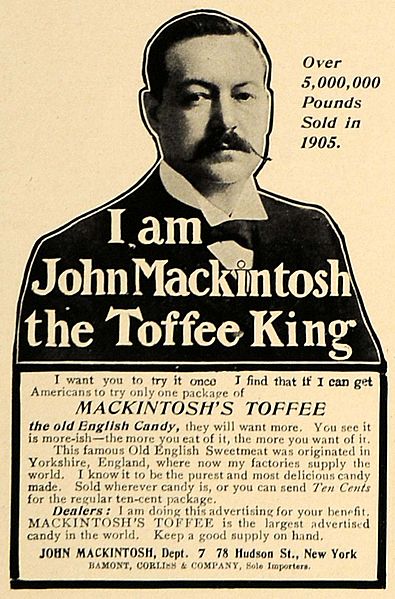
(And by the way, that recipe for Mackintosh’s toffee that ‘came soon after’ John Mackintosh opened his shop, and which led to a multi-million pound global industry, was invented by his wife, Violet Mackintosh.)
If you’re interested in what I discovered about women’s lives and the long fight for equality in every sphere, then my publishers have a special offer on the book at the time of writing, or else it’s available on Amazon or bookshops and libraries.
*
I hope you’ve found this month’s topic interesting! If you’re a writer, I’d be interested to know what’s been your most eye-opening or fun research? Please do let me know in the comments.
And if you’d like to hear what the other authors in the Round Robin have to say on about their own research, please click on the links below.
Bob Rich https://wp.me/p3Xihq-3Df
Sally Odgers https://behindsallysbooksmark2.blogspot.com
Skye Taylor http://www.skye-writer.com/blogging_by_the_sea
Anne Stenhouse http://annestenhousenovelist.wordpress.com/
Diane Bator https://escapewithawriter.wordpress.com/
Victoria Chatham https://victoriachatham.blogspot.com/
 Helena Fairfax
Leave a Reply