

OK, I’m going to make a terrible admission. I’m not actually that keen on vampires, zombies and werewolves in books. It’s not that I dislike them, as such, it’s just if you asked me to take them or leave them I could pretty well leave them much of the time.
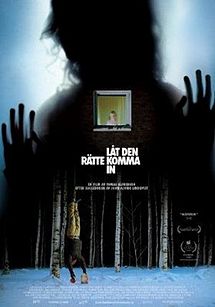
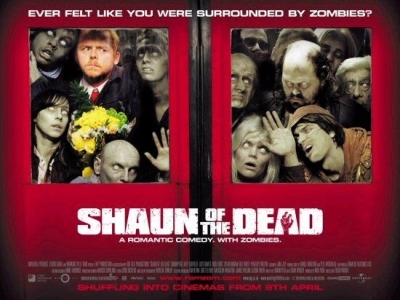 Strangely, in films or television it’s a different matter. Shaun of the Dead is one of my favourite films, as is A Werewolf in London. I watched Let the Right One In last year, and much enjoyed it. I’ve never been tempted to read Frankenstein but I saw Benedict Cumberbatch in the play a couple of years back and thought it was brilliant. When it comes to books, though, for some reason these creatures leave me pretty bored.
So when I went to a talk by novelist Margaret Atwood on monsters in literature, I was interested in what she might have to say, and why she finds the subject so fascinating.
Anyone who reads romance novels will know there is a whole subgenre called paranormal romance, which includes all sorts of vampires, werewolves and general shape-shifters. The Twilight series of books and films is the most famous of the genre. According to Margaret Atwood, vampires used to be ‘evil and smelly’; small creatures of the night who were more bat-like than hunk-like. Nowadays we’re seeing a twist on this type of monster, and it’s become desirable to be a vampire. Vampires are cool, attractive and aristocratic. They are still the outsiders in society, but in Twilight , as Margaret Atwood says with typical humour, they’ve actually started to form ‘cosy domestic units’.
What are these monsters metaphors for?
Children love toy dinosaurs for a reason. A dinosaur is a monster, but it’s a monster who is on the child’s side, and is big enough to protect them if they are being given a hard time in the playground.
And children love stories about monsters because they are vulnerable themselves, and subject to the whims of adults. Reading about monsters is a way of helping children to confront their fears in a safe environment. Vampires hold a particular appeal for teenagers because they represent outsiders, on the edge of society. They also represent sexuality, which is a whole discussion on its own, as in this Huffington Post article.
Zombies are a modern monster, and appear to increase in popularity during an economic downturn. When we read about a zombie apocalypse, we’re rehearsing for a world meltdown. Margaret Atwood also posed a couple more interesting theories about zombies: that they represent our fear of the unemployed working-class, and that one day the poor will rise up against the rest of the world. They could also represent our fear of a crowded planet: – maybe we secretly wish that 80% of the population were dead. (I must admit, for anyone travelling on a crowded tube or train to work every day, this one must strike a chord. Check out the poster for Shaun of the Dead, pictured above!)
But in recent times there has been a shift in our portrayal even of zombies. Those pathetic, shuffling creatures are becoming handsome and sympathetic, as in the character R in Isaac Marion’s Warm Bodies.
 What Margaret Atwood was basically asking at the end of this talk was, if we’ve “cleaned up” our monsters in literature, and if vampires, werewolves and zombies are more or less accepted amongst us, then ‘what carries the darkness that monsters used to carry?‘ What scares us now, in stories and films? Who are the marginalised characters who strike real terror?
The question was left open ended at the end of the talk. If you are looking for an answer from me as to who the new monsters are in literature, then I’m afraid I’m the last person to give one. I have never, ever in my life watched a horror film, and, as I mentioned at the start of the post, I don’t read books featuring monsters. As far as I’m concerned, there are enough terrifying things in real life, without going out of my way to look for more!
Although now I have a confession to make. After listening to Margaret Atwood’s talk, I bought and read my first zombie book ever: Warm Bodies. Guess what? I thought it was excellent, and I really enjoyed it! :) It’s an apocalytic story, a metaphor for the world’s ills, where the zombies are revealed as the good guys, and the bad guys are the humans still left in charge. The characters were warm and funny, and it’s also a gentle love story – and that can’t be bad!
And if I’ve taken one tip away from Margaret Atwood, it’s this: zombies can’t skate on ice.
Do you enjoy paranormal literature? And do you agree with Margaret Atwood that vampires, werewolves and zombies have been “cleaned up”? If so, what do you think has replaced them to terrify us? Any comments, please let me know – I’d love to hear from you!


 Helena Fairfax
Leave a Reply to Helena Fairfax Cancel reply