

 In three days at the brilliant Edinburgh Book Festival I packed in a mighty amount, and came away with so much learned and so much to think about that I thought I’d put some of it down here, before I forgot everything :)
Here are some of the authors I was lucky enough to see, in no particular order:
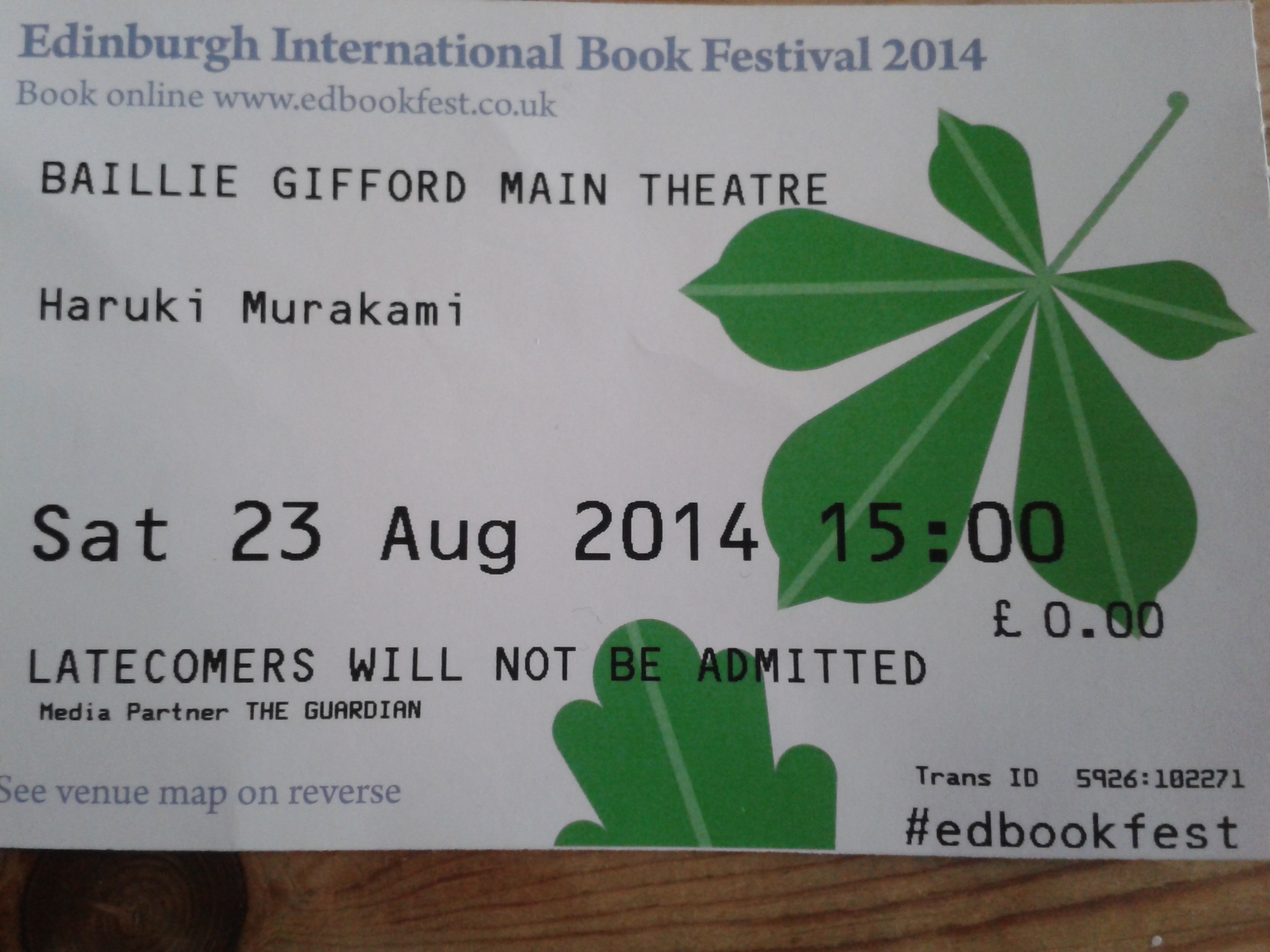 By far the most popular author of the whole festival, and possibly one of the most popular authors ever to attend, was Haruki Murakami. Fans all around the world queued up for the launch of Murakami’s latest novel, in a Harry Potter-esque way, and he’s one of the few authors who’s both massively commercially popular and also set as a text for schools and colleges.
I’ve only read one book of his – probably his most popular, Norwegian Wood. I found it so depressing I haven’t read any more. Please don’t shoot me, Murakami fans! I’ll try again. Anyway, this is what I found out about Murakami:
- the most amazing thing to me as a writer – Murakami never plans anything at all in his books! He told the audience how every day he just sits down at the screen and asks himself what’s going to happen next. I find this incredible! Is he just a natural story teller? Is it all secretly jotted down in his notebook, and he just made that up? Or are his stories really just a series of random events he’s put together? If so, why do critics think they’re so amazing? He said writing was ‘like dreaming a dream awake.’ If I wrote like that, no publisher would look at my work because it would be utter tripe. I’m still pondering over that one.
- someone in the audience asked him why his characters were so “sad”. I wanted to know that, too. Murakami looked genuinely amazed that people could think so. (“Really!” he said.) He said he had no intention to write about sad characters. Hmm. I’m still pondering that one, too!
- Murakami said he writes in the first person, because it makes him feel closer to his character. When he tried writing in the third person, he felt it distanced him. I can understand this one. However, after this he also made what I thought was one of his most interesting comments. He said he used to live in eastern Japan, where they speak a local dialect (Kansai). When he moved to Tokyo in the west, he began writing in effect in a completely different language. I thought that was fascinating that he was writing in a language that didn’t come naturally to him.
All in all, Haruki Murakami was fascinating to listen to, even though an enigma wrapped in another enigma, buried in a secret.
Children’s laureate Malorie Blackman gave a talk on the power of fiction, focusing on how children read books as part of exploring their own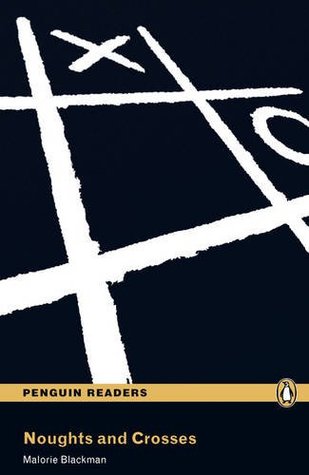 identity. Several things in Malorie Blackman’s talk stuck with me. How do children from different ethnic backgrounds feel when they can’t find themselves anywhere in the books before them? As the author says, ‘a very significant message goes out when you cannot see yourself at all in the books you are reading‘. The same is true if you only ever see yourself reflected in books, and no one else. What a narrow world that is! Unbelievably, a bookseller once told Malorie Blackman, ‘Your books are just for black children and we don’t have that many black children in this area.’ Do we actually still have segregation? Is a child not still a child, no matter what?Do we have to put books about children in wheelchairs in a different section, too?
Although things have improved, we have a very, very long way to go regarding diversity in children’s fiction. I find it absolutely astonishing that Malorie Blackman was once challenged by a ticket collector as she sat in the first-class carriage because he thought she must have stolen her ticket! The author recounted this story with remarkable humour. I wish I had her well-balanced nature.
Another talk that challenged stereotypes was between footballers Pat Nevin and Clarke Carlisle. As Clarke Carlisle said, when most people think of footballers they think of overpaid prima donnas whose every waking thought outside football is either drinking or shagging. Yes, that’s the stereotype! But these two guys presented a totally different picture. They were witty, articulate, intelligent, self-deprecating, hard-working and thoroughly charming. They also spoke thoughtfully about racism and homophobia in football and about their experiences with depression. Do these sound like “typical” footballers to you? No, me neither. I went and bought Clarke Carlisle’s book, and I wish him all the best for his career after football.
 Leigh Bardugo is an American writer of YA fantasy. I don’t read many fantasy novels, but millions of other people do, and they read Leigh Bardugo’s novels in shedloads. The room was full of teenage fans during her talk, which was great to see. I found Leigh is a fluent speaker, she was funny and entertaining, and the passage she read from one of her novels was gripping. I wanted to find out why so many readers love her novels, and it seems Leigh Bardugo paints a realistic and dramatic world with a Russsian flavour and a terrifying villain. This is another author who is going on my TBR pile, and might even tempt me to give fantasy novels another go :)
These are just a few of the hundreds of authors at the Festival, and you can see what a massive range of writing there is to be found in the wonderful world of books :)
*
One of the things I most enjoyed about the Book Festival was seeing the way children and teenagers cheered their favourite authors like proper fans. People say no one reads any more, but there were tons of young people in Edinburgh who say different.
If you’ve read any of the authors I’ve mentioned, or have any questions or comments at all, please let me know. I’d love to hear from you!


 Helena Fairfax
Leave a Reply