helena fairfax, freelance editor, yorkshire

Helena Fairfax

Pathetic fallacy – symbolism and the weather in fiction

round robin, helena fairfaxAnother month has gone by, which means it’s time for another Round Robin, and author Rhobin Courtwright has come up with yet another great topic for us: “Have you noticed how weather is used in writing? How have you used weather in your writing? Drama? Mood? Revelation?”

I absolutely love all forms of symbolism in writing and art. Even when the symbolism isn’t subtle, I still really enjoy it. As far as I’m concerned, there’s no such thing as OTT with symbolism, and I especially love spotting it in films – the good guy riding the white horse, the bird flying away to symbolise freedom, the rainbow symbolising hope, etc, etc.

helena fairfax, writing tips, symbolism

I first discovered writers could use the weather as a symbol in their stories when I was at school. The book we were studying was A Handful of Dust, by Evelyn Waugh, and I was struck by how the author used the weather to mirror what was going on for the protagonist. This was when I first learned the term “pathetic fallacy”. Pathetic fallacy actually means giving human abilities to the weather or nature – eg “the sun was smiling”, or “the daffodils danced”. Of course the sun doesn’t really smile and flowers can’t dance – that’s why it’s a “fallacy”- but writers often use pathetic fallacy to reflect what’s happening to their characters. Even if the symbolism is so subtle the reader doesn’t directly notice, it can still subconsciously affect their mood and the way they react to what’s happening.

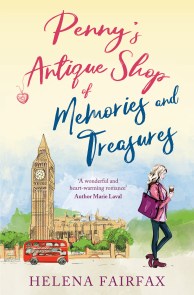
I’ve used the weather/nature as symbolism a few times in my own writing. In Penny’s Antique Shop of Memories and Treasures, for example, the hero,Penny's Antique Shop cover Kurt Bold, is walking home from an evening with the heroine. He still doesn’t realise yet that he’s in love with her. It’s a clear, cold night. When he looks up, the sky should be as bright and starry as it would have been in his home in Wyoming, but because he’s in London, all he can see is the neon of the streetlights. The stars are hidden – just like his own emotions.
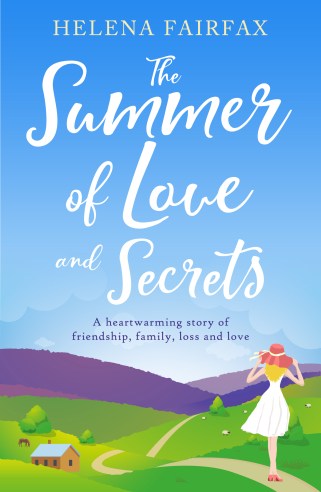
The weather plays a much bigger role in my novel The Summer of Love and Secrets. For the first half of the novel, the heat in the city of London is stifling, and the heroine, Kate, is deeply unsettled and has trouble sleeping. The weather mirrors her own restless emotions. Then the weather breaks, and the resulting storm is vital as a symbol. It’s a scene in which the hero, Paul, is persuading Kate to see her dad – the man who abandoned her as a child. I’ve put the full extract here, so you can see how important the break in the heat and the sudden downpour is to the play of emotions.

helena fairfax, a way from heart to heart

Paul put his hand on Kate’s arm, and she stared down at it, full of rage. ‘Please. It’s important. Come inside and give the guy a chance.’

She shook off his hand. ‘Like he gave me a chance, you mean?’ She turned on her heel. ‘I can’t even believe what I’m hearing.’

The rain was falling in sheets now, dripping from her hair in wet streaks. Kate blinked the water out of her eyes and stumbled as she walked away. Instantly Paul was at her side, steadying her. His shirt was soaked, plastered to his frame.

‘Kate, if not for your dad, then for his kids. They’re waiting inside to meet you.’

Kate stopped in her tracks. ‘They?’ she said. Her voice was brittle. ‘How many has he got?’

‘Two. He’s brought his son and daughter.’

A brother she’d only met once as a baby, and a sister she didn’t even know existed. Kate’s teeth began to chatter in the rain. Paul stood over her, the rain rolling down his forehead and into eyes full of urgent anxiety.

‘Why?’ she said. ‘Why do you care?’
helena fairfax, freelance editor, authorHe caught hold of her arms and turned her to face him. ‘Because I care about you,’ he said.

The rain was now a torrential downpour. Paul raised his voice above the sound of the water beating hard on the rooftops. Raindrops ran in rivulets down his face and over his lips. ‘I might be an idiot. I might have done this all the wrong way. But I care about you. This is your only family. You have to give them a chance, before it’s too late.’

Her body was shaking, but she forced her mouth open to speak. ‘It’s not fair. Not fair of you to ask. Not fair of him to come here after all this time and blackmail me with his children like this.’ She gave a violent shiver, half anger, half misery. ‘And it’s especially wrong that you even thought about contacting him without telling me. I cannot believe you did that.’ Her anger consumed her so that she could barely articulate herself. The words stuck in her throat, and she heaved great breaths.

Paul gripped her arms. ‘No, I know. Nothing about it is fair. And I shouldn’t have contacted him without letting you know. But I didn’t want to see any more lies printed about you. I thought I was looking after you.’ For a moment he held her, bending his head over hers in a vain attempt to shelter her from the rain. Then he dropped his hands to his sides. ‘Come on inside.’ He made an attempt at a smile. ‘In case you hadn’t noticed, it’s raining.’

With this passage, I tried to have the storm add an extra dimension to the heroine’s sadness and her turbulent emotions. The part where the hero is “bending his head over hers in a vain attempt to shelter her from the rain” is also symbolic. Paul would like to protect Kate from all the hurt she’s experienced in her life, but it’s impossible. He can only do what he can.

I love to use symbolism in this way, and I really enjoy deciphering the symbolism in other writers’ books, so I enjoyed writing about this topic a lot!

* * *

How about you? If you’re a reader, do you enjoy it when an author uses symbolism? How about in films? And if you’re a writer, do you use symbolism yourself? And do you have any great examples of when the weather has been used as a symbol?

If you have any comments at all, I’d love to hear them!

And if you’d like to read what my author friends have written on this topic, please click on the following links to find out:

Skye Taylor http://www.skye-writer.com/blogging_by_the_sea
Rachael Kosinski http://rachaelkosinski.weebly.com/
Beverley Bateman http://beverleybateman.blogspot.ca/
Connie Vines http://connievines.blogspot.com/
Anne Stenhouse  http://annestenhousenovelist.wordpress.com/
Judith Copek http://lynx-sis.blogspot.com/
Dr. Bob Rich http://wp.me/p3Xihq-EP
Victoria Chatham http://victoriachatham.blogspot.ca
Kay Sisk http://kaysisk.blogspot.com
Rhobin Courtright http://www.rhobinleecourtright.com

31 responses to “Pathetic fallacy – symbolism and the weather in fiction”

  1. Annika Perry Avatar

    Great post, Helen and an enjoyable snippet from your book. Like you I often use the weather to reflect the emotions of my characters, to the extent I wonder if I use it too much. Your post also had me googling the difference between pathetic fallacy and personification – my early morning lesson!

    Like

    1. Helena Fairfax Avatar

      Hi Annika, that’s a good point about whether the symbolism can be overdone. I suppose it’s a fine line between adding depth to the story – or irritating the reader! And I’m guessing pathetic fallacy is a form of personification. Isn’t it good we’re no longer at school and not being tested!
      So glad you enjoyed the post. Thanks very much for your comment!

      Liked by 1 person

  2. J.Q. Rose Avatar

    Excellent topic. I agree. I love to add the weather as a backdrop to enhance the mood of my characters. In Deadly Undertaking, during an explosive meeting between the good guy and the bad guy, lightning and the cracking thunder match the anger and struggle going on inside the old barn between the two men. Don’t you smile a little when you write the scene and wonder if the reader will get the idea you are using to ramp up the drama? I first recognized all the symbolism and “meaning” in writing when I took a class in college on Shakespeare’s sonnets. I loved tearing his writings up to find the “real” meaning of his words. Pathetic fallacy is a new term to me. Thanks.

    Like

    1. Helena Fairfax Avatar

      Hi JQ, I remember the thunderstorm scene in your novel. It was really dramatic and added a lot to the tension! I absolutely love the symbolism in Shakespeare’s language. You can read his sonnets again and again and still find something new.
      Thanks for dropping in, and for your great comment.

      Like

  3. Marsha R. West Avatar

    Great post, Helena. I’m pathetic where symbols are concerned. I never get them. Someone always has to point them out. LOL So no I don’t consciously use them in my writing. You’ve done a lovely job here in this excerpt. This is perhaps my favorite of your books. I’ll share.

    Like

    1. Helena Fairfax Avatar

      There is a type of writing that is completely free of symbols, Marsha, and I think your stories work really well. They are direct and your style of writing fits your characters perfectly.
      I’m so glad you enjoyed A Way from Heart to Heart. Thanks so much for sharing!

      Like

  4. Victoria Chatham Avatar
    Victoria Chatham

    Thank you Helena! I had never heard the term pathetic fallacy even though Waugh was prescribed school reading and I continued reading him after I left school. The snippet from your book also gave me food for thought.

    Like

    1. Helena Fairfax Avatar

      It’s been another interesting topic, Victoria. I still read Waugh now, too. Thanks very much for dropping in!

      Like

  5. Jacquie Biggar Avatar

    I love the symbolism behind an atmospheric setting! It can say so much about the character’s emotions. Great excerpt, Helena :)

    Like

    1. Helena Fairfax Avatar

      It’s great to find another fan of symbolism, Jacquie! :) And I’m so glad you enjoyed the excerpt. Thank you so much for dropping in, and for your comment!

      Liked by 1 person

  6. Skye-writer Avatar

    The symbolism angle is something I didn’t think of before, but I love it. Great excerpt, by the way. I might just have to go download that book.

    Like

    1. Helena Fairfax Avatar

      Hi Skye, I’m so happy you like the excerpt – thank you!! I really enjoyed this topic. I’m looking forward to checking out everyone else’s posts. Thanks so much for dropping in!

      Like

  7. Susan Bernhardt Avatar

    I do use weather in my all of my Kay Driscoll mysteries. In The Ginseng Conspiracy. Kay and her husband have a day outing to an art museum walking through a park to get there. Everything is bright and beautiful. Then she gets pushed into traffic. She still wants to see a Camille Pissarro exhibit. On the way back through the park after dusk, everything is scary, the trees, a jogger coming up to them, shadows, etc.

    Good post, Helena.

    Like

    1. Helena Fairfax Avatar

      Hi Susan, I love the way the day becomes more and more sombre and threatening in your story. It’s a while since I read The Ginseng Conspiracy. thanks for reminding me.
      I’m so glad you enjoyed the post. Thanks for dropping in!

      Like

  8. Shaz Goodwin (@shazjera) Avatar

    I love to read figurative language and personification Helena. The read that I started last night gives the fields human attributions and for me, it’s very visual :)

    Liked by 1 person

    1. Helena Fairfax Avatar

      What a great way to describe the setting. It sounds an interesting read, and an unusual way to immerse the reader from the start. Thanks for the comment, Shaz, and for dropping in!

      Like

  9. okwriter Avatar

    Very interesting post. I’ve never heard of ‘pathetic fallacy ‘ before and I don’t think I’ve used it. I may know. Thanks. Your use of weather in A Way From Heart to Heart is excellent. It really adds depth and emotion to the scene.

    Like

    1. Helena Fairfax Avatar

      Thanks so much for dropping in, Beverley, and for your kind comment about my extract. I enjoyed writing that scene very much – and I really enjoyed this topic, too!

      Like

  10. Rachael Kosinski Avatar

    Helena, it made me happy how you’re enthusiastic about symbolism. In middle school and high school, my teachers really shoved symbolism down our throats and for a time I hated any sort of writing that got too metaphoric, etc. I’m still a little wary around them because school gave me the connotations of symbols being too high brow, but your post is really nice and shows how great symbols in books can be!

    Like

    1. Helena Fairfax Avatar

      Hi Rachael, it’s such a shame when school ruins something for you like that. I absolutely love Jane Austen, but it took me a long while to re-read Emma because I had to pore over it at school so much I couldn’t bear to look at it again for a long time afterwards.
      I do love symbolism, though, and I love to spot it in books and films. I’m so glad I made it seem like fun again. (And Emma is a brilliant book!)
      I loved your post. Thanks so much for dropping in on mine, and for your comment!

      Like

  11. annestenhouse Avatar

    Hi Helena, despite being rather well educated, I’d never been sure what pathetic fallacy meant – and now I know. thank you. Will use it at my next book group when, by coincidence, the book s A Handful of dust, anne Stenhouse

    Like

    1. Helena Fairfax Avatar

      What a coincidence! And such a coincidence that you mentioned Evelyn Waugh in your own post. It’s a long while since I read A Handful of Dust. Now I want to read it again. Thanks very much for dropping in. I enjoyed your comment very much!

      Liked by 1 person

  12. Dr Bob Rich Avatar

    Helena, that passage really got me in. Instant characterization, powerful emotions, which you couldn’t have elicited so well without the downpour.

    Liked by 1 person

    1. Helena Fairfax Avatar

      Thanks very much, Bob! I enjoyed writing that scene very much. This has been another great topic. Thanks for dropping in, and for your kind words!

      Like

  13. judyinboston Avatar

    As an English major a long time removed from university classes, i had totally forgotten what the pathetic fallacy was. What a weird name! Thanks for reminding me. Enjoyed your post Symbolism rocks!

    Liked by 1 person

    1. Helena Fairfax Avatar

      Hi Judy, I agree about pathetic fallacy being a weird description! There’s nothing pathetic about it at all. I think (although I’m not sure) that in Victorian times “pathetic” would refer to emotions, as in “pathos”. That would make sense.
      Symbolism does rock! Thanks very much for dropping in!

      Like

  14. […] side note: The hurricane could also be an example of pathetic fallacy, which is the use of weather to foreshadow an event (Fairfax 3). Bad/unfortunate weather, in this […]

    Like

  15. The symbolism of the seasons in literature, with four brilliant examples – Helena Fairfax Avatar

    […] written a post previously on pathetic fallacy, and how I love using the weather and the seasons as symbols in my own […]

    Like

  16. How do you develop the theme of your novel? And does theme matter? – Helena Fairfax Avatar

    […] written before about how much I love symbolism. Besides the symbolism of the characters’ names, I also rewrote the opening a little to emphasise […]

    Like

  17. 9 Tips for Choosing Your Characters’ Names – Helena Fairfax Avatar

    […] If you’ve been following my blog for a while, you’ll know how much I love symbolism. Choosing a name that’s symbolic of your character’s personality is good fun. Felicity, the […]

    Like

  18. How using the senses in your writing can bring your characters to life – Helena Fairfax Avatar

    […] setting is Chicago. I’ve written before about using the seasons as symbolism, and the sensory language around the weather in Chicago again reflects Julia’s […]

    Like

Leave a Reply

Your email address will not be published. Required fields are marked *

This site uses Akismet to reduce spam. Learn how your comment data is processed.