
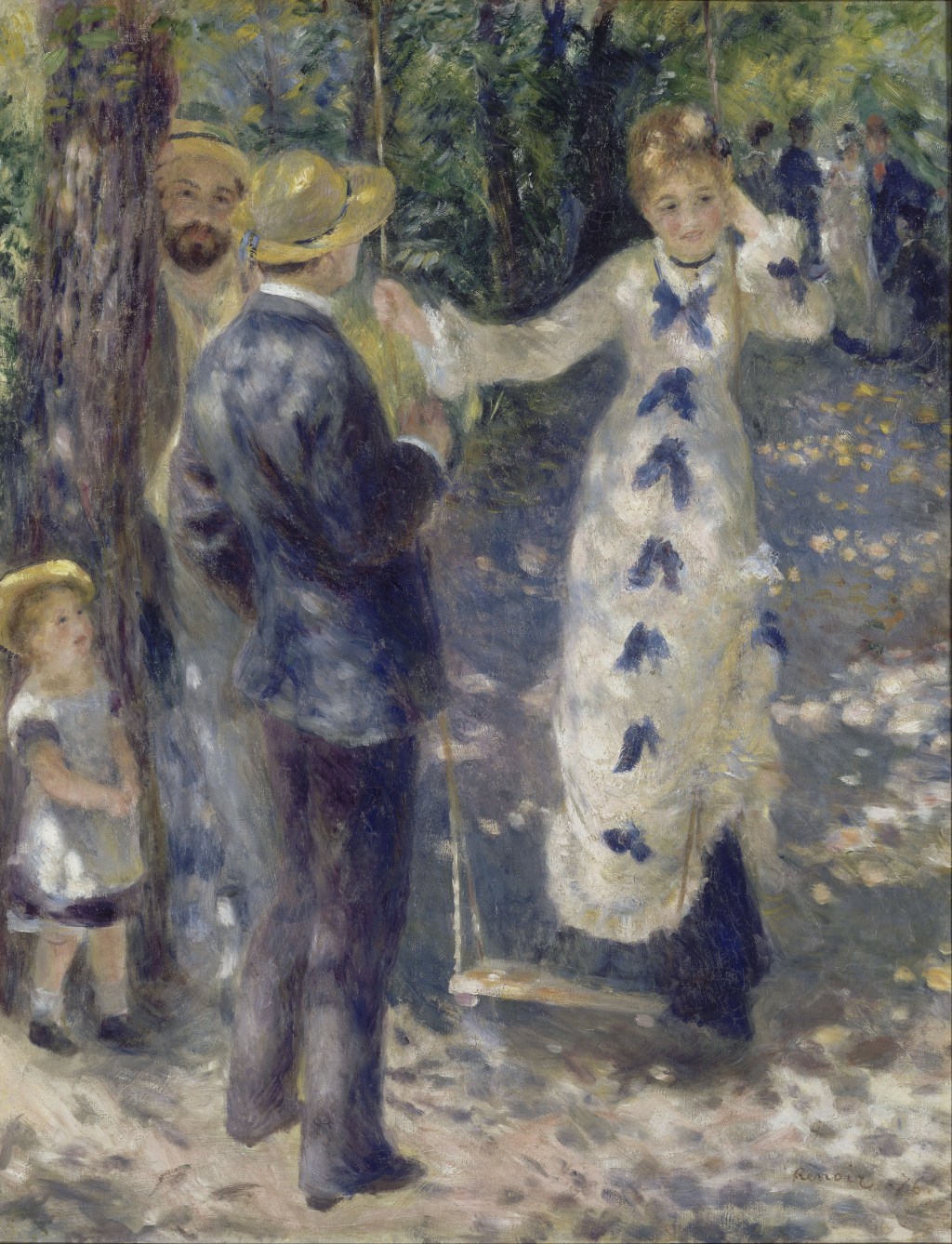
The artist Auguste Renoir once said that none of his paintings told a specific story. He explained that he kept things vague deliberately because he didn’t want to limit the painting’s scope, and that he wanted his viewers to come away with their own meaning, rather than have him dictate to them what they ought to think.
Here is one of Renoir’s most famous paintings, The Swing:
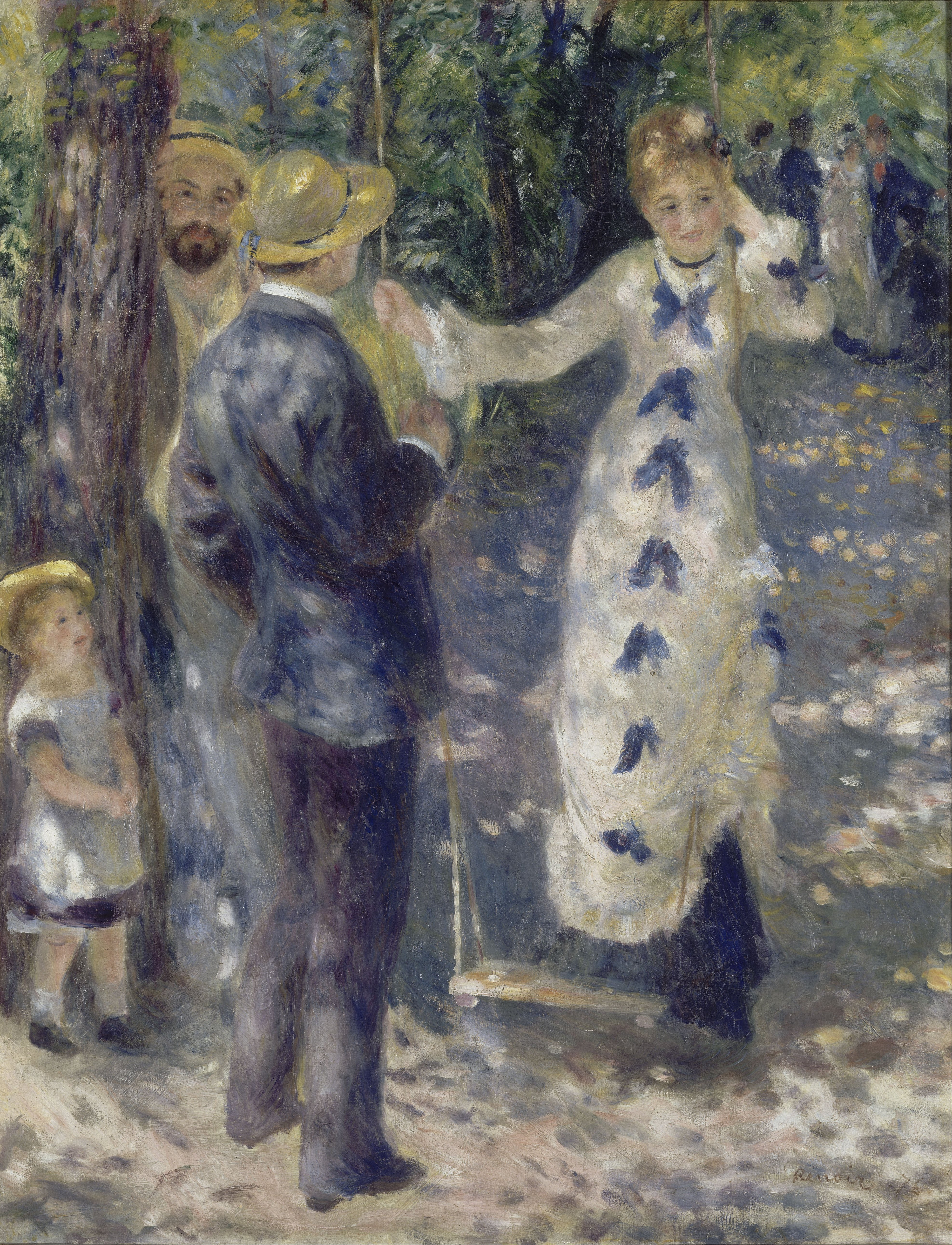
The painting does tell a story – but what is it? There’s a young man (we guess he’s young) talking most earnestly to a girl on a swing – but she’s looking away from him. What is she thinking? Is she trying to avoid him? Is she listening? Is she being coy? A man with a beard is watching the young man and he has an affectionate smile on his face (at least, I personally think it looks affectionate). And then the little girl in the corner – what is she thinking about? Is she the daughter of one of the figures? Or sister?
I could stare and stare at this painting. Although the story isn’t clear, you can tell that something intense and interesting is happening.
A while ago I went to the stunning Hepworth Gallery in Wakefield, West Yorkshire. As the name suggests, most of the artworks in the gallery were by the English sculptor, Barbara Hepworth.
Here are just a couple of her sculptures that I loved:
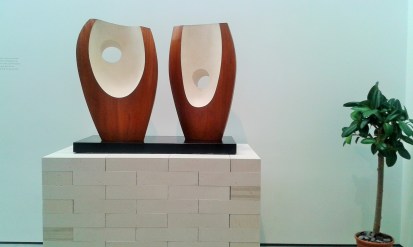

I love both these sculptures! You would have to see them in real life, and in the gallery, to experience the full power of them. I’m so sorry I can’t bring them to life properly with words. If you can imagine walking into the gallery on a cold, grim, rainy day in northern England and seeing the Two Forms with White (Greek) sculpture. This sculpture transported me away from my surroundings and to somewhere else entirely. I don’t know why, or what it is about the sculpture, but the Mediterranean – and a bright, hot landscape – leapt into my mind. It’s a great feeling to be whisked away like that – the same feeling you get when you are transported by a book.
The second sculpture is called Mother and Child – I think! Does it matter what title it has? To me, this sculpture was very tender and seems to be two figures clinging to one another – like a Mother and Child, in fact. I walked around it for a long time. I loved it.
I’ve been thinking of how artists say so much with apparently so little for quite a while, and trying to relate it to my own writing. When I’m writing, I like to know where my characters are. It’s the first thing I think of. What can they see? What surrounds them? I want to have their surroundings firmly fixed in my mind, and for the reader to see exactly what I see.
My next novel – Felicity at the Cross Hotel – is set in the Lake District. My editor has advised me to cut down on the description of the surroundings and to let the reader do some of the work of filling in the background. I am dictating too much, apparently, and instead of transporting the reader I am slowing the action. It’s a difficult balance and I worry that the reader will have to work too hard. But then when I think of these masterpieces of art, in which so much is left to the viewer’s imagination, I begin to understand how less is more.
I love visiting art galleries, and if I could choose between being an artist or a writer, I would choose being an artist every time. Unfortunately I can’t draw to save my life …!
* * *
Do you love visiting art galleries? And what is your favourite work of art? When you’re reading a novel, do you like the author to give you as much description as possible, or do you prefer to fill in the setting yourself using your own imagination?
I hope you enjoyed my post on art! If you have any comments at all, please let me know. I’d love to hear from you!


 Helena Fairfax
Leave a Reply to rosgemmell Cancel reply