

When I’m editing fiction and making notes in the margins of a manuscript, there are a couple of comments I make more often than any others. One of them is ‘show, don’t tell‘, and another is ‘focus on the story’.

What’s my book about?
A piece of advice I often give to writers is to ask themselves ‘what is my book about?’ Ideally an author should be able to give the answer in a couple of lines.
Here are some classic examples:
In To Kill a Mockingbird Scout, a young girl growing up in the deep south, learns what it is to show courage and compassion when her father defends a black man accused of rape.
In Blade Runner Rick Deckard must pursue and terminate four replicants who have returned to 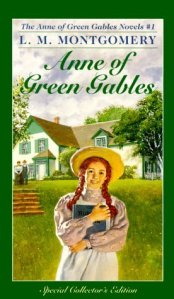 Earth to find their creator. During the pursuit Deckard falls in love with a replicant and begins to question whether he is one himself.
There don’t have to be lots of thrilling page-turning events to make a classic story. In Anne of Green Gables – one of my favourite books – a series of seemingly ordinary events in a small community show Anne to be a spirited and plucky orphan who transforms the hearts of everyone around her.
And the story doesn’t have to be at all complicated. Predator is a massively successful film. Here’s what happens: a team of commandos on a mission in a Central American jungle find themselves hunted by an extraterrestrial warrior.
So that’s what those stories are about, and the writers of these stories stuck to the premise.
It’s easy to drift off the path
Writing a book takes a long time. (If you’re like me, a very long time :) ) One of the problems writers have is that when they’re halfway through the book, perhaps several months after they first wrote ‘Chapter One’, they’ve simply forgotten the original idea. What was meant to be a book about Charles, an innocent man who is wrongfully arrested, instead becomes a book about Janice, the real killer. It’s easy to see how this happens, but think of it from the reader’s point of view. We pick up the book and for page after page we’re immersed in Charles’s life. We care about him and his family, we care about his terrible time in prison. Then all of a sudden Charles is no longer in the picture. Page after page goes by, and he’s not mentioned. Is he not important? What is this book about? It’s at this point, no matter how interesting Janice is, readers will feel cheated.
Where there is more than one main character, there still has to be one leading premise. Liane Moriarty’s brilliant Big Little Lies tells the stories of three women, but their lives are intertwined around one central theme of secrets and lies.
In a romance novel, the story is often told from both hero and heroine’s point of view. The writer may think they are keeping the focus by having one of the central protagonists appear in every scene, but the central focus of a romance is the conflict – what it is that keeps the hero and heroine apart. If you have several scenes in which the hero and heroine are speeding to the hospital one minute, or taking a scenic boat trip the next, if there is no underlying conflict between them then the focus of the developing romance has gone.
Instead of drifting, up the stakes
So, ask yourself, what is my story about? Once you pinpoint what your story is about, every scene and piece of dialogue should either further your basic idea or be used to show the main character(s) developing.
Every line of dialogue needs to move the story forward in a new way, or make a point about a character that the reader doesn’t know, or else reflect the character’s arc. Ask yourself what is the purpose behind a particular scene. If it doesn’t fit your premise, can it go? What would happen if you deleted it? Anything?

Often writers seem to run out of steam halfway through their manuscript – or maybe even run out of confidence in their original idea – and so they add something else to try and liven things up – a stalker or a new character or a fresh tiff between hero and heroine. But random meandering only confuses the reader and makes them lose interest.
One piece of advice, if you do feel your story is flagging, is to up the stakes for your main character(s). Think of all the bad things that have happened to them, and subject them to something ten times worse. Lizzie Bennett’s family let her down time and time again. Just as she thinks marriage to Darcy might after all be a possibility, Jane Austen dashes her hopes in the worst way possible by having Lizzie’s younger sister elope with the man Darcy despises the most. This isn’t just a random event in the novel – the elopement has been foreshadowed in such a way that the reader completely understands how it’s happened, even while they feel Lizzie’s shock.
Of course it’s easy for me to write this theory, and it’s easy for writers to understand the theory – in theory! When it comes to the practice, it’s much harder to see where your own story is drifting from your original idea. Sometimes you can read and re-read your own manuscript so many times, you no longer have the freshness to see it properly. That’s when a good editor and a new pair of eyes can really help you!
* * *
Are you a writer, and do you ever find your story meandering? How do you keep it on track? If you have any comments at all, I’d love to hear from you!


 Helena Fairfax
Leave a Reply