
It’s the very first authors’ Round Robin of the year, and it’s another thought-provoking topic…

…this month set by author Connie Vines:
How are you dealing with the COVID pandemic in your contemporary novels/short stories?
I try to be an optimist but have to admit I find it very depressing that at the start of 2022, as I’m writing this, the covid pandemic is still raging worlwide, causing untold stress to our health services, and with many people continuing to die.
Twelve months ago, in December 2020, we’d already had a year of the pandemic – and what a really long year it seemed. But I was still reasonably optimistic that our worries about the virus would be over before too long. I wrote a short story on this blog called Have Yourself a Merry Christmas Story, about two young people visiting their granddads in a care home in lockdown. I wanted to write a heartwarming tale about people coming together, despite everything. At that time I was sure, this time next year, everything would be different.
I don’t need to say how tired I am of it all now. I’ve been lucky. I’ve had covid twice, but I haven’t lost anyone to the virus. I’m also very lucky to have a job where I can work from home as an editor, and I’ve been very busy with my freelance editing. I’m lucky again to have kept my income.
But as a writer, I can’t really face the thought of putting the pandemic or covid at the centre of my stories, and I don’t know if I ever will really want to. It’s interesting that, although the flu pandemic of 1918 killed more people than died in World War One, there is very little fiction about it.
Covid has made a difference to us all. I was editing a story recently which was written pre-pandemic. The story briefly featured a film script about a travel writer who had a problem with his passport, and was unable to travel. Pre-pandemic, it seemed a massive deal. Now, this bit of the story had to be edited out. With the whole world grounded, we were all in the same boat, travelling nowhere.
As an editor, I now have to approach my job in a different way. As a writer, I don’t want to have a pandemic at the heart of my story. As a reader, I thought I’d never want to read a novel about a panedemic again, as I was tired of it. But then I was given two books for Christmas that feature viruses, both of which I really enjoyed. And I read several pandemic novels before the covid-19 outbreak that have stuck in my mind.
Sometimes it can help to get a different perspective on the times we’re living in.
So here is a selection of novels about a pandemic I’ve either enjoyed, or have been recommended.
Eight novels about a pandemic
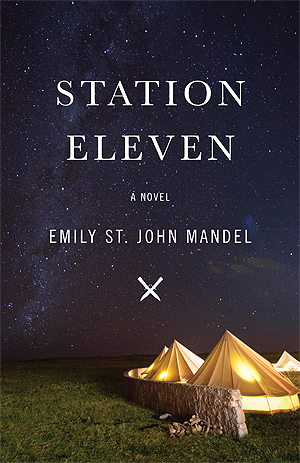
First up is Station Eleven, by Emily St John Mandel
I read this when it first came out. The story and characters have stuck in my mind, and despite the bleakness of the subject, it ends on an optimistic note, and I love how the heroine is trying to preserve the works of Shakespeare.
Here is the blurb:
One snowy night in Toronto famous actor Arthur Leander dies on stage whilst performing the role of a lifetime. That same evening a deadly virus touches down in North America. The world will never be the same again.
Twenty years later Kirsten, an actress in the Travelling Symphony, performs Shakespeare in the settlements that have grown up since the collapse. But then her newly hopeful world is threatened.
If civilization was lost, what would you preserve? And how far would you go to protect it?

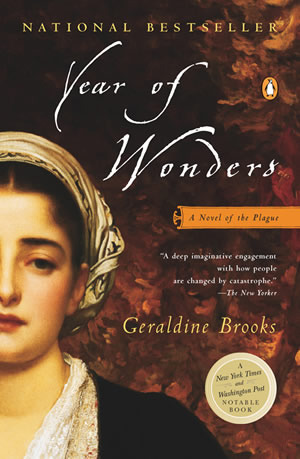
Year of Wonders, by Geraldine Brooks
This is a book on my tbr. I was brought up near the village of Eyam in Derbyshire, and was very struck as a child by the story of how the villagers deliberately cut themselves off when the plague struck. This novel is based on this true history.
Here is the blurb:
In 1666, plague swept through London, driving the King and his court to Oxford, and Samuel Pepys to Greenwich, in an attempt to escape contagion. The north of England remained untouched until, in a small community of leadminers and hill farmers, a bolt of cloth arrived from the capital. The tailor who cut the cloth had no way of knowing that the damp fabric carried with it bubonic infection.
So begins the Year of Wonders, in which a Pennine village of 350 souls confronts a scourge beyond remedy or understanding. Desperate, the villagers turn to sorcery, herb lore, and murderous witch-hunting. Then, led by a young and charismatic preacher, they elect to isolate themselves in a fatal quarantine. The story is told through the eyes of Anna Frith who, at only 18, must contend with the death of her family, the disintegration of her society, and the lure of a dangerous and illicit attraction.
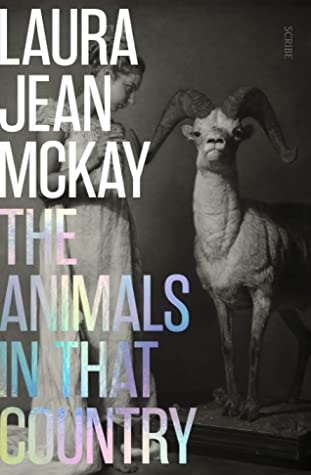
The Animals in That Country, by Laura Jean McKay
I was given this book for Christmas. The virus in this story leaves people infected able to understand what animals are saying. It’s set in Australia, featuring a heroine who isn’t conventionally likeable. The blurb says:
Hard-drinking, foul-mouthed, and allergic to bullshit, Jean is not your usual grandma. She’s never been good at getting on with other humans, apart from her beloved granddaughter, Kimberly. Instead, she surrounds herself with animals, working as a guide in an outback wildlife park. And although Jean talks to all her charges, she has a particular soft spot for a young dingo called Sue.
If you’re looking for a heartwarming read, then this isn’t it, but I really loved the relationship between Jean and her granddaughter, and between Jean and the dingo. The book is an original story and will stay with me a while.
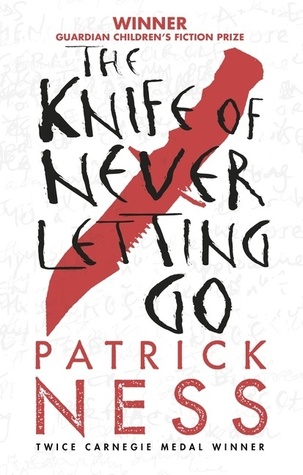
The Knife of Never Letting Go, by Patrick Ness
This was another Christmas present, and I read it directly after the book by Laura Jean McKay. I was astonished when on the first page, the hero can understand the dog speaking. This book came out before McKay’s, and hers is very different indeed, but I wondered if it had influenced her.
Here is the blurb:
Prentisstown isn’t like other towns. Everyone can hear everyone else’s thoughts in a constant, overwhelming Noise. There is no privacy. There are no secrets. Then Todd Hewitt unexpectedly stumbles on a spot of complete silence. Which is impossible. And now he’s going to have to run…
The book is soon to be a film with the brilliant Tom Holland.
*
A couple of books I read a long time ago, and really enjoyed, in a scary way:
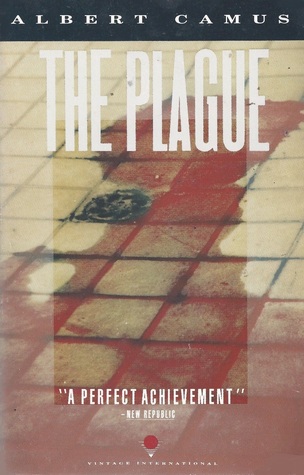
The Plague, by Albert Camus
The townspeople of Oran are in the grip of a deadly plague, which condemns its victims to a swift and horrifying death. Fear, isolation and claustrophobia follow as they are forced into quarantine. Each person responds in their own way to the lethal disease: some resign themselves to fate, some seek blame, and a few, like Dr Rieux, resist the terror.
An immediate triumph when it was published in 1947, The Plague is in part an allegory of France’s suffering under the Nazi occupation, and a story of bravery and determination against the precariousness of human existence.
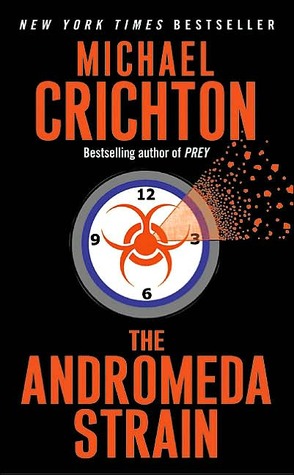
The Andromeda Strain, by Michael Crichton
Five prominent biophysicists have warned the United States government that sterilization procedures for returning space probes may be inadequate to guarantee uncontaminated re-entry to the atmosphere. Two years later, a probe satellite falls to the earth and lands in a desolate region of northeastern Arizona. Nearby, in the town of Piedmont, bodies lie heaped and flung across the ground, faces locked in frozen surprise. What could cause such shock and fear? The terror has begun, and there is no telling where it will end.
*
And a couple of books that ought to be on the list:

Wish You Were Here, by Jodi Picoult
This is the only novel on this list that directly deals with the present covid pandemic. #
Here is the blurb:
Diana O’Toole’s life is going perfectly to plan. At twenty-nine, she’s up for promotion to her dream job as an art specialist at Sotheby’s and she’s about to fly to the Galápagos where she’s convinced her surgeon boyfriend, Finn, is going to propose.
But then the virus hits New York City and Finn breaks the news: the hospital needs him, he has to stay. But you should still go, he insists. And reluctantly, she agrees. Once she’s in the Galápagos, the world shuts down around her, leaving Diana stranded – albeit in paradise. Completely isolated, with only intermittent news from the outside world, Diana finds herself examining everything that has brought her to this point and wondering if there’s a better way to live.
But not everything is as it seems . . .
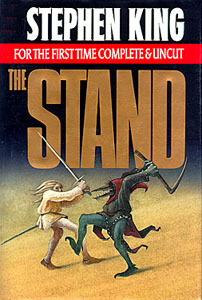
The Stand, by Stephen King
Set in a virus-decimated US, King’s thrilling American fantasy epic, is a Classic. First come the days of the virus. Then come the dreams.
Dark dreams that warn of the coming of the dark man. The apostate of death, his worn-down boot heels tramping the night roads. The warlord of the charnel house and Prince of Evil.
His time is at hand. His empire grows in the west and the Apocalypse looms.
When a man crashes his car into a petrol station, he brings with him the foul corpses of his wife and daughter. He dies and it doesn’t take long for the virus which killed him to spread across America and the world.
*
If you’re a writer, how do you plan to deal with the pandemic in your novels or stories? If you’re a reader, do you want to read fiction about the covid virus? Or do you want to escape the present at all costs? If you have any comments at all, I’d love to hear from you.
This has been another thought-provoking topic in our Round Robin. If you’d like to know what the other authors have written on the subject, please click on the links below.
Connie Vines http://mizging.blogspot.com/
Skye Taylor http://www.skye-writer.com/blogging_by_the_sea
Anne Stenhouse http://annestenhousenovelist.wordpress.com
Marci Baun http://www.marcibaun.com/blog/
Diane Bator http://dbator.blogspot.ca/
Dr. Bob Rich https://wp.me/p3Xihq-2wY
Judith Copek http://lynx-sis.blogspot.com/


 Helena Fairfax
Leave a Reply to Skye-writer Cancel reply