
helena fairfax, freelance editor, yorkshire

Helena Fairfax

A simple tip for creating story structure, for plotters and pantsers alike

It’s another month, and another authors’ Round Robin. This month our topic has been set by author Skye Taylor

helena fairfax, freelance editor, fiction editor
Plotting or pantsing – which method do you prefer? 

Since this question is all about creating story structure, I’m answering with my developmental editor’s hat on.
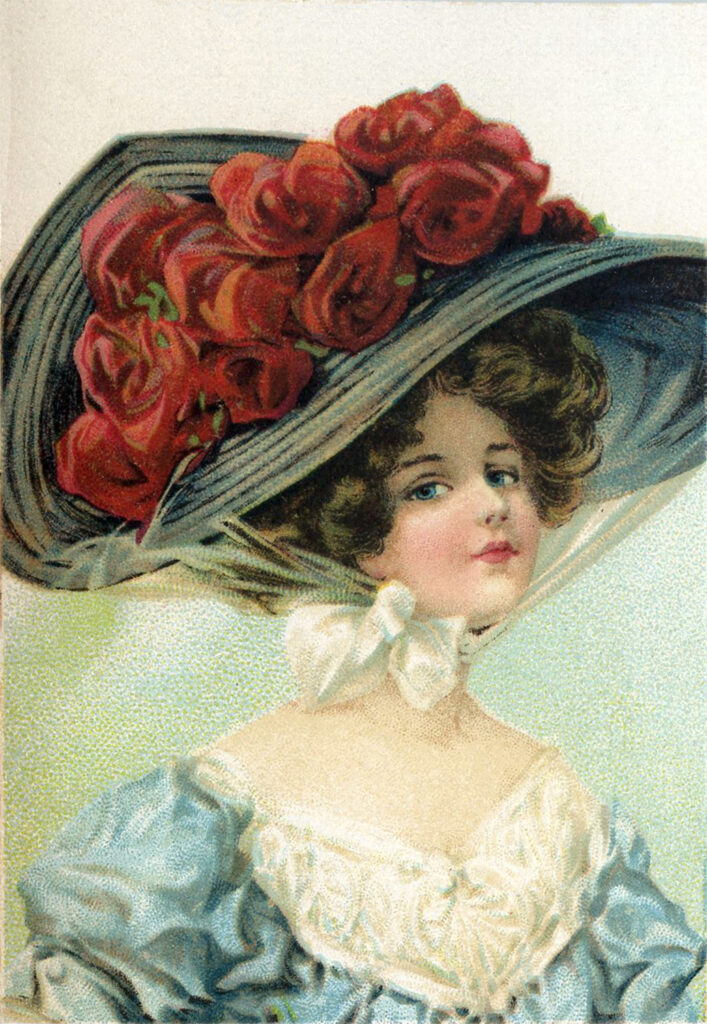
(I don’t really have a developmental editor’s hat, but if I did, it would be brilliant if it looked something like this.)

Creating story structure

Giving feedback on a story’s structure is one of those tasks I find particularly difficult as a fiction editor. This is because every writer has their own way of structuring a story, and what works for one person can totally ruin the creative process for another.
In my own writing, I have an outline. I know where I’m starting and ending; I know the chief personality traits of my characters, and I know what needs to happen for them to get the happy ending they deserve. I don’t like to plan every single chapter, because then the story would be done with in my head and I’d find that thoroughly boring to write up. I like to let ideas bubble and ferment as I’m getting the basic story down. This is why I wrote in this post on ‘Why the best ideas often come after you’ve started writing’.

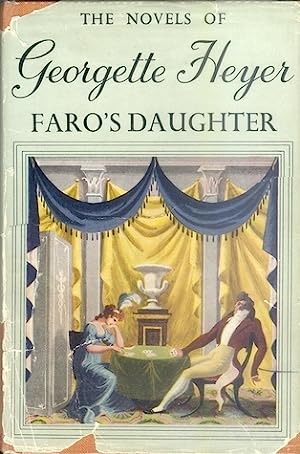
I was interested to read in this biography of Georgette Heyer, by Jane Aiken Hodge, that Heyer wrote her novels in a similar way. She would write letters to her publisher saying things like, ‘I expect you want to know how my hero ends up in the same town as my heroine. Let’s not worry about that one now. All will become clear as we go along.’

Focus on your story’s core idea

It helps that I’m quite a focused writer. If I have a new idea, it will fit in with my overall outline. I don’t find it hard to stick to the core idea, without drifting.

Which leads to the piece of advice I most often give in developmental feedback: focus, focus, focus.

What is your story about?

Whether you’re a plotter or a pantser, you need to be able to answer the simple question: what is your story about? And ideally you should be able to answer in a line or two. This may seem reductive, but if you can’t answer in a line or two, this can be a sign that the story is drifting.

Image by Mohamed Hassan from Pixabay

Here are just a couple of examples:

To Kill a Mocking Bird is about a lawyer who tries to defend a black man falsely accused of rape by a white woman. The story is narrated by his six-year-old daughter, whose innocent, child-like view casts a spotlight on racial prejudice.

A Tale of Two Cities is about the lives of two very different men – Charles Darnay, an exiled French aristocrat, and Sydney Carton, a self-centred but brilliant English lawyer – who both fall in love with Lucie Manette. Because of love, Sydney Carton makes the ultimate sacrifice for Lucie and Charles, and proves himself to be a hero.

These are the core ideas of these two novels. Perhaps you have a great idea for a story. It’s when you come to write an entire novel around it that the difficulty starts. (Writing a novel isn’t easy!) You may find yourself running out of steam halfway through. The temptation then is to throw in another idea, to keep the reader’s interest, and to drift off for several chapters with some great scenes involving unrelated characters or a new source of tension.

Or perhaps you’ve simply got bored. After all, writing a novel takes time, and it may be many months since your first exciting lightbulb moment. But remember, a novel isn’t just a series of great scenes. A series of scenes, no matter how well written, will start to become dull. Every single scene and piece of dialogue, and every single character, needs to be there to serve your core story. Each scene has to be there to drive the story forward or reveal something about one of the characters. It helps to ask yourself the question: if this scene or character were cut, would it matter? If the answer is no, then why not just cut?

Image by Mohamed Hassan from Pixabay
Character depth and story structure

One of my favourite tips is: ‘Be brave!’ Don’t create characters and then run away from them to create someone new. Stick with your characters through thick and thin and page after page of writing. If you do, you (and the reader) will get to know them like real people, and your characters will have the depth they deserve.

There is so much to say about developing story structure, it’s impossible to fit it all into one blog post. A book I’ve personally found useful is Get Your Story Straight, by Diane Drake. It’s aimed at screenwriters, but it’s clearly laid out and I really like the examples she uses.

I know lots of other writers who swear by Save the Cat! Writes a Novel, by Jessica Brody. If you like this way of working, you can find the Save the Cat! structural outline summarised in this useful blog post on Plotting Save the Cat.

There is also K.M. Weiland’s excellent blog series and her related books on story structure.

*

I’m always curious to know how other writers work. How do you structure your own story? Do you do a lot of work in advance, or do you find you work best as you’re writing? What advice on story structure have you found useful? If you have any tips, please do let me know in the comments.

And if you’d like to know how the other authors in our Round Robin have approached this topic, please click on the links below. Happy writing!

Marci Baun http://www.marcibaun.com/blog/

Dr Bob Rich  https://wp.me/p3Xihq-2X1

Anne Stenhouse http://annestenhousenovelist.wordpress.com

Skye Taylor http://www.skye-writer.com/blogging_by_the_sea

11 responses to “A simple tip for creating story structure, for plotters and pantsers alike”

  1. Marsha R. West Avatar

    My goodness, Helena. What an excellent post. So many good ideas. My process has changed over the years. Originally, I wrote out a list of everything that needed to happen. Later I did in depth character sketches, so I knew the folks well. And I usually began with a short statement about the story. Maybe that’s what’s wrong with my current WIP. I haven’t done that yet at 25 K into the story and I’ve just kind of stopped. LOL Back to the drawing board. Such a helpful post, Helena. Oh and I do pants more than plot now. I’ve shared. :)

    Liked by 1 person

    1. Helena Fairfax Avatar

      Hi Marsha, that’s interesting you’ve stopped at 25K into the story. I really like the idea of a list of everything that needs to happen. Do you think something like this might help you get back into it?
      I’ve gone the opposite way now to you and have become more of a planner than a pantser. I’ve found out the hard way that planning saves me time in the long run. I don’t plan in detail. I find a list like yours is perfect.
      Thanks so much for dropping in and for your great comment.

      Like

      1. Marsha R. West Avatar

        Hey, Helena. I guess it’s whatever works at the time. LOL

        Liked by 1 person

  2. Skyewriter Avatar

    I love the hat… Although I have to wonder if your head would start aching under the weight after a bit… Seriously, good advice on the question of “if this scene, character or dialog were taken out, would that change the story?” Very good question for pantsers, who often get off the beaten track, to ask themselves as they go through their first heavy edit, or even while writing. Personally, I’m big on having a very “very” detailed dossier for my main charcter(s) so when a scene, or problem comes up, I know how they are going to react and how that would impact the story.

    Liked by 1 person

    1. Helena Fairfax Avatar

      Hi Skye, it’s hard to believe women really used to wear hats like this. When I was researching my non-fiction book, Women’s Lives in Halifax, I found out women in Edwardian times often had to ask their maids to lift the hat onto their heads!
      I don’t plan in as much detail as you do, but as an editor it’s such a help in the process to see that the writer has a plan (even if it’s only a mental one) and is focusing on the core story, with no drifting off here and there.
      Thanks so much for the topic, and thanks for dropping in!

      Like

  3. James Christie Avatar

    Thought I’d just throw in my usual delirious nonsense today as I was drunk down a drain somewhere over the rainbow last time and missed your previous post!

    In my case, “Dear Miss Landau” was biographical. Half of it had already been written in blog format before it finally entered our heads that maybe we should make a novel out of my odyssey to go see Helen of Troy. I already knew the layout, several of the blogs could easily be pasted into the document and text could be added to fill the gaps.

    Not exactly like squirting concrete or Polyfilla into the cavities, but not all that different…

    “The Legend of John Macnab”, however, was another animal entirely. Spanning about fifteen centuries, multiple cultures, rewriting history (thanks, John Evelyn!) and then getting thrown completely out of whack because Princess Diana, whom I’d noticed had a small historical connection to the story in 1996, suddenly died in 1997!

    At that point, I had to make a hard commercial decision whether or not to include her in the story and, after some careful consideration, I did so.

    This did not help matters.

    While I knew it was intrinsically about the gospel illuminated manuscript The Book of Deer, trying to get this web of history, action, comparative theology and weird mysticism straight was virtually impossible.

    Anyone sane would probably have given up after the eighth year or so, but as I am certifiable, I just kept plugging away…

    The research was lethally hard. In fact, I consider the process was even worse than just the usual “heart’s blood on every page” standard operating procedure every writer must be aware of. This was because, rather than, say, talking about two people’s feelings in Tewkesbury, I was going right back to Columba, Mesopotamia and the Graupians (the spelling Grampians was a Roman clerical error) and relating it all to the death of Diana and the Scottish devolution referendum of 1997…

    The best analogy I can provide to show you how all that felt is the scene in 1982’s “Conan the Barbarian,” where young Conan is manacled to a corn-grinder (the wheel of pain!) and, no matter what, just has to push it round and round in all weathers…

    And this is it.

    While I at least knew what “Macnab” was about, my experience sums up the quintessential lesson every writer must be clear about if they want to make it:

    You’ve got to draft your ass off!

    You see, by any normal standard, “Macnab” shouldn’t have worked. I just kept at it until it did. I used to say that I “manacled myself screaming to the word-processor,” hour after hour, day after day, month after month…

    And, yes, year after year.

    And sometimes, you’ve just got to do that.

    I openly thank my publisher for seeing the potential of the manuscript (twenty years after I had the original idea!), but my God, you’ve got to put the time in!

    Actually, if anyone wants the dramatic story of “Macnab’s last day,” I can tell it here. THAT was like coming out against Apollo Creed in the 15th round of “Rocky II”…

    Liked by 1 person

    1. Helena Fairfax Avatar

      Haha! James, your comments always bring a smile. I love the ‘manacling myself to the word-processor’. You deserve every success with both books. I expect the research was fascinating, mind you, as well as a slog at times. I had no idea ‘Grampians’ was a clerical error, for example. How interesting!
      And I also didn’t release that DML started off as blog posts. What a great idea – and an even better one to turn the posts into a book. I thoroughly enjoyed your story. You’ve reminded me to re-read it.
      Thanks so much again for your entertaining comment. I hope you’re working on a new novel. Very best wishes!

      Like

  4. Esther O'Neill Avatar

    Both, surely – since the best ideas spring almost out of nowhere , while writing, or for my current WIP, arrive on the top deck of a bus .
    What if ?
    Would I dare ?
    Could hardly wait to get home and start writing, fall in love with the story again.

    Liked by 1 person

    1. Helena Fairfax Avatar

      I love the idea of inspiration springing on the bus, and you couldn’t wait to get home. (Apparently JK Rowling had the idea for the whole Harry Potter series when her train came to a halt on the tracks.)
      I hope you did dare, and the risk paid off in a big way. Thanks so much for dropping in, and for your great comment. Happy writing!

      Like

      1. Esther O'Neill Avatar

        Thanks. Not yet. Book complete, still working on that title.

        Liked by 1 person

  5. Moses Medh Avatar
    Moses Medh

    Keep up the good posts Helena

    Like

Leave a Reply to Marsha R. West Cancel reply

Your email address will not be published. Required fields are marked *

This site uses Akismet to reduce spam. Learn how your comment data is processed.