

Another month and time for another authors’ Round Robin…

This month, our topic is
How do you manage stress as a writer?
This is a great question. Scientific research has proven that reading novels relieves stress. For me, there’s nothing more relaxing than immersing myself in the sort of novel where I know, despite all the page-turning setbacks along the way, everything is going to end happily… but what if it’s actually your job to write or edit those novels so others can read them?
I wish I had all the answers, but here are some tips I’ve learned, from other writers and editors, and from experience, on dealing with stress as a writer.
The best way to manage stress is to prevent it
Preventing stress is easier said than done, I know. There is a lot of ‘Do What I Say, and Not What I Do’ in what follows!
But here are some tips to help prevent burnout.

- Learn to say no professionally
Saying no is difficult at the best of times. When writing or editing is your career, and you’re relying on yourself to earn a living, saying no is scary. Maybe you’re turning down work you can’t fit in without massively stressing yourself out. Maybe you’re telling a publisher you can’t make the next deadline, or go to the next event they’ve lined up for you. Maybe by saying no, you think to yourself, I’m never going to work again.
But if you burn out, you’ll at best be doing substandard work, and thus cutting yourself off from future offers, and at worst you’ll end up not being able to work at all.

And ultimately, people in the workplace prefer the truth rather than a stressed-out person trying not to upset anyone.
- Learn to say no to family and friends
I know. Saying no to people who are going to be bitterly disappointed, and just don’t understand that you are working to eat. And if you’re a woman, this family problem is magnified a hundred times. Women who write or edit from home are hobbyists making a bit of pocket money. Men who write or edit from home have a proper career and it’s important not to disturb them. (Apologies to any families out there where this stereotype doesn’t fit.) If you’re a woman, chances are you’re also doing the bulk of the family care and chores. In fact, I have no tips on saying no in these situations, so if anyone else has any advice – please let me know in the comments!
- Have a supportive network

A supportive network is important in any walk of life. I’ve found, though, that with work, it’s the people who actually write or edit themselves who really understand writer stress.
Joining a professional body has been a massive help to me. I’ve made friends through both the Romantic Novelists’ Association and the Chartered Institute of Editing and Proofreading. If you have such a professional group available, it may well be worth joining. Meeting a group of real people can feel intimidating at first, for people who work alone all day in a room, but in my experience these groups are full of writers who were equally scared when they first joined, and are supportive and welcoming
- Get a dog!
This last one isn’t for everyone, and looking after a dog is a big commitment, but my dear dog Lexi (sadly no longer with us) was an instant stress- and anxiety-buster.
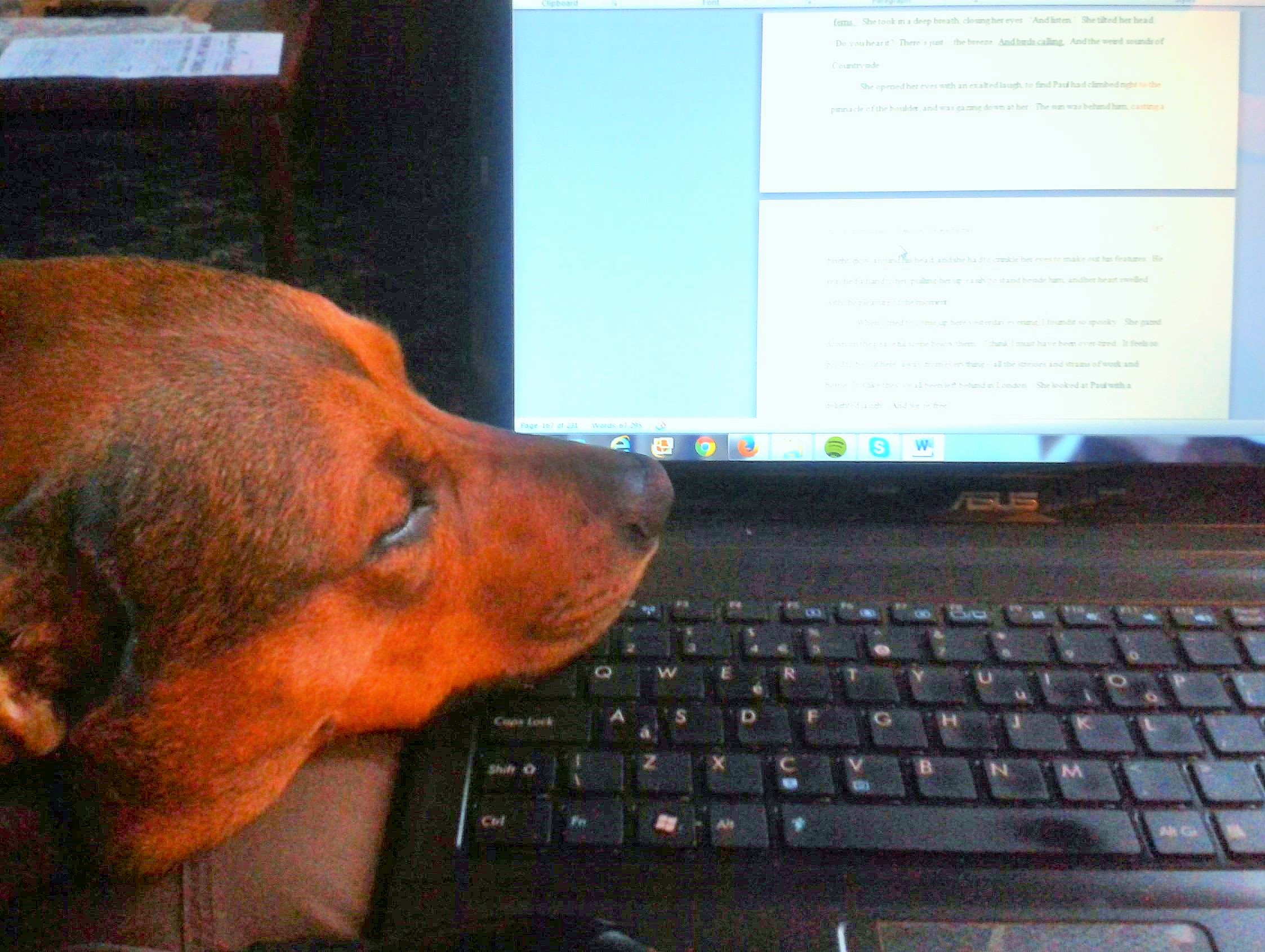
Chris Packham has also described how no matter how dark his mood was, his dogs ‘instigated instant euphoria’
Dealing with writer stress and anxiety
No matter how hard you try to stave off stress, inevitably there’ll come a time when everything is on top of you and you wonder how on earth you’ll be able to face the blank page. No one can escape stressful life events. (In fact it must be hard to write stories readers engage with if you’ve never known what it is to experience dark days.)
In the past five years I’ve moved house, gone through a pandemic, lost my dad and two of my brothers and been the carer for my bereaved mum in her nineties. Reading heartwarming novels is a great stress relief – but writing and editing them isn’t so easy when you’re under a dark cloud.
Everyone has their own methods of dealing with stress. Here are a few of mine:
- Go for a walk every day

(See ‘Get a dog’!) Getting away from the desk every day is important. A walk in nature, or even round your local streets, come rain or shine, clears the head and makes you realise there’s a beautiful world out there that stays beautiful, no matter what problems you’re going through
- Take up a ‘mindless’ hobby
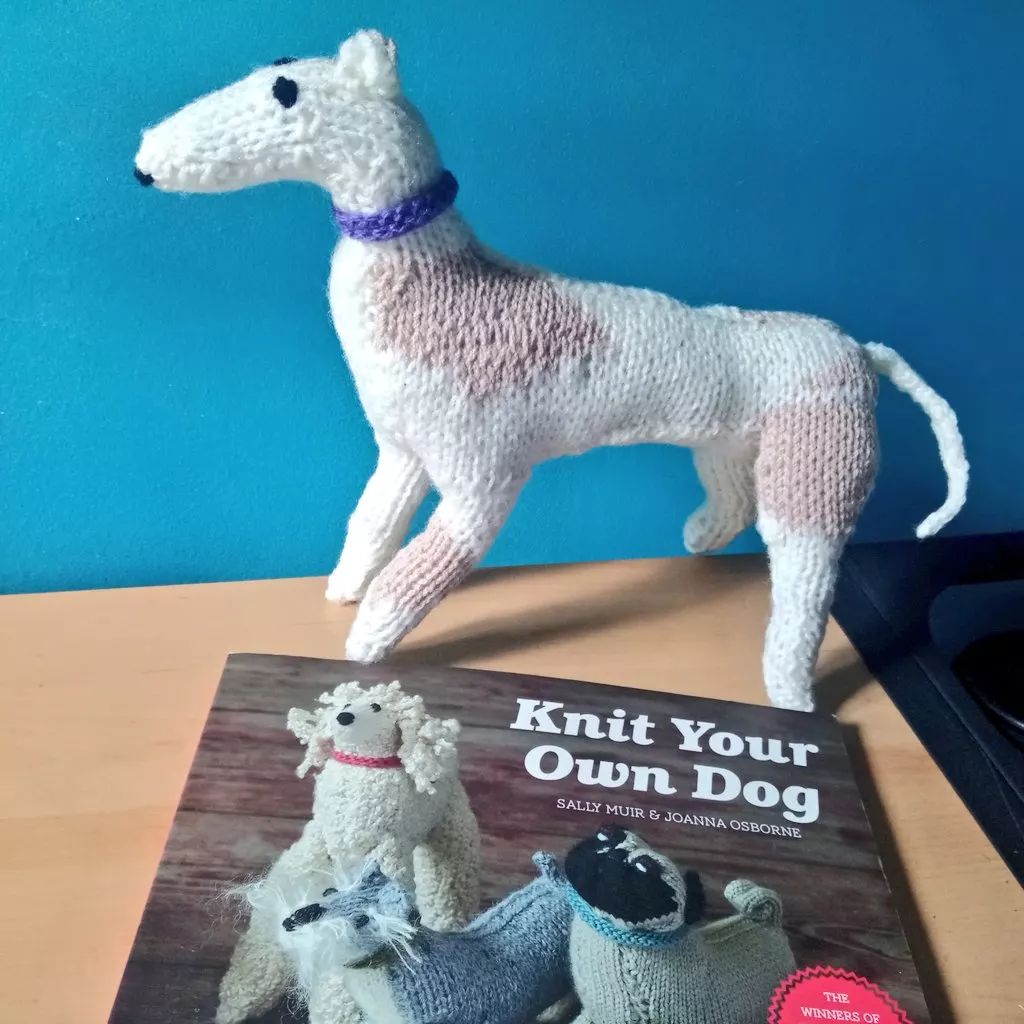
By ‘mindless’ I mean one that doesn’t force you to use the part of the brain you need for writing. I find knitting very therapeutic, plus there’s a real sense of achievement in seeing a piece of knitting steadily grow – which can be really helpful when you’re dissatisfied with your writing. Similarly with gardening. Digging and weeding are ‘mindless’ activities that give a sense of purpose. Even bottoming out the kitchen is better than sitting under the weight of problems, and at least when it’s done the kitchen is clean. Result.
(And you can even knit your own dog…!)
- Some people swear by meditation
I’ve never tried meditation, but research has proven it’s very effective against stress. When I actually am stressed, the last thing I want to do is learn something new, like how to meditate. (I guess ‘learn to meditate’ should go in the section on pre-empting stress!) Taking deep breaths definitely does work for me, though, when stress seems to be building
- Just sit down to work
The beauty of writing – and of editing other people’s writing – is that you’re immersing yourself in someone else’s story, and taking yourself a long way from your own problems. Quite often it helps to just forget your personal stresses and plunge into work.
What to do if you’re burnt out
Often it’s very difficult to recognise for yourself when you’re simply too burnt out to write. You keep on trying to get the words down, and getting more anxious and exhausted at the sense of failure. If you reach this point, TAKE A BREAK, no matter what. Take as long as you need. Again, I understand this is easier said than done if you’re relying on your work for an income. And everybody hates to let people down. But your health is important, and without a break at this stage, things could get even more serious.
If you’re relying on your income as a writer/editor, it’s important to have income protection insurance for those times you can’t work. This insurance is usually relatively cheap, and could be well worth the outlay. The problem comes in getting a ‘fit’ note from your doctor, because if you’re in the UK, and your GP’s practice is anything like mine – well, good luck with getting an appointment. I spoke to my own GP just recently about the particular challenge faced by people who are stressed, depressed or anxious in getting to see their doctor. This is when it helps to have someone supportive who can take on this sort of challenge for you.

But best of all, try to deal with those moments of stress the best way you can, in good time, before everything builds up. (Again, do as I say, not as I do!)
*
Have you ever suffered from stress as a writer, or in your own particular workplace? What works for you at these times? And I’d be interested to know, do you find reading ‘heartwarming’ novels a particular stress relief, as I do?
If you have any comments or tips at all, I’d love to hear from you!
And if you’d like to hear what the other authors have to say on the subject, please click on the links below…
Judith Copek – http://lynx-sis.blogspot.com/
Victoria Chatham – http://www.victoriachatham.com
Anne Stenhouse – http://annestenhousenovelist.wordpress.com
Fiona McGier http://www.fionamcgier.com/
Skye Taylor – http://www.skye-writer.com/blogging_by_the_sea


 Helena Fairfax
Leave a Reply to Victoria Chatham Cancel reply