
helena fairfax, freelance editor, yorkshire

Helena Fairfax

The art of seamless backstory: avoiding the dreaded info dump in your writing

Another month, and another authors’ Round Robin. This month the topic has been set by author Skye Taylor

helena fairfax, freelance editor, fiction editor
How do you avoid the ‘info dump’ and drop in backstory in a seamless way?

As a writer I’d love to start a book with a first chapter called something like: ‘Backstory: Read It Here’. In this first chapter I’d describe my characters and their background, something like this:

Sarah, the heroine, is a circus clown.  Her dad left her when she was five, and her mum never got over it.  Sarah is kind and witty, a bit untidy; her childhood has left her with a distrust of marriage and family life.

My work would be done, and then I could get on to the fun part of actually telling Sarah’s story in the present. It would be a brilliant cop-out.

So what’s wrong with starting a story in this way?

Image by Alexa from Pixabay
  • First of all, the writing is dull.  Sarah doesn’t ‘come alive’ on the page, which means readers probably aren’t too interested in reading on.
  • I’ve ‘told’ readers what Sarah is like, rather than letting them find out for themselves.  As an editor, I often say you can tell your readers until you’re blue in the face that your characters are kind, or selfish, or noble, or whatever. Unless readers actually see the character behave in this way, they won’t actually believe it.
  • So what if Sarah doesn’t believe in marriage and family? This isn’t important in her everyday job as a circus clown. It is important, though, if she falls in love with someone who wants to marry her and have a family. Then we have conflict and a story.
  • I’ve given a lot of information about Sarah at once.  Imagine you go to a party and meet someone who tells you all about themselves in the first five minutes. It would feel like you’re revising for an exam, trying to remember everything they’ve said. Better to get to know people gradually, and only drop in information at a point when it’s relevant and memorable.
Image by Gerd Altmann from Pixabay

Your main characters need a background and a backstory to make them rounded and believable characters. It’s always a difficult decision when to drop this information in, but in general it’s better to let readers get to know and care for characters in the present before dropping in their background. Every time you go into the past, or give background information, you’re stopping the tension around the story ‘in real time’.

So how do you drop in backstory in a seamless way?

Here are a few options:

  • Use dialogue and interior monologue.  In this extract from Sophie Weston’s The Cinderella Factor, the heroine is talking to a teacher at her school:
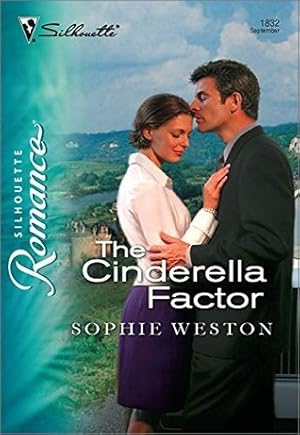
In those few sentences we learn a lot about Joanne. The information about her family is given in her thoughts, which makes it much more interesting than an info dump. Giving the background in this way also helps readers care more about Joanne because she seems more ‘real’.

You just have to watch with dialogue that you don’t make it clunky and drop in exposition in a way that’s unrealistic.  ‘Do you remember that day in 1997 when we met George, the man who later became our stepfather?’  sounds strange, and will jolt readers out of the story.

  • Another way to drop in information/backstory is to write about the character indirectly, using their voice.  Here’s another example, this time from Barbara Hannay’s A Bride at Birralee:
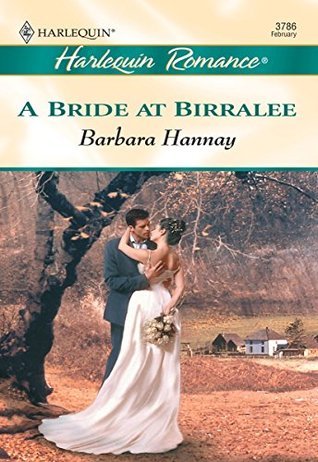
These few lines give us an excellent idea of the location, of Callum’s introverted character, his isolation, and the fact that he’s grieving.

Fitting in all the backstory in an interesting and subtle way is one of the most difficult things writers have to do.  I recently had a good tip from another writer.  If you feel a scene you’ve written isn’t working, go through and highlight in yellow all the parts that are referring to the past.  See what will happen if you eliminate them altogether.  There’s no need to force feed readers information about the past right from the start of the story.  A lot of the time, readers actually enjoy discovering things for themselves, bit by bit.

Another tip is to cut your first chapter and start with chapter two. Is the opening more arresting?
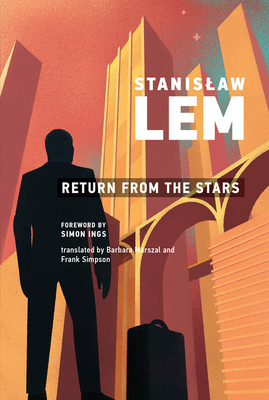
Apart from romance I also read a lot of sci-fi, and one of my favourite books is Stanislaw Lem’s Return from the Stars.  In the opening, the reader is thrown into a world with absolutely no backstory and no explanation from the author.  This novel really sticks in my mind, because when I first started reading it, I turned page after page, wondering what on earth is going on?  But this is exactly the effect Lem was after.  The author is describing an astronaut’s return to planet earth, at a time so far in the future that the world is a place he no longer recognises.  The astronaut is completely disorientated.

If Lem had filled me in on the backstory right from the beginning, I would have understood what was going on…but I wouldn’t have shared the astronaut’s sense of disorientation.  I was completely immersed in the hero’s feelings during the opening scenes.  It is a masterly novel, and a classic example of withholding backstory to brilliant effect.

*

If you’re a writer, do you have any tips on dropping in info or backstory? Are the any authors you admire who do this really well?

I’m looking forward to reading the other authors’ take on this topic. Please click on the links below for my fellow authors in the Round Robin.

Anne Stenhouse http://annestenhousenovelist.wordpress.com

Connie Vines http://mizging.blogspot.com/

Diane Bator http://dbator.blogspot.ca/

Skye Taylor http://www.skye-writer.com/blogging_by_the_sea

Bob Rich https://wp.me/p3Xihq-3i8

15 responses to “The art of seamless backstory: avoiding the dreaded info dump in your writing”

  1. Connie Vines Avatar
    Connie Vines

    As always, detailed examples and helpful way to improve and hone writing skills. :)

    Liked by 1 person

    1. Helena Fairfax Avatar

      The problem of dropping in backstory is one that often comes up in my editing work. A lot of writers struggle with it – including me, in my own writing!
      I’ve enjoyed this month’s Round Robin. Thanks for dropping in, and for your kind comment x

      Like

  2. piawhitmartlet Avatar
    piawhitmartlet

    Interesting article- I loved the tip about highlighting references to the past to eliminate them. Actions speak louder than words, in real life as on the page.

    Like

  3. piawhitmartlet Avatar
    piawhitmartlet

    With two internet crashes hiding my previous attempt to comment I hope this gets through ( and it not a duplicate)

    I found the article interesting especially the tip to spot ‘telling’ by highlighting narrative in the past and see if it can be removed. Actions speak louder than words in life as in narrative. If a character tell you they did x, you have to wonder- did they? or is this just their side of the story, whereas if you ‘see’ them through the action, the action is credible and more immediate to the reader.

    Pia
    Whitmartlet. com
    For tongue-in-cheek irreverent bloglets on a writer’s life in Italy and England

    Liked by 1 person

    1. Helena Fairfax Avatar

      Hi Pia, thanks so much for dropping in. I’m sorry you’ve had a problem commenting. It often seems to happen with WordPress at the moment, for some reason. Thank you for persevering.
      It’s so true that actions speak louder than words. I also find that if you write that a character is kind, for example, readers will easily forget or skim over this information. If you show the character behaving in a kind way, their actual actions will stay in the reader’s mind.
      Thanks again for taking the time to comment. How lovely to divide your time between England and Italy!

      Like

  4. Dr Bob Rich Avatar

    Thank you, Helena, for a wonderful, clear explanation with powerful examples.
    You asked for examples from other writers. In my book, “Sleeper, Awake,” all I had at the start was a person. She awoke into an utterly foreign world, and I had no idea what she would find, what her background was, until she told me.
    :)
    Bob

    Liked by 1 person

    1. Helena Fairfax Avatar

      Hello Bob, this sounds like an intriguing opening, and a really interesting book to write. It seems like the opening to the Stanislaw Lem book I quoted. In fantasy and scifi you have the problem of letting readers know the world of the setting, without an info dump. I love the idea of getting to know the strange world along with the character. I’m enjoying learning how other authors approach this topic. Thanks for dropping in, and for your comment!

      Like

  5. jameschristie466 Avatar
    jameschristie466

    Well, as we all know, WordPress totally sucks and I spent most of last night shouting at BT for suddenly saying they were having issues – again – and nearly destroying a carefully wrought email at the last moment. I don’t much like any organisations these days, especially high techy-techy ones no doubt run by spotty and malnourished adolescents who’ve never been outside…

    Anyway, I am hopelessly throwing a new novella at disinterested agents these days, and this is how I did a bit of backstory. It was fun, and also evil…

    “Sunset on the Boulevard wasn’t an exciting prospect for any actress with silver in her hair, and if she hadn’t somehow managed to crash drunk into me at quarter past two in the morning outside the Scum and Villainy Cantina, an intergalactic-themed bar on Hollywood Boulevard, I doubt we’d ever have met.

    Okay, I’m absolutely certain of it.

    I was a jet-lagged tourist from Cleethorpes on a package holiday. She was an actress from Hollywood on Skid Row, I’d taken the risk of a wide awake late-night walk, she’d had three too many Pan Galactic Gargle Blasters and, dressed as Princess Leia, lurched out of the pub’s main doors like Captain Kirk on a bender.

    And she lurched right into me.

    I think it was at that very moment I lost my scepticism and came to believe that fate and destiny were real.

    It was 2.17 in the morning, I had an armful of actress and the doorman, who’d noted with perspicacity that nothing was happening except this coincidental crash, looked on with a grin.

    While her brunette hair flowed all over my arms, I tried to come up with a good one-liner and could only, feebly, say:

    ‘Is that a blaster in your breast pocket, or are you pleased to see me?’ ”

    (I’m in Marsport Without…)

    Liked by 1 person

    1. Helena Fairfax Avatar

      So glad you managed to comment this time, James. Thanks very much for persevering with WordPress!
      I love the idea of the Scum and Villainy Cantina. I’d definitely have a few drinks in there :) You set the scene and give a picture of the characters in just a few lines. I hope one of the agents you throw this novella at picks it up. Wishing you all the best with another cracking story!

      Like

      1. jameschristie466 Avatar
        jameschristie466

        Hi Helena,

        The Scum and Villainy Cantina is actually real (looked it up on Google Maps), although I don’t think they serve Pan Galactic Gargle Blasters!

        I hope someone decides to give me another shot at another title…

        Best wishes,

        James

        Liked by 1 person

        1. Helena Fairfax Avatar

          It’s a great name! I looked up some photos on Google. Wow! It looks like the sort of place that WOULD serve a Pan Galactic Gargle Blaster. I hope someone does take it on. May the force be with you!

          Liked by 1 person

  6. Skye-writer Avatar

    Great post – awesome examples, both of how to add backstory without it becoming a dump and how NOT filling in the backstory right off amps up the tension.

    Liked by 1 person

    1. Helena Fairfax Avatar

      Thanks for organising another great Round Robin, Skye. I’ve enjoyed reading the other writers’ take on this topic.

      Like

  7. L.A.C. Avatar

    Thanks for the useful advice Helena. I think that writing a 3D character is one of the hardest things to do and many people first try to describe characteristics too much at first, until they start developing their craft more, using advice such as you have given today.
    I just started writing my outline for a new cozy murder mystery and will keep your advice in mind as I move forward.
    Cheers, Lynn

    Liked by 1 person

    1. Helena Fairfax Avatar

      Hi Lynn, yes, I’ve sometimes seen writers give the personality traits/appearance in one go as soon as the character appears, and then never mention anything about these traits again. the knack is to drop things in throughout, so the character stays consistent in readers’ minds. It is quite hard to do at first, but seems one of those things that it’s relatively simple to edit in afterwards if the first draft doesn’t quite get it right.
      That’s exciting about the new cozy mystery. Wishing you all the best with your writing, and I hope it’s fun to write!

      Like

Leave a Reply to Connie Vines Cancel reply

Your email address will not be published. Required fields are marked *

This site uses Akismet to reduce spam. Learn how your comment data is processed.