
Another month, and another authors’ Round Robin. This month the topic has been set by author Skye Taylor…

How do you avoid the ‘info dump’ and drop in backstory in a seamless way?
As a writer I’d love to start a book with a first chapter called something like: ‘Backstory: Read It Here’. In this first chapter I’d describe my characters and their background, something like this:
Sarah, the heroine, is a circus clown. Her dad left her when she was five, and her mum never got over it. Sarah is kind and witty, a bit untidy; her childhood has left her with a distrust of marriage and family life.
My work would be done, and then I could get on to the fun part of actually telling Sarah’s story in the present. It would be a brilliant cop-out.
So what’s wrong with starting a story in this way?

- First of all, the writing is dull. Sarah doesn’t ‘come alive’ on the page, which means readers probably aren’t too interested in reading on.
- I’ve ‘told’ readers what Sarah is like, rather than letting them find out for themselves. As an editor, I often say you can tell your readers until you’re blue in the face that your characters are kind, or selfish, or noble, or whatever. Unless readers actually see the character behave in this way, they won’t actually believe it.
- So what if Sarah doesn’t believe in marriage and family? This isn’t important in her everyday job as a circus clown. It is important, though, if she falls in love with someone who wants to marry her and have a family. Then we have conflict and a story.
- I’ve given a lot of information about Sarah at once. Imagine you go to a party and meet someone who tells you all about themselves in the first five minutes. It would feel like you’re revising for an exam, trying to remember everything they’ve said. Better to get to know people gradually, and only drop in information at a point when it’s relevant and memorable.
Your main characters need a background and a backstory to make them rounded and believable characters. It’s always a difficult decision when to drop this information in, but in general it’s better to let readers get to know and care for characters in the present before dropping in their background. Every time you go into the past, or give background information, you’re stopping the tension around the story ‘in real time’.
So how do you drop in backstory in a seamless way?
Here are a few options:
- Use dialogue and interior monologue. In this extract from Sophie Weston’s The Cinderella Factor, the heroine is talking to a teacher at her school:
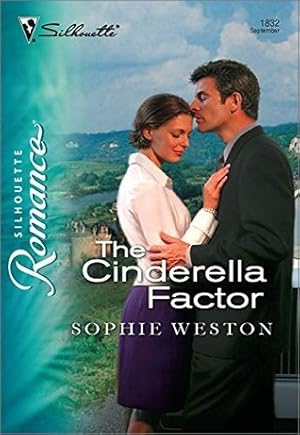
‘“You know, people keep telling me you’re a tearaway. You don’t care about school. You hardly ever do your homework. But you don’t seem like that in my class, Joanne.”
No one had looked at her like that before. So interested. So warm.
“Oh.”
“Now why don’t you tell me why you really ran away from home, hmm? The real reason?”
Well, that was impossible, of course. What could she say? My so-called aunt hates me and her husband is a drunk who hits me?’
In those few sentences we learn a lot about Joanne. The information about her family is given in her thoughts, which makes it much more interesting than an info dump. Giving the background in this way also helps readers care more about Joanne because she seems more ‘real’.
You just have to watch with dialogue that you don’t make it clunky and drop in exposition in a way that’s unrealistic. ‘Do you remember that day in 1997 when we met George, the man who later became our stepfather?’ sounds strange, and will jolt readers out of the story.
- Another way to drop in information/backstory is to write about the character indirectly, using their voice. Here’s another example, this time from Barbara Hannay’s A Bride at Birralee:
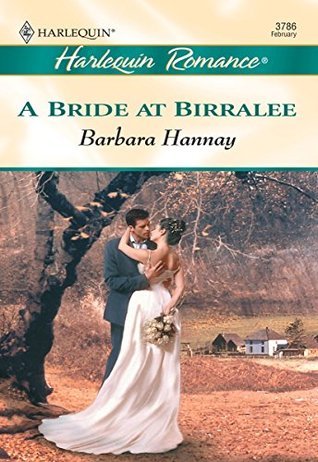
‘Callum Roper slouched against a veranda post and glared at the distant cloud of dust. In the outback, dust travelling at speed meant one thing – a vehicle heading this way.
He wasn’t in the mood for visitors.
Turning his back on the view, he lowered his long body into a deep canvas chair and snapped off the top off a beer. He took a deep swig and scowled. Truth was, he wasn’t in the mood for anything much these days. Even beer didn’t taste the same.
How long did it go on for, this grief business?’
These few lines give us an excellent idea of the location, of Callum’s introverted character, his isolation, and the fact that he’s grieving.
Fitting in all the backstory in an interesting and subtle way is one of the most difficult things writers have to do. I recently had a good tip from another writer. If you feel a scene you’ve written isn’t working, go through and highlight in yellow all the parts that are referring to the past. See what will happen if you eliminate them altogether. There’s no need to force feed readers information about the past right from the start of the story. A lot of the time, readers actually enjoy discovering things for themselves, bit by bit.
Another tip is to cut your first chapter and start with chapter two. Is the opening more arresting?
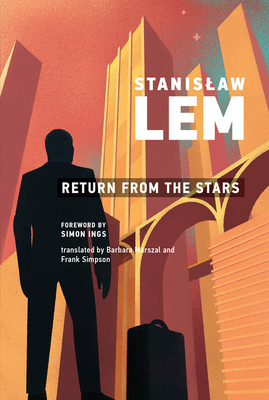
Apart from romance I also read a lot of sci-fi, and one of my favourite books is Stanislaw Lem’s Return from the Stars. In the opening, the reader is thrown into a world with absolutely no backstory and no explanation from the author. This novel really sticks in my mind, because when I first started reading it, I turned page after page, wondering what on earth is going on? But this is exactly the effect Lem was after. The author is describing an astronaut’s return to planet earth, at a time so far in the future that the world is a place he no longer recognises. The astronaut is completely disorientated.
If Lem had filled me in on the backstory right from the beginning, I would have understood what was going on…but I wouldn’t have shared the astronaut’s sense of disorientation. I was completely immersed in the hero’s feelings during the opening scenes. It is a masterly novel, and a classic example of withholding backstory to brilliant effect.
*
If you’re a writer, do you have any tips on dropping in info or backstory? Are the any authors you admire who do this really well?
I’m looking forward to reading the other authors’ take on this topic. Please click on the links below for my fellow authors in the Round Robin.
Anne Stenhouse http://annestenhousenovelist.wordpress.com
Connie Vines http://mizging.blogspot.com/
Diane Bator http://dbator.blogspot.ca/
Skye Taylor http://www.skye-writer.com/blogging_by_the_sea
Bob Rich https://wp.me/p3Xihq-3i8


 Helena Fairfax
Leave a Reply to Skye-writer Cancel reply